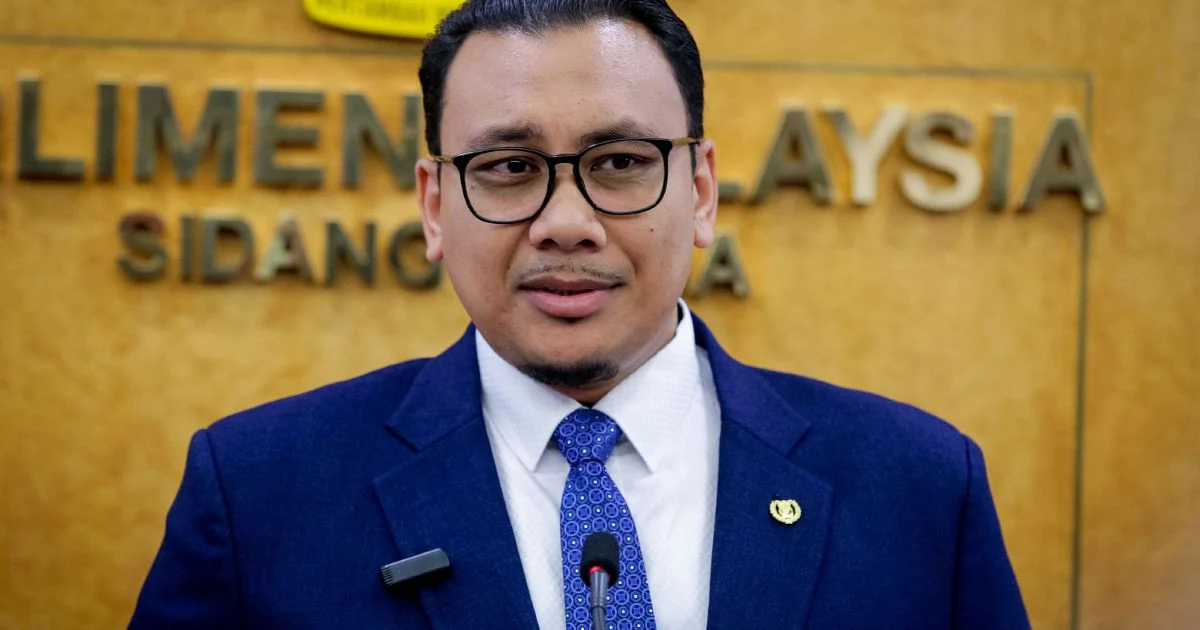
The youth wing chief of the Pan-Malaysian Islamic Party has escalated a brewing social media dispute to the courts, moving beyond initial public outcry to seek legal remedies for what his team characterises as a personal attack. Afnan Hamimi Taib Azamudden confirmed that he has engaged legal counsel to investigate and pursue action related to a Facebook post associated with a Bersatu office-holder that he claims contained derogatory language targeting his father and immediate family members.
Social media disputes among Malaysian political figures have become increasingly litigious in recent years, reflecting the contentious landscape of contemporary politics. What begins as online rhetoric often transforms into formal legal complaints, bringing fresh urgency to already fractious political relationships. This particular case reflects that pattern, as tensions between PAS and Bersatu—coalition partners in federal government—occasionally surface in unexpected ways on digital platforms.
The move to pursue litigation signals a hardening of positions within the ruling coalition, where personal grievances now trigger institutional responses. Rather than resolving the matter through internal party dialogue or public statements, the decision to involve lawyers indicates Afnan Hamimi's determination to establish clear legal consequences for what he views as a serious transgression. This approach mirrors growing trends among Malaysian politicians who increasingly weaponise the court system to address perceived slights and reputational damage.
The involvement of family honour in political disputes carries particular weight in Malaysian culture and within Islamic party politics specifically. For a PAS leader, defending his father's reputation becomes intertwined with personal honour and family integrity—concepts that carry moral and social significance extending beyond the immediate dispute. This cultural dimension may explain why Afnan Hamimi felt compelled to escalate the matter rather than dismiss it as routine online antagonism.
The fact that the alleged perpetrator holds a Bersatu leadership position adds complexity to the situation, given that both parties operate within the same federal government coalition. Such internal conflicts, when aired publicly and pursued legally, can create awkwardness within the ruling administration and potentially strain working relationships between coalition partners. PAS and Bersatu have maintained their alliance despite occasional friction, but personalised disputes carry risks of deepening divisions.
Facebook remains a primary platform for Malaysian political discourse, where figures from various parties post statements, commentary, and sometimes provocative content intended for their supporters. The platform's reach and the permanence of posts mean that offensive remarks gain wider circulation than traditional political statements, amplifying their impact and often forcing responses from targeted individuals. In this case, the Facebook post appears to have crossed what Afnan Hamimi and his advisers considered an acceptable threshold.
The legal system in Malaysia provides avenues for addressing defamation and insults through both civil suits and criminal statutes such as the Penal Code. Pursuing such cases requires demonstrating that the allegedly insulting remarks caused reputational harm and that the source of the posts can be definitively established. The attribution of the post to a specific Bersatu leader will likely feature prominently in any legal proceedings, as establishing clear authorship constitutes a fundamental requirement for holding someone accountable.
Previous disputes involving Malaysian politicians have illustrated how personal grievances aired on social media can lead to sustained legal battles, with cases sometimes taking months or years to conclude. Media attention during the legal process itself becomes an additional consideration, as public interest in internal coalition disputes may keep the matter prominent in news cycles. This visibility can either amplify pressure on the alleged perpetrator or, conversely, generate counter-narratives that complicate the legal and political landscape.
The timing of this legal action within the broader context of Malaysian politics warrants consideration. Coalition dynamics, internal party positioning, and upcoming electoral considerations all potentially influence how politicians respond to attacks on themselves or their families. Afnan Hamimi's willingness to take the matter to court may also signal broader frustrations within PAS youth leadership regarding treatment by coalition partners or perceived disrespect within ruling circles.
For Malaysian political observers, this incident highlights ongoing tensions within the coalition and the willingness of younger party leaders to employ legal remedies for personal disputes. The PAS Youth movement, as the party's youth wing, often takes a more assertive stance on various issues, and Afnan Hamimi's decision to pursue legal action reflects that characteristic directness. His course of action may influence how other young political leaders respond to similar provocations, potentially establishing precedents for legal action over social media disputes.
The broader implications for online political discourse in Malaysia remain significant. While defending one's reputation through legal channels represents a legitimate exercise of rights, the proliferation of defamation cases related to social media posts may create a chilling effect on political discussion. Malaysian politicians and commentators will watch this case's progression closely, particularly regarding standards for what constitutes actionable insult versus permissible political criticism.