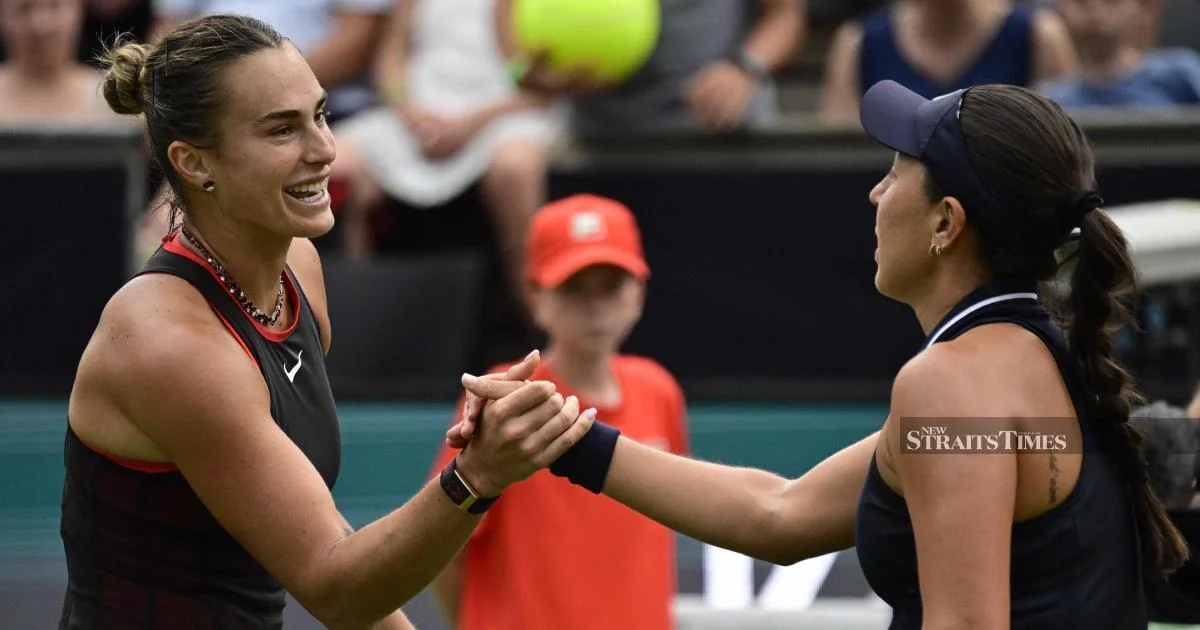
Jessica Pegula has punched her ticket to the Berlin WTA final following a commanding display against top-ranked Aryna Sabalenka, triumphing 6-2, 6-7 (4-7), 6-0 in the semifinals at the prestigious grass-court tournament. The American's resounding victory on the Berlin courts underscores her growing mastery on the surface and marks a significant moment in her career trajectory as she prepares for another shot at the title.
Pegula's performance revealed a marked tactical shift as the American controlled the early stages of the contest, claiming the opening set with considerable ease. Her aggressive baseline play and precise shot placement proved too much for Sabalenka to handle initially, allowing Pegula to establish dominant momentum early. The first set loss appeared to rattle the world number one, suggesting vulnerabilities in her usually formidable game that the American contestant was well-positioned to exploit.
The second set proved a more competitive affair, with both players elevating their intensity and demonstrating resilience under pressure. Sabalenka mounted a spirited fightback, forcing the set into a tiebreaker where the margin between victory and defeat narrowed considerably. Despite the tightly contested nature of the proceedings, Pegula ultimately proved the steadier competitor when the stakes were highest, securing the second set through the tiebreak and effectively deciding the match's trajectory.
With momentum firmly established, Pegula delivered a masterclass in the third set, overwhelming Sabalenka with a commanding 6-0 victory. The Ukrainian star, who has dominated much of the professional circuit this season from the top ranking, found no answers to Pegula's relentless attacking tennis. The comprehensive nature of this final set suggested that Pegula had discovered a winning formula that her opponent simply could not counter, highlighting the importance of tactical flexibility in elite competition.
This represents Pegula's second appearance in the Berlin final, demonstrating her pedigree on grass surfaces where consistency and technical precision prove paramount. The American has increasingly established herself as a genuine threat on the faster courts, where her aggressive approach and solid fundamentals align perfectly with the demands of the surface. Her path through the draw has showcased her potential to compete with the world's elite competitors when conditions favour her style of play.
The significance of this victory extends beyond the immediate tournament context. Pegula's ability to neutralise and ultimately overcome a player of Sabalenka's calibre represents a statement of intent within professional women's tennis. The world number one has been virtually imperious throughout the season, and securing such a comprehensive victory against her demonstrates that Pegula possesses the tools necessary to challenge the established hierarchy when everything aligns correctly.
For Malaysian and Southeast Asian tennis enthusiasts, Pegula's advancement highlights the depth of talent within the women's professional circuit and the unpredictable nature of competition at the highest levels. The grass-court season, while brief, consistently produces unexpected results as players adjust to the unique challenges the surface presents. Pegula's success serves as a reminder that rankings, while informative, do not always reflect how individual matchups unfold depending on playing style and surface compatibility.
Sabalenka's semifinal exit will likely prompt reflection within her camp regarding her grass-court approach. Despite her dominance across other surfaces, the Ukrainian's results on grass have occasionally proved inconsistent compared to her performance on hard courts and clay. The defeat to Pegula adds weight to discussions about whether even the world's top players require specialized preparation when transitioning to faster, lower-bounce surfaces where serve-and-volley tactics and first-strike tennis gain greater significance.
Pegula now awaits her opponent in the Berlin final, having demonstrated the form and confidence necessary to compete for the tournament title. The American's trajectory through the week has been marked by increasing confidence and tactical acumen, suggesting she arrives in the championship match as a genuine contender. Her capacity to perform when it matters most against the world's finest players strengthens her credentials as a major tournament threat moving forward.
The semifinal victory also carries implications for the broader women's tennis narrative as the season progresses toward the year's major tournaments. Pegula's demonstration that Sabalenka can be defeated comprehensively may encourage other competitors to reassess their approaches against the world number one. Furthermore, Pegula's continued development on grass courts represents valuable progress for an American contingent traditionally strong on this surface, carrying the torch of a storied tradition in American tennis excellence.

