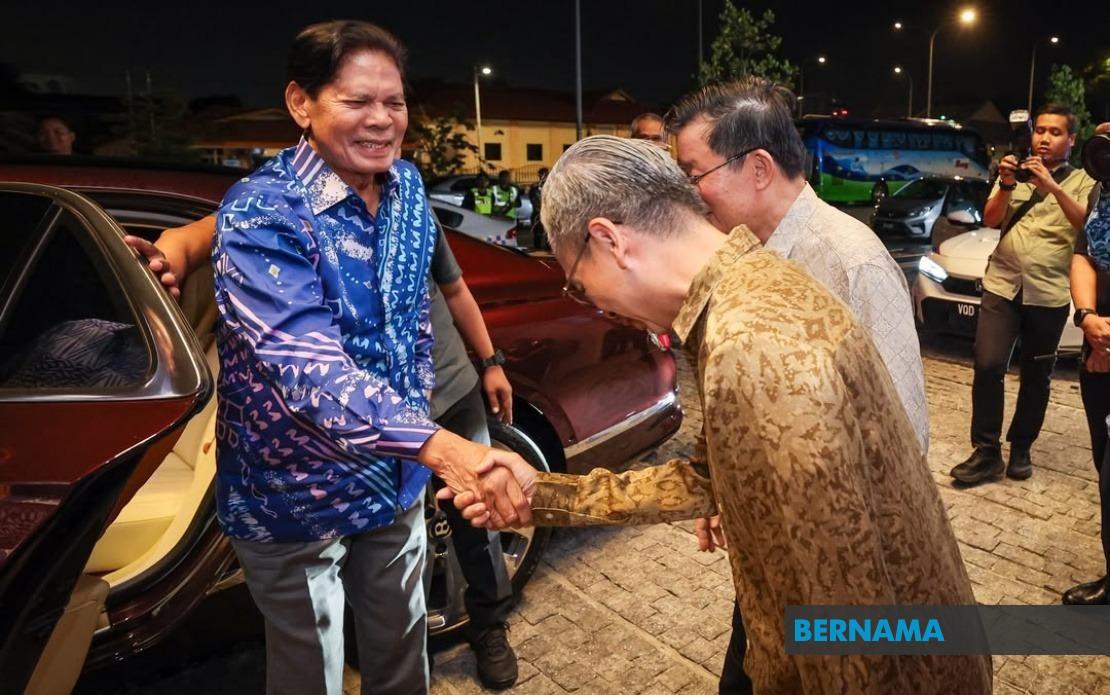
Penang Governor Tun Ramli Ngah Talib brought together nearly 350 media practitioners from Malaysia and the broader ASEAN region at a state government dinner on the evening of June 19, celebrating National Journalists' Day (HAWANA) 2026 and honouring the essential role of journalism in the nation's progress and democratic institutions.
The gathering in Butterworth drew an impressive array of senior figures spanning government, media leadership, and international delegations. Penang Chief Minister Chow Kon Yeow attended alongside Communications Minister Datuk Fahmi Fadzil, while representatives from the Communications Ministry and regional press agencies underscored the event's significance as a platform for strengthening media ties across Southeast Asia. The dinner preceded the main HAWANA 2026 conference, which will be officially opened by Prime Minister Datuk Seri Anwar Ibrahim on the following day at the PICCA Convention Centre @ Butterworth Arena.
The guest list reflected the breadth of Malaysia's media landscape. Senior editors and executives from the country's major news organisations attended, including Farrah Naz Karim from the New Straits Times Group, Chan Aun Kuang of Sin Chew Daily, Esther Ng Sek Yee representing Star Media Group, Datuk Sardahthisa James of Daily Express Sabah, and Zaiful Mohd Ariffin from Astro Awani. Leadership from Bernama, the Malaysian National News Agency, also participated prominently, with Datuk Seri Wong Chun Wai chairing proceedings and Datin Paduka Nur-ul Afida Kamaludin heading both the news agency and the HAWANA 2026 working committee.
International representation added a regional dimension that signals Malaysia's commitment to deepening media cooperation within ASEAN. Delegates from Timor-Leste, Indonesia, and other Asian nations attended, including Noemio Mateus Soares Falcao, president of Timor-Leste's national news agency TATOLI, and Asro Kamal Rokan, who leads the Indonesia chapter of ISWAMI (Ikatan Setiakawan Malaysia-Indonesia). This cross-border participation demonstrates how HAWANA has evolved beyond a domestic journalists' gathering into a meaningful regional forum for press communities to exchange perspectives and strengthen professional bonds.
The timing and scale of this celebration carry particular significance for Malaysia's media environment. With approximately 1,000 journalists from several ASEAN nations converging in Penang for the full conference, the event underscores journalism's prominence as a democratic institution worthy of high-level governmental recognition. The state government's investment in hosting the festivities, combined with Prime Minister Anwar Ibrahim's scheduled participation, signals that the administration views a healthy, professional press as instrumental to national development and regional stability.
HAWANA 2026 operates under the theme "Media Integrity Strengthens Credibility," a framework that addresses contemporary concerns about misinformation, journalistic standards, and public trust in news organisations. For Malaysian and Southeast Asian media practitioners, this thematic focus provides an opportunity to collectively discuss strategies for maintaining editorial independence, combating disinformation, and adapting to digital transformation while preserving professional ethics. The choice of theme suggests that organisers recognise the escalating challenges facing journalism in the region, from technological disruption to political pressures and audience fragmentation.
Beyond the formal dinner, the celebration extends into the broader community through the RIUH Pi HAWANA Carnival, a three-day event held at the same venue expected to draw approximately 30,000 visitors. This public-facing component democratises access to media and creative industries, moving beyond industry insiders to engage ordinary citizens. The carnival features over 24 local creative product brands, 20 food and beverage vendors, and interactive workshops allowing the public to explore creative endeavours. By combining cultural performances—including acts such as Bunkface, Masdo, and Sakura Band—with hands-on creative activities, the carnival positions media and journalism within a broader cultural narrative, helping to elevate their perceived value in society.
For Malaysia's media industry, particularly smaller outlets and independent journalists, HAWANA 2026 represents a validation of their professional standing. The inclusion of representatives from publications ranging from mainstream outlets like New Straits Times to regional newspapers like Daily Express Sabah signals an inclusive approach that acknowledges the diversity of Malaysia's press landscape. This recognition matters in an era when traditional media faces pressure from digital disruption and advertising revenue challenges.
The regional context also matters significantly. Southeast Asia faces ongoing challenges related to press freedom, with various countries experiencing restrictions on journalism and political pressures on media organisations. By hosting an international gathering that includes journalists from across ASEAN, Malaysia subtly positions itself as a relatively open society committed to supporting press freedom and professional journalism standards. The participation of Timor-Leste's media representatives and Indonesian press associations reflects nascent efforts to build solidarity among journalists across the region, potentially creating informal networks that can advocate collectively for press freedoms.
The celebration also comes at a moment when Malaysian media organisations are navigating substantial transitions. The industry has witnessed consolidations, digital transformations, and shifting audience preferences. A gathering of this scale provides opportunities for editors, reporters, and media executives to discuss common challenges, share best practices, and explore collaborative approaches to journalism in an increasingly complex information environment. Informal conversations among the 350 guests likely touched on practical issues ranging from newsroom economics to ethical frameworks for AI-assisted reporting.
Looking ahead, HAWANA 2026's emphasis on media integrity assumes added importance given global concerns about information warfare and electoral integrity. In a region where elections occur regularly and where different nations maintain varying degrees of democratic openness, shared commitment to professional journalism standards serves as a stabilising force. When journalists from multiple countries gather to affirm the principles of fact-checking, editorial independence, and audience service, they collectively reinforce norms that transcend national boundaries.
For Malaysian readers and media professionals, this celebration ultimately reflects an ecosystem that, despite challenges, retains institutional support for journalism at the highest governmental levels. The presence of the Prime Minister, Cabinet ministers, and business leaders at media-focused events signals that journalism is understood as essential infrastructure rather than a peripheral sector. As the full HAWANA 2026 conference unfolds, the insights and connections forged among Malaysian and ASEAN journalists will likely shape the industry's trajectory in addressing contemporary challenges including digital transformation, audience trust, and ethical standards in an increasingly polarised information landscape.

