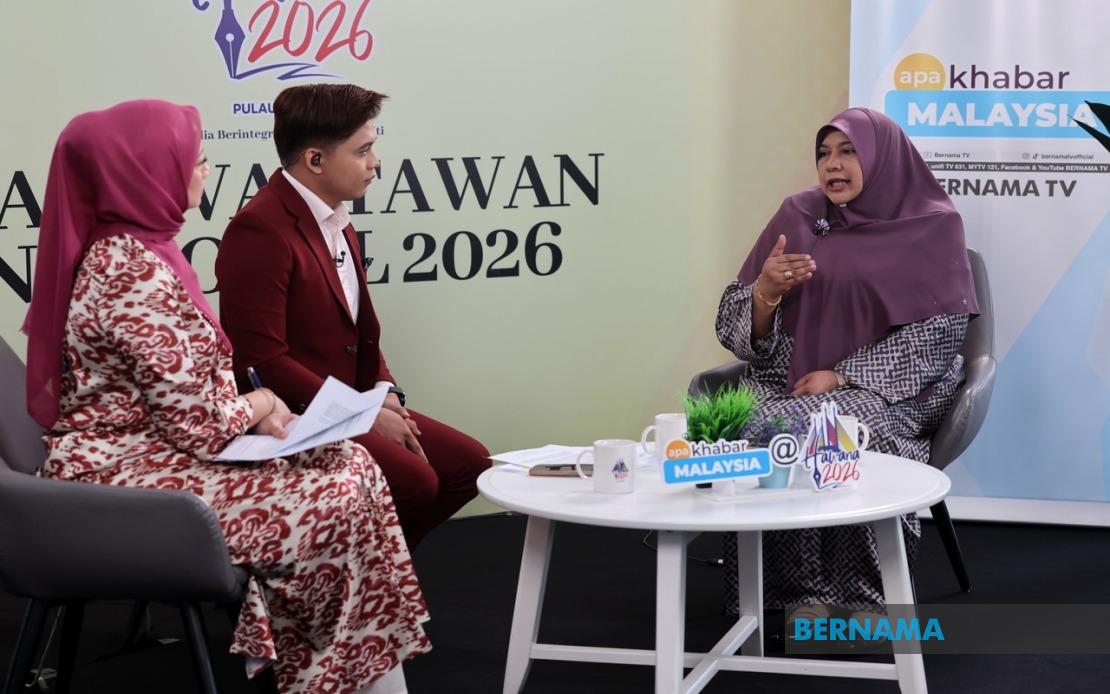
Penang becomes the epicentre of Malaysia's media industry tomorrow when the National Journalists' Day summit concludes a year-long celebration centred on the theme of media integrity and credibility. The event, drawing roughly 1,000 journalists and media practitioners from across the country and internationally, represents a significant moment for the profession to reaffirm its commitment to delivering truthful, authoritative information amid an increasingly complex information landscape. Prime Minister Datuk Seri Anwar Ibrahim will officiate the proceedings at 3 pm, lending presidential weight to an occasion that extends beyond ceremonial recognition to encompass broader questions about journalism's evolving role in Malaysian society.
The gathering reflects a deliberate strategy to move beyond the traditional confines of media recognition ceremonies. Rather than confining celebrations to newsrooms and broadcasting studios, organisers have intentionally positioned HAWANA 2026 as a community-facing initiative designed to demystify journalism and foster direct engagement between practitioners and the public. This approach acknowledges a fundamental challenge facing the profession: declining public trust in media institutions and the proliferation of misinformation. By opening the event to wider participation and positioning it within a carnival setting alongside cultural performances and interactive workshops, the organisers attempt to rebuild the social contract between journalists and their audiences.
Penang Chief Minister Chow Kon Yeow, Communications Minister Datuk Fahmi Fadzil and other senior government figures will join the summit, signalling state and federal support for the media profession at a time when journalism faces mounting pressures from technological disruption, economic uncertainty and polarised public discourse. The presence of Malaysian National News Agency chairman Datuk Seri Wong Chun Wai and CEO Datin Paduka Nur-ul Afida Kamaludin underscores Bernama's pivotal role in coordinating Malaysia's media landscape and setting professional standards. This alignment of government, regulatory bodies and industry leadership creates a unified front around the principle that journalism integrity forms the bedrock of informed democratic participation.
Datin Paduka Nur-ul Afida, steering the HAWANA 2026 organising committee, articulated a vision extending beyond symbolic appreciation of journalists. She emphasised the platform's utility in strengthening professional networks, fostering peer relationships and reconnecting the media community with its broader audience. This networking dimension carries particular significance for an industry experiencing fragmentation through digital transformation and economic pressures that have eroded traditional newsroom structures. By facilitating direct connections among practitioners, HAWANA 2026 addresses a professional isolation that has deepened as media outlets compete individually for survival in an increasingly atomised media ecosystem.
The event's broadcast strategy demonstrates awareness of contemporary media consumption patterns. Live coverage on Bernama TV, with simultaneous transmission by public broadcasters RTM and TV AlHijrah plus distribution through social media platforms, ensures nationwide reach and aligns with audience expectations for multi-platform accessibility. This integrated broadcast approach contrasts with the largely insular media gatherings of previous decades, instead positioning the summit as a public spectacle that invites scrutiny and participation from ordinary Malaysians. The decision to livestream proceedings acknowledges that legitimacy for the profession increasingly depends on demonstrating accountability and transparency to the broader public rather than confining conversations to professional circles.
The concurrent RIUH Pi HAWANA Carnival, featuring over 24 local creative brands and 20 food and beverage vendors alongside performances by established artists including Bunkface, Sakura Band and others, represents an unconventional strategy for media institution building. This cultural integration suggests recognition that journalism's standing in society cannot rest solely on professional credentials or ethical codes; it requires emotional resonance and cultural relevance. The three-day carnival format, hosted at the PICCA Convention Centre, transforms what might otherwise remain an insider professional gathering into a public festival that positions media practitioners within the broader creative ecosystem of contemporary Malaysia.
Prime Minister Anwar Ibrahim's role in distributing contributions from Tabung Kasih@HAWANA to veteran journalists in need carries symbolic weight beyond simple philanthropic gesture. This welfare component acknowledges a profession under genuine economic stress, where many longtime practitioners face uncertain retirement prospects and declining income. The symbolic transfer of resources from government and media institutions to retired journalists simultaneously affirms professional dignity while highlighting the economic vulnerabilities that have become endemic to the industry. Malaysian journalism has contracted substantially over the past two decades, with newsroom closures, redundancies and freelance precarity becoming routine. Formalised welfare mechanisms, however modest, represent recognition that professional commitment cannot be expected from practitioners unable to sustain basic economic security.
The awards component of tomorrow's summit recognises outstanding contributions to journalism and public thought development, honouring individuals who have advanced the profession's standards. These recognitions serve multiple functions: they establish exemplars for professional conduct, they provide career validation for dedicated practitioners operating within constrained economic circumstances, and they publicly celebrate the intellectual and civic contributions that journalism produces beyond its immediate commercial value. In a society where media outlets increasingly serve commercial or political interests rather than purely informational functions, such recognition of journalism done primarily for public service value becomes particularly important.
HAWANA's annual observation on May 29 commemorates the first publication of Utusan Melayu in 1939, anchoring contemporary celebrations in Malaysia's extended history of professional journalism. This historical grounding proves significant, as it positions modern journalism within a nationalist and developmental narrative extending across multiple generations. The continuity implied through annual commemoration suggests that despite contemporary challenges, Malaysian journalism maintains institutional memory and traditions of professional practice. However, the selection of 1939 as a founding moment also raises complex questions about journalism's relationship to colonial history and independence movements, subjects that modern celebrations tend to foreground more cautiously than the circumstances warrant.
The Ministry of Communications' designation of Bernama as implementing agency for HAWANA reinforces news agency authority within Malaysia's media governance structure. This arrangement places responsibility for professional standards, ethical conduct and industry coordination primarily with a government-aligned institution, a relationship that invites scrutiny regarding editorial independence and professional autonomy. While Bernama provides essential infrastructure and coordination, the arrangement highlights persistent questions about whether formal professional associations independent of government structures might better serve journalism's long-term institutional interests. Malaysian journalism, unlike some peer democracies, lacks a fully autonomous professional body capable of establishing and enforcing industry standards without government involvement.
The theme of media integrity strengthening credibility reflects recognition that public trust forms journalism's essential currency. In an environment saturated with content from countless sources, where distinguishing professional journalism from misinformation, propaganda and entertainment has become increasingly difficult for ordinary audiences, demonstrating commitment to integrity becomes a practical business imperative alongside an ethical obligation. HAWANA 2026 thus functions partly as professional reassurance to audiences, partly as internal commitment-building among practitioners, and partly as government endorsement of media institutions aligned with official development narratives. The convergence of these motivations creates a complex event that simultaneously celebrates professional values while advancing particular institutional interests.
For Malaysian readers and media professionals, HAWANA 2026 represents a inflection point where the industry collectively affirms its commitment to standards and professionalism despite surrounding pressures toward sensationalism, polarisation and economic decline. The summit's emphasis on strengthening networks and community engagement acknowledges that journalism's future depends not merely on formal ethical codes but on practical, everyday commitment from practitioners supported by sustainable institutions and engaged audiences. The gathering in Penang, with its provincial location rather than concentration in Kuala Lumpur, additionally signals an intention to distribute media industry conversations geographically and to acknowledge journalism's role beyond the capital's political corridors.

