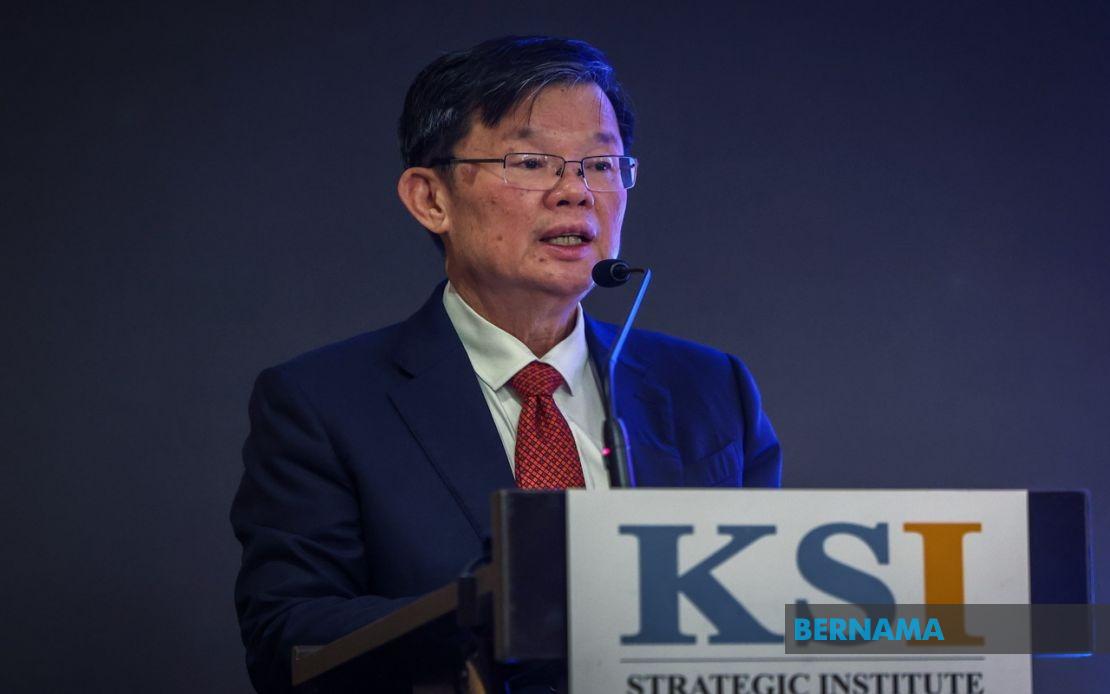
Penang's Pakatan Harapan leadership has reaffirmed its commitment to increasing women's representation at the ballot box, with Chief Minister Chow Kon Yeow stating that the coalition intends to nominate more female candidates when the state heads to polls. Speaking after opening the World Women Economic and Business Summit 2026 in George Town on June 15, Chow acknowledged that while the aspiration remains firm, translating that goal into practice continues to present logistical and social hurdles that cannot be easily dismissed.
The 30 per cent women's participation benchmark has been a longstanding objective for Malaysian political parties since its introduction in 2009, yet nearly 15 years on, the needle has barely moved. Nationally, women comprise only 13.5 per cent of Members of Parliament and 12 per cent of state assemblypersons, figures that underscore just how entrenched the gender gap remains across the political landscape. For a state like Penang, which positions itself as progressive and forward-thinking, this disparity carries particular weight and raises questions about whether rhetorical commitment translates into substantive systemic change.
Chow's remarks highlighted a distinction that often gets overlooked in discussions about women's political representation: there is a crucial difference between parties' willingness to nominate female candidates and women's willingness to stand for election. While Penang PH frames itself as proactive on the issue, the party continues to encounter resistance during candidate selection processes, not from party machinery refusing to consider women, but from women themselves declining to put themselves forward. This phenomenon reflects broader societal pressures and the genuine challenges that prospective female candidates face when contemplating political careers.
The barriers confronting women considering political participation extend well beyond simple lack of opportunity. Potential female candidates often weigh the personal costs of public scrutiny, the demands on family time, and the particular intensity of attacks and criticism that women in politics frequently endure compared to their male counterparts. In Malaysia's context, where traditional gender roles remain influential across much of society, these considerations carry additional weight. Chow's frank acknowledgement that there must be "enough candidates to choose from" before targets can be meaningfully pursued suggests a recognition that supply-side constraints are as real as any institutional or policy barriers.
Yet the Penang Chief Minister also drew attention to women's substantial achievements in sectors beyond politics, noting progress in education, business, engineering, and public service. This observation carries important implications: the issue is not a lack of female talent or capability, but rather specific deterrents associated with the political arena itself. Understanding why accomplished women in other fields hesitate to enter politics becomes crucial for parties genuinely seeking to broaden the talent pool from which candidates emerge.
During his speech at the World Women Economic and Business Summit, Chow articulated a more expansive agenda beyond simply increasing candidate numbers. He called on political parties to institutionalise the 30 per cent target within their formal candidate selection frameworks, suggesting that voluntary commitments have proven insufficient. He further recommended that parties guarantee balanced representation of women on decision-making committees and establish stronger mentoring and resource-access pathways for emerging female leaders. These proposals signal recognition that tackling the representation gap requires structural reform rather than ad hoc responses.
The gap between Malaysia's stated 30 per cent target and actual representation of 12-13.5 per cent cannot be attributed to a single cause. It reflects a combination of institutional inertia, entrenched incumbent networks, societal expectations about women's roles, and genuine recruitment challenges. For Penang specifically, which has administered relatively progressive policies on various fronts, the underperformance on women's political participation represents an unfinished agenda that carries both symbolic and practical significance.
The timing of these remarks at an economic and business summit is telling. Chow implicitly connected women's advancement across economic sectors with their advancement in political decision-making, suggesting that true equality requires presence across all leadership domains simultaneously. Women's progress in business, engineering, and public administration loses some meaning if they remain marginalised in electoral politics, where the ultimate power to shape policy and allocate resources resides.
Looking toward the next state election, Penang PH faces a test of whether it can translate aspiration into action. The party's willingness to field more women candidates will depend partly on its success in addressing the underlying factors that currently discourage women from standing. This might include developing robust support systems for female candidates during campaigns, establishing zero-tolerance policies for gender-based attacks and harassment, and creating career pathways that make political participation seem less isolating or personally costly.
The broader Malaysian political landscape also watches Penang's performance on this metric. As a state governed by Pakatan Harapan, which emerged partly on a reform platform, Penang's progress on women's representation carries symbolic weight across the coalition. Success or failure in meeting representation targets could influence broader discussions about whether Malaysia's political establishment is genuinely committed to gender equity or merely performing commitment.
Chow's candid discussion of the challenges involved represents a step toward more honest engagement with the problem. Rather than simply promising higher numbers of women candidates, acknowledging the genuine difficulties involved—and the agency of women themselves in deciding whether to run—reflects a more sophisticated understanding of what systemic change requires. The task ahead for Penang PH, and Malaysian political parties generally, involves not just opening doors but fundamentally reshaping the environment so that stepping through those doors becomes a more attractive proposition for qualified, capable women.