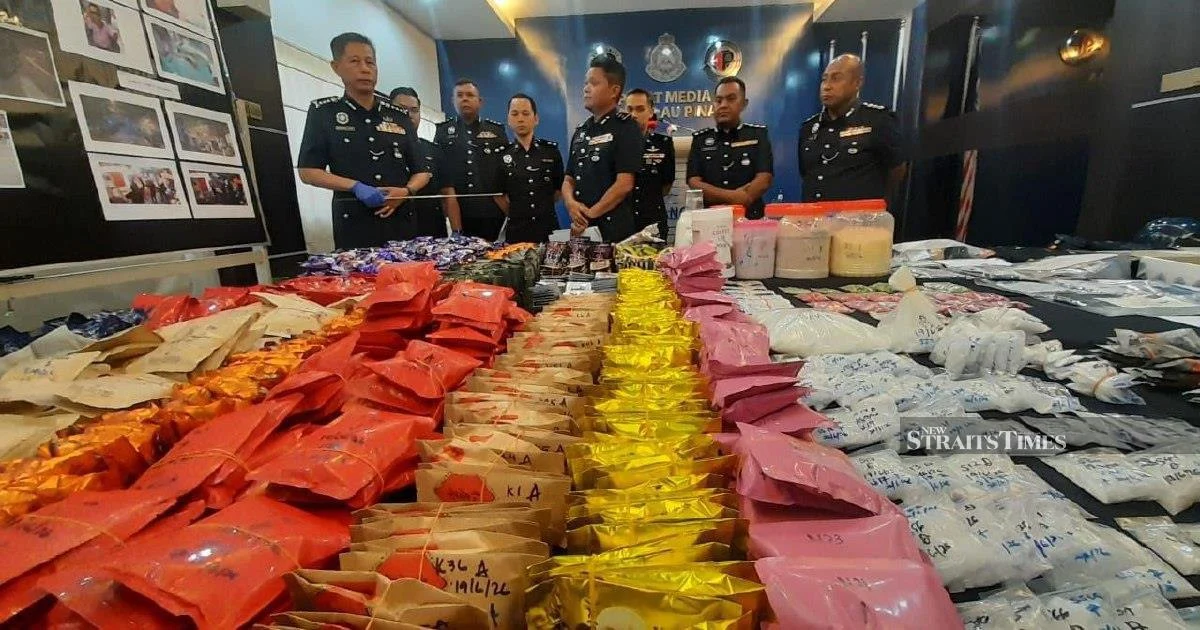
Police in Penang have moved against a substantial narcotics operation after uncovering evidence of drug processing and distribution activities being conducted within a residential condominium in the Butterworth area. The enforcement action resulted in the apprehension of two individuals—a romantic couple—and the confiscation of controlled substances valued at RM9.7 million, marking a significant victory for authorities in their ongoing campaign against organised drug trafficking in the northern region.
The scale of the operation reflects the sophisticated nature of contemporary drug distribution networks in Malaysia. Rather than relying on street-level dealing, the suspects had established what appears to be a wholesale processing facility within an urban residential setting, exploiting the apparent normalcy of condominium living to shield their activities from detection. This approach, while not uncommon among trafficking organisations, demonstrates how criminal syndicates adapt their methods to evade law enforcement oversight.
For Penang residents and the broader Malaysian public, the seizure underscores the persistence of large-scale drug manufacturing within domestic spaces. The location in Butterworth, an industrial and residential hub in Seberang Perai, suggests that traffickers are willing to operate in densely populated areas where they believe anonymity provides protection. The condo setting particularly signals a concerning trend: the professionalisation of drug operations that move beyond street markets into middle-class housing complexes.
The arrest of both individuals jointly suggests they were integral partners in the enterprise—a pattern increasingly documented in domestic drug trafficking cases where romantic relationships coincide with criminal collaboration. This development carries implications for law enforcement strategy, particularly regarding domestic intelligence gathering and the monitoring of suspicious purchasing patterns related to drug manufacturing precursors.
The monetary value attached to the seized narcotics—RM9.7 million—reflects either the quantity involved or the particular type of controlled substances discovered. In Malaysia's context, such valuations typically encompass methamphetamine, heroin, or designer drugs like MDMA, all of which command substantial street prices and represent high-priority targets for federal and state narcotics divisions. The scale suggests this was not merely a local distribution point but potentially a regional hub supplying multiple markets across the northern corridor.
For Southeast Asian context, Penang's geographic position as a major port and international crossroads makes it a natural target for traffickers seeking to process and distribute drugs throughout the region and beyond. The state's maritime access, coupled with its industrial zones and relatively porous enforcement challenges across border areas, creates vulnerabilities that criminal organisations routinely exploit. This particular bust therefore reflects broader regional trafficking patterns centring on northern Malaysian territories.
The method of interdiction—direct police action against a fixed location rather than street enforcement—indicates that authorities likely developed sufficient intelligence to mount a coordinated operation. This suggests either tip-offs from community members, financial tracking, or surveillance of suspicious activity. The success of such targeted operations depends heavily on intelligence gathering capabilities and inter-agency coordination, elements that Malaysian law enforcement has gradually strengthened over recent years.
The implications for condo management and residential security emerge as a secondary consideration. Condominium operators and management committees may face increased scrutiny regarding their tenant vetting procedures and resident monitoring systems. While privacy concerns remain paramount, the discovery of large-scale criminal activity within residential properties raises questions about the balance between security and civil liberties in shared housing arrangements.
From a demand-reduction perspective, the continued discovery of substantial drug manufacturing and distribution operations indicates persistent market demand within Malaysia and the region. Despite decades of enforcement effort, the economic incentives driving individuals like this couple to engage in trafficking remain sufficiently attractive to sustain criminal enterprises. This reality underscores why public health approaches to drug addiction, alongside enforcement, constitute essential components of comprehensive narcotics policy.
The timing and nature of this bust also reflects resource allocation within Penang's police force, which faces competing priorities including conventional crime, traffic enforcement, and community policing demands. The dedication of significant investigative effort to a single condominium-based operation suggests either specific intelligence regarding the scope of the operation or a strategic decision to target mid-level trafficking nodes as a means of disrupting broader supply networks.
Moving forward, the case will likely generate prosecutorial activity within the Penang judiciary system. Drug trafficking charges in Malaysia carry severe penalties, including potential capital punishment depending on quantity thresholds and compound circumstances. The case may also trigger subsequent investigations into supplier networks and downstream distribution channels, as authorities use arrested individuals to map broader criminal networks operating across northern Malaysia and potentially into neighbouring Perlis and Kedah.
The effectiveness of this operation ultimately depends on how thoroughly authorities pursue the investigative leads it generates. Single-point seizures, while newsworthy and strategically valuable, represent temporary disruptions unless they catalyse broader dismantling of the networks they serve. For Penang residents and the Malaysian public, the message remains clear: despite periodic high-profile busts, the narcotics challenge persists, requiring sustained enforcement commitment and complementary public health interventions to address underlying demand drivers.

