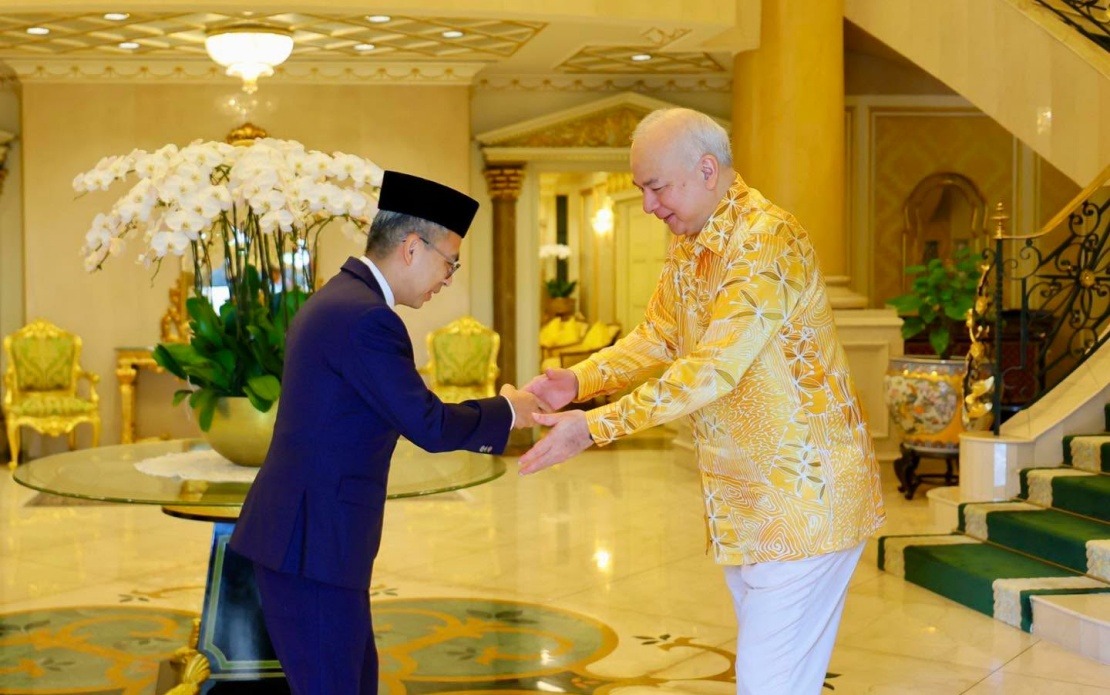
The Sultan of Perak, Sultan Nazrin Shah, has been brought up to speed on Malaysia's strategic push to develop and strengthen communication infrastructure across the state, with particular focus on widening service coverage to underserved areas. Communications Minister Datuk Fahmi Fadzil conveyed the government's agenda during a recent royal audience, underscoring the administration's commitment to bridging the digital divide within Perak's diverse communities.
Infrastructure development remains a cornerstone of Malaysia's broader economic ambitions, particularly as the nation seeks to position itself as a regional digital hub. Perak, as one of the nation's largest states by area, faces unique challenges in delivering equitable connectivity to its sprawling populations across both urban and rural zones. The minister's decision to personally brief the state's ruler reflects the significance accorded to this initiative at the highest levels of government.
During the audience, the discussion extended beyond mere infrastructure deployment to encompass the critical dimension of online safety—a concern increasingly central to digital policy across Southeast Asia. As communities become more reliant on internet connectivity for commerce, education, and social interaction, safeguarding citizens from cyber threats and malicious online content has emerged as a complementary priority to expansion efforts. This dual focus suggests a maturing approach to digital development that recognises infrastructure alone is insufficient without corresponding protective mechanisms.
Fahmi's engagement with the Perak ruler also signals the government's intent to maintain institutional coordination on connectivity matters at state level. Royal houses in Malaysia continue to wield considerable influence over public sentiment and policy direction within their respective domains, making such briefings strategic communications exercises that lend legitimacy and visibility to national digital initiatives. The audience format itself—a formal, traditional mechanism—demonstrates how modern policy priorities are being integrated into established governance frameworks.
Perak's geographic and demographic characteristics create specific infrastructure challenges distinct from more densely populated federal territories or selangor. The state encompasses significant portions of peninsula Malaysia's interior, with communities distributed across mining regions, agricultural areas, and coastal zones. Tailoring communication infrastructure expansion to serve this heterogeneous landscape requires sophisticated planning that accounts for terrain, population density variations, and existing network architecture. Government efforts to address these variables reflect a recognition that one-size-fits-all solutions prove ineffective in Malaysia's varied topography.
The emphasis on service coverage expansion carries economic implications for Perak's development trajectory. Reliable, high-speed communication infrastructure functions as a prerequisite for attracting investment, enabling remote work opportunities, and facilitating e-commerce participation by small and medium enterprises scattered throughout the state. Rural connectivity initiatives undertaken in Perak thus contribute to broader inclusive growth objectives that aim to reduce economic disparities between metropolitan and peripheral regions.
Online safety considerations mentioned during the briefing reflect heightened awareness of digital security challenges confronting Malaysia and the broader region. As internet penetration deepens, exposure to cybercrime, data theft, and harmful online content intensifies, particularly among vulnerable populations including children and the elderly. Government efforts to strengthen both infrastructure and the protective ecosystem around digital services represent a comprehensive approach to ensuring that connectivity gains translate into genuine societal benefit rather than inadvertently creating new vulnerability channels.
The minister's concluding remarks wishing good health and blessings upon the Sultan and the Perak Royal Family adhere to diplomatic protocol while reinforcing the collaborative spirit characterising the engagement. Such formalities, while sometimes dismissed as ceremonial, serve important functions in Malaysian governance by demonstrating respect for constitutional arrangements and maintaining harmonious centre-state relations that facilitate policy implementation.
Moving forward, the outcomes of infrastructure investments discussed during this audience will merit monitoring. Whether deployment timelines meet targets, how equitably coverage reaches different demographic groups, and what measurable improvements emerge in service quality across Perak will indicate the genuine impact of these initiatives. Regional observers, particularly those tracking digital development patterns across Southeast Asia, will be attentive to how Malaysia executes its infrastructure ambitions in geographically challenging states like Perak.

