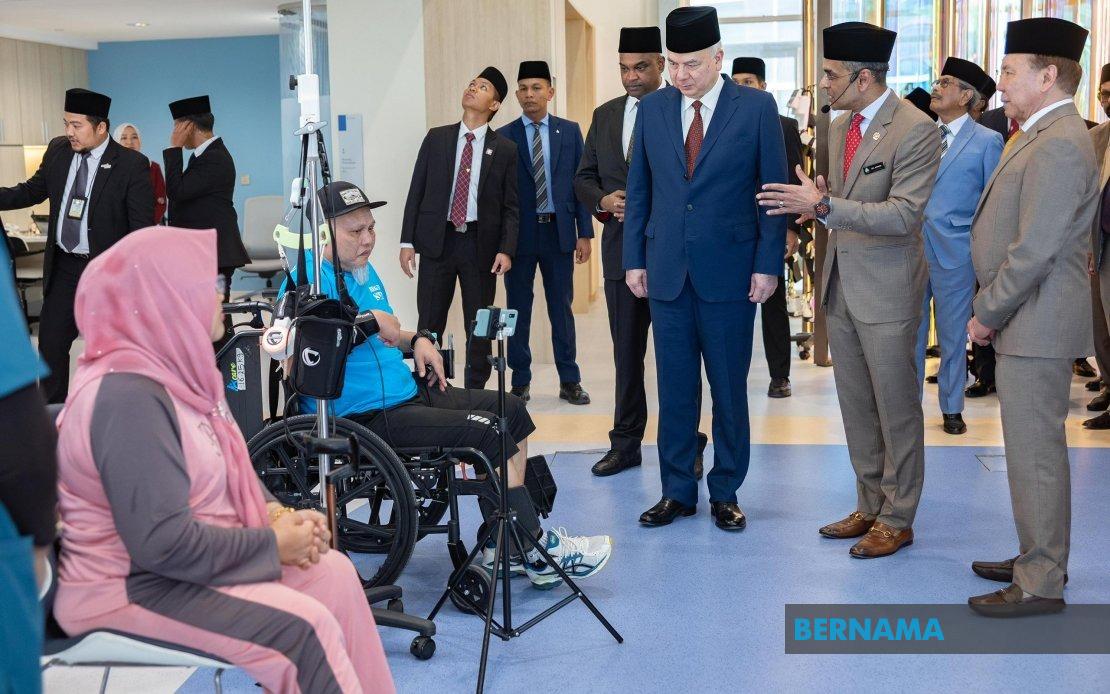
The Sultan of Perak, Sultan Nazrin Shah, has inaugurated the Social Security Organisation's (PERKESO) cutting-edge Neuro-Robotics and Cybernetics Rehabilitation Centre in Meru Raya, underscoring the nation's commitment to modernising healthcare and rehabilitation services for injured workers. The facility, which will bear the Sultan's name as "Pusat Rehabilitasi Perkeso Sultan Nazrin Shah", represents a significant step forward in how Malaysia approaches the treatment and reintegration of individuals recovering from work-related injuries and neurological conditions. The opening ceremony included several high-ranking officials, among them Raja Muda Perak Raja Jaafar Raja Muda Musa, Raja Di Hilir Perak Raja Iskandar Dzulkarnain Sultan Idris Shah, Menteri Besar Datuk Saarani Mohamad, and Minister of Human Resources Datuk Seri R. Ramanan.
In his address, Sultan Nazrin emphasised that the centre's true value extends far beyond its technological capabilities, resting instead on the expertise and compassion of the medical and therapeutic professionals working within its walls. The facility brings together a multidisciplinary team comprising specialists in medicine and healthcare, assistive technology, physiotherapy, occupational and vocational therapy, social guidance, and psychological support. This integrated approach reflects a comprehensive understanding that successful rehabilitation requires not merely medical intervention but also the human touch and sustained care that holistically address the physical, mental, and emotional needs of patients rebuilding their lives.
The Sultan's remarks highlighted a fundamental philosophical shift in how Malaysia conceptualises rehabilitation services. Rather than viewing such centres as purely clinical operations, Sultan Nazrin positioned the facility as a symbol of a society that values every individual and recognises the inherent dignity of workers facing adversity. He articulated the vision of rehabilitation not as a clinical endpoint but as a pathway to renewed independence and self-reliance, challenging prevailing attitudes that sometimes marginalise those with disabilities or work-related injuries. The centre's architectural design, inspired by the traditional art of gold-thread embossing, visually embodies this philosophical approach, connecting modern technological advancement with Malaysia's cultural heritage.
The project's genesis traces back to 2018, when Ipoh Barat Member of Parliament M. Kulasegaran initiated the concept during his tenure as Minister of Human Resources, recognising an urgent need to upgrade Malaysia's rehabilitation infrastructure. The intervening years have seen the transformation of that vision into a tangible facility capable of serving stroke survivors, workers recovering from neurological injuries, individuals dealing with traumatic brain injuries, and countless others seeking to reclaim their physical and cognitive capabilities. By providing advanced therapeutic technologies and expert clinical care, the centre aims to restore not only physical function but also the psychological confidence necessary for individuals to envision productive futures beyond their injuries.
Sultan Nazrin drew specific attention to the potential life-changing impact for different categories of patients. For stroke survivors, the centre represents the possibility of recovering movement and motor function. For workers suffering neurological injuries, it offers opportunities to rebuild both physical and mental strength through targeted interventions. For those affected by traumatic brain injury, the comprehensive support available addresses the complex challenges of restoring memory, speech capabilities, and self-confidence that often characterise recovery from such injuries. Families of patients equally benefit, as the centre provides tangible evidence that recovery remains achievable, transforming what might otherwise feel like an irreversible situation into one offering genuine hope and realistic pathways forward.
Crucially, the Sultan addressed society's broader responsibility to eliminate prejudice against persons with disabilities and to actively support their reintegration into the workforce. He highlighted PERKESO's existing partnership with 7-Eleven, which provides post-rehabilitation workplace training and creates genuine employment pathways for programme graduates. This model demonstrates how rehabilitation success depends not solely on medical treatment but equally on subsequent opportunities to apply recovered skills in gainful employment. Without such opportunities, even successful clinical rehabilitation risks leaving individuals unable to achieve true independence and economic self-sufficiency.
The Sultan's call for expanded private sector engagement represents a significant challenge to Malaysia's business community. He urged companies to embrace corporate social responsibility initiatives that include vocational training and employment opportunities for rehabilitated workers, transforming what might be viewed as charitable activity into a strategic component of inclusive economic development. This approach aligns with broader regional trends recognising that inclusive employment practices benefit both individuals and organisations through enhanced workforce diversity, improved employee retention, and demonstrated commitment to community welfare.
Sultan Nazrin articulated a vision of national progress that transcends conventional economic metrics. He argued that true development encompasses a nation's capacity to implement social programmes preserving human dignity, protecting vulnerable populations, and offering meaningful second chances to those tested by illness, injury, or disability. This perspective challenges Malaysia and other Southeast Asian nations to recalibrate how they measure societal advancement, incorporating indicators related to social inclusion, rehabilitation success rates, and employment outcomes for persons with disabilities alongside traditional gross domestic product and infrastructure development measures.
The facility's establishment carries particular significance for Malaysia's workforce, which faces substantial occupational risks across manufacturing, construction, agriculture, and transportation sectors. By investing in world-class rehabilitation infrastructure, Malaysia positions itself as a regional leader in worker protection and occupational health services, potentially influencing broader ASEAN standards and practices. The centre's success will likely generate valuable data and methodologies that could inform rehabilitation approaches throughout the region, where many countries grapple with similar challenges in supporting injured workers' recovery and reintegration.
Looking forward, the centre's impact will depend substantially on its operational efficiency, the sustained commitment of healthcare professionals, and crucially, the willingness of employers to hire rehabilitated workers. Sultan Nazrin's emphasis on corporate partnership suggests recognition that rehabilitation's ultimate success metric is not merely clinical recovery but successful return to productive employment and community participation. As the centre begins operations, its effectiveness in achieving these outcomes will demonstrate whether Malaysia has genuinely embraced a comprehensive, inclusive approach to worker rehabilitation or whether systemic barriers to employment remain.