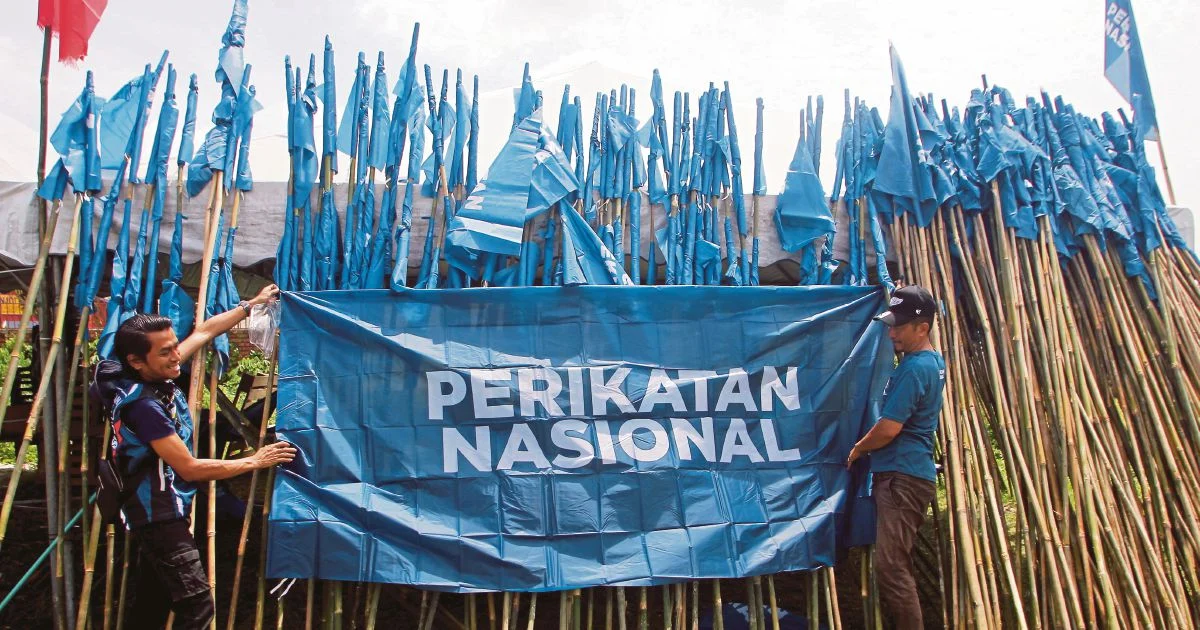
Perikatan Nasional's leadership hierarchy is preparing for a critical gathering scheduled for June 22, with the Supreme Council agenda focused on unresolved tensions that have complicated the coalition's coordination mechanisms ahead of upcoming electoral cycles. The meeting signals an attempt by the broader party coalition to establish unified protocols on sensitive matters that have historically strained relationships between its constituent members.
The use of Perikatan Nasional's logo has emerged as a contested issue within the coalition, reflecting deeper disagreements about brand identity and representation across the various political formations that comprise the alliance. Member parties have demonstrated varying interests in deploying the central logo for their respective campaigns, creating confusion among voters and undermining the coalition's intended unified messaging strategy. This logistical matter carries symbolic weight, as logo prominence directly affects public perception of which party commands the coalition narrative and therefore wields greater influence within the broader movement.
Candidacy decisions represent the second major item on the Supreme Council's June 22 agenda, revealing friction over resource allocation and seat distribution. Coalition partners have traditionally competed for nomination rights in contested parliamentary and state constituencies, and the endorsement framework directly determines which party members receive institutional backing and campaign resources. These endorsement decisions carry substantial implications for electoral performance, as candidates lacking coalition support may face competing campaigns from within the alliance itself, fragmenting anti-government votes or splitting support among competing factions.
For Malaysian observers, the Perikatan Nasional coalition's internal management challenges underscore the operational difficulties facing any broad-based political alliance attempting to coordinate across multiple party structures. Unlike monolithic political organisations, multi-party coalitions require continuous negotiation and compromise, with no single authority possessing unilateral decision-making power. The June 22 meeting represents an effort to impose order on an inherently fragmented system, though success remains uncertain given the tracked history of disagreements between coalition partners.
The timing of this Supreme Council convocation warrants attention, as it precedes election cycles where coalition cohesion directly translates into electoral outcomes. Parties and individual politicians within Perikatan Nasional face incentives to prioritize personal advancement, creating perpetual tension between collective coalition interests and individual ambitions. The Supreme Council must therefore navigate difficult political terrain, establishing frameworks that accommodate diverse member interests while maintaining sufficient unity to present a credible alternative to incumbent administrations.
Regional implications extend beyond Malaysia's borders, as the stability of opposition coalitions influences the broader Southeast Asian political landscape. International observers closely monitor whether multi-party alliances can successfully govern collectively, information directly relevant to countries throughout the region where coalition politics dominate electoral competition. Perikatan Nasional's demonstrated ability or inability to resolve internal coordination problems offers instructive lessons for political formations across Thailand, Indonesia, the Philippines, and neighbouring democracies.
The logo dispute particularly illustrates how constitutional matters can create unexpected complications for coalition operations. While seemingly administrative in character, logo utilisation decisions fundamentally address questions of dominance and equality within the alliance structure. Member parties scrutinise such allocation decisions for signals about their respective positions within the hierarchy, interpreting even technical choices as reflections of broader political relationships and future resource distribution.
Candidate endorsements similarly extend beyond electoral mechanics into deeper questions about coalition governance philosophy. Should the Supreme Council impose endorsement decisions upon member parties, or should individual parties retain autonomy over nomination procedures? These competing visions of coalition structure pit centralised coordination against organisational autonomy, creating persistent procedural friction that the June 22 meeting will attempt to resolve through negotiated compromise rather than authoritative diktat.
Looking forward, the Supreme Council's effectiveness in resolving these outstanding issues will significantly influence Perikatan Nasional's electoral prospects. Coalition partners require clarity regarding logo deployment and candidate endorsement procedures to plan campaign strategies confidently and allocate limited campaign resources rationally. Ambiguity surrounding these foundational matters creates planning difficulties and generates mutual recriminations when coalition coordination breaks down during critical campaign periods.
The meeting also reflects broader Malaysian political dynamics characterised by fluid alignments and constantly renegotiated partnerships. Unlike Western democracies where coalition membership remains relatively stable between elections, Malaysian politics features frequent realignments driven by factional disputes, personality conflicts, and strategic calculations about electoral viability. Perikatan Nasional's June 22 gathering must therefore address not only immediate procedural questions but also the underlying political relationships that determine whether member parties continue viewing coalition participation as strategically advantageous.
For Malaysian voters, Perikatan Nasional's demonstrated capacity to manage internal divisions meaningfully affects their electoral choices. Coalitions presenting internal discord signal weak governance potential, while organisations demonstrating effective coordination mechanisms project competence to potential supporters. The Supreme Council's June 22 discussions will therefore generate signals far beyond the political elite, influencing public perception of coalition viability and contributing to broader electoral calculations across the Malaysian electorate.

