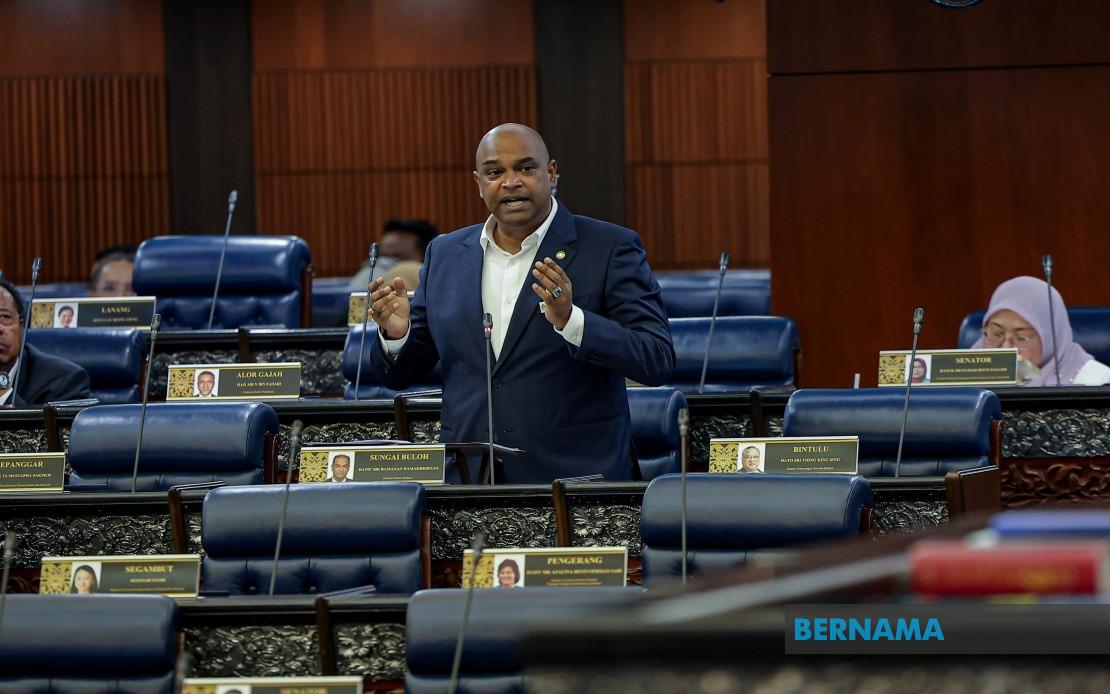
The Social Security Organisation (PERKESO) has demonstrated substantial improvement in its service delivery mechanisms, achieving a processing compliance rate exceeding 96 per cent throughout the previous financial year. Human Resources Minister Datuk Seri R. Ramanan revealed this milestone to Parliament on June 24, underscoring the organisation's commitment to meeting contributor expectations across multiple benefit schemes. The performance data suggests that PERKESO's operational framework is delivering results that compare favourably with international standards for social security administration, a critical indicator for a developing nation managing the welfare needs of millions of working Malaysians.
Central to this achievement is the implementation of revised and more stringent Customer Charter standards introduced last year, which now govern the processing timelines across PERKESO's three major schemes: LINDUNG Pekerja, LINDUNG Kendiri, and LINDUNG Kasih. These standardised protocols represent a departure from previous ad-hoc arrangements, establishing clear and predictable processing windows that contributors can depend upon when submitting claims. The emphasis on complete documentation submission as a trigger for processing cycles has created transparency in administrative processes, allowing workers to understand exactly what constitutes a valid claim and when they can expect resolution.
The minister outlined specific processing timeframes that reflect PERKESO's differentiated approach to various benefit categories. Funeral benefit and temporary disablement claims now operate on a two-day processing window, recognising the immediate financial pressure families face during bereavement or temporary income loss. More complex claims involving permanent disability assessments, invalidity determinations, survivor entitlements, and dependent benefits proceed on a three-day cycle, acknowledging the more intricate evaluation these categories demand. This tiered system reflects sophisticated understanding of claimant priorities whilst maintaining administrative feasibility.
For the newer LINDUNG Kerjaya scheme, which targets a distinct worker demographic, PERKESO has established even more aggressive timelines, mandating two-day processing for all benefits once complete applications arrive. The organisation has achieved an exceptional 99.68 per cent compliance rate for this scheme specifically, suggesting that newer systems may benefit from refined processes developed through experience with earlier programmes. This differential performance indicates that PERKESO has learned from implementation challenges and applied those lessons to newer frameworks, a positive indicator of institutional learning capacity.
Digitalisation has emerged as a critical enabler of these performance improvements. The LINDUNG Faedah PERKESO portal represents the public-facing component of PERKESO's digital transformation, providing contributors direct access to application submission and status tracking capabilities. Behind the scenes, the 1Best system overhauls internal benefit processing infrastructure, streamlining workflows that previously required manual handoffs between departments. The complementary PRIHATIN application extends digital engagement further, democratising access to information about PERKESO services across a broader contributor base, particularly benefiting workers with limited time or mobility constraints.
Beyond portal automation, PERKESO has invested in direct human support mechanisms that acknowledge technology's limitations. The establishment of the Prihatin Squad demonstrates institutional recognition that vulnerable workers and beneficiaries often require personalised guidance navigating social security bureaucracy. These advisory units provide on-ground assistance that digital systems cannot replicate, ensuring that marginalised groups—including informal sector workers and dependants of deceased contributors—receive adequate support throughout claims procedures. This hybrid approach combining technological efficiency with human-centred service represents contemporary best practice in social security administration.
Accident cases present particular urgency given their impact on household financial stability and medical treatment access. PERKESO has strengthened coordination mechanisms through the INSPIRE System, which creates direct electronic linkages between hospitals and the organisation's assessment teams. This infrastructure eliminates traditional delays caused by paper-based information transfers, enabling medical facilities to flag eligible cases immediately. The minister confirmed that emergency accident scenarios can now navigate from incident report to initial approval within 24 hours, a dramatic reduction from historical timelines that often stretched processing across weeks.
The organisation has adopted a multi-layered fraud prevention architecture that balances security with service delivery speed. Artificial intelligence tools conduct preliminary screening of submissions, flagging applications exhibiting statistical anomalies or documentation inconsistencies that warrant deeper investigation. However, the minister emphasised that algorithmic decisions never constitute final determinations—human verification teams independently review AI-flagged cases and conduct spot checks across randomly selected claims from all categories. This dual-verification approach mitigates risks of algorithmic bias whilst leveraging machine learning's pattern recognition capabilities, providing reasonable assurance that approved benefits genuinely reflect legitimate entitlements.
For Malaysian workers and dependants, these improvements carry tangible implications. The standardised processing windows reduce uncertainty about claim timelines, facilitating household financial planning during periods of income disruption. Workers in formal employment benefit from employer-facilitated submissions, whilst self-employed contributors utilising LINDUNG Kendiri gain access to simplified procedures previously unavailable to this demographic. The expanded Prihatin Squad support particularly assists informal sector workers unfamiliar with formal bureaucratic procedures, potentially improving coverage rates amongst populations historically underrepresented in social security schemes.
The performance data also carries significance for regional assessment of Malaysia's social protection infrastructure. Many Southeast Asian nations are simultaneously expanding coverage and modernising administrative systems, often struggling with legacy processes that create claim backlogs and contributor dissatisfaction. PERKESO's documented achievements—particularly the 99.68 per cent compliance for LINDUNG Kerjaya and the 24-hour emergency processing—suggest that middle-income emerging economies can implement efficient social security administration without prohibitive technological investment. The organisation's willingness to maintain human verification as a counterweight to AI automation also signals confidence in staff capabilities and institutional commitment to accuracy over speed optimisation.
Looking forward, PERKESO's trajectory suggests sustained improvement remains achievable through incremental technological refinement and administrative discipline. The gap between LINDUNG Kerjaya performance (99.68 per cent) and the broader average (96 per cent) indicates that legacy schemes accommodating older worker cohorts may face lingering bottlenecks. Targeted process reviews of these programmes, informed by LINDUNG Kerjaya implementation experience, could drive organisation-wide compliance beyond current thresholds. Simultaneously, expansion of direct hospital-to-PERKESO linkages beyond accident cases into other urgent scenarios could further accelerate payments in circumstances where medical intervention timing directly impacts employment outcomes and household welfare.

