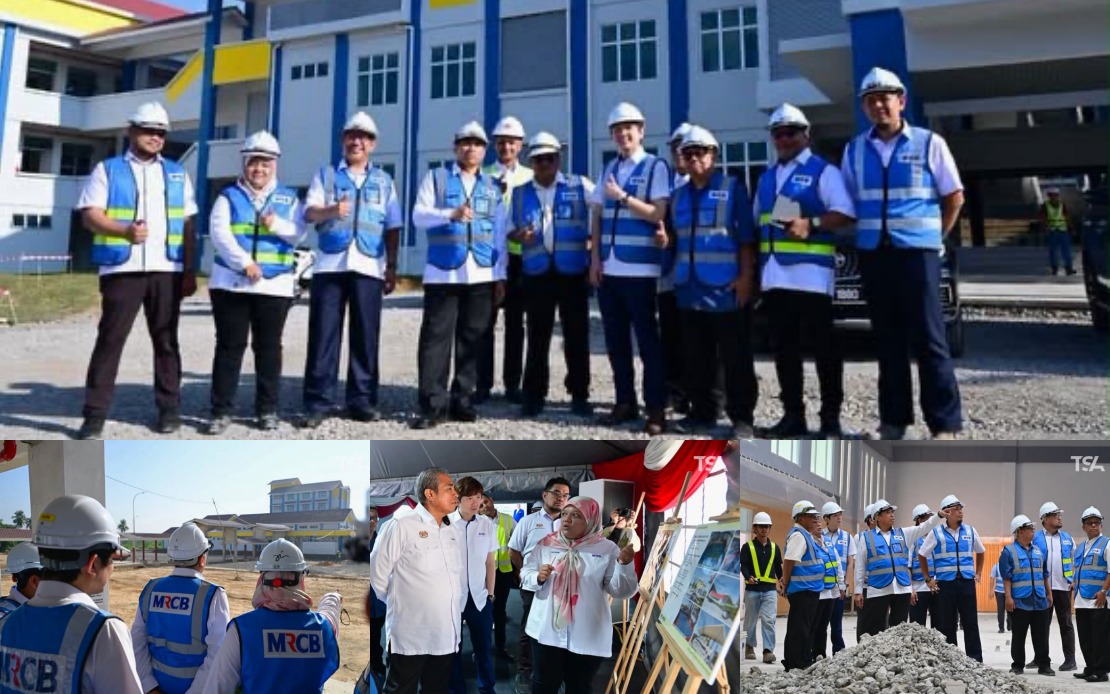
The Perlis Malaysia Sports School project in Bukit Chabang, Padang Besar, is finally moving toward completion after more than thirteen years of inactivity. Chief Secretary to the Government Tan Sri Shamsul Azri Abu Bakar announced during the Iltizam 2026 Convention at Universiti Utara Malaysia that the sprawling construction site has reached between 85 and 90 percent completion, with final handover expected in January 2027. The declaration marks a significant milestone for a project that has become emblematic of Malaysia's broader infrastructure and governance challenges.
The facility's chequered history underscores the complications that can derail even strategically important national initiatives. Originally envisioned as a premier training facility for Malaysian athletes, the school languished largely abandoned from 2013 onward, accumulating maintenance issues and becoming a symbol of mismanagement. Multiple obstacles plagued earlier implementation efforts, ranging from insufficient labour availability to contractor underperformance—problems that Shamsul Azri indicated have now been substantially resolved. The decision to transfer the project to a capable government-owned entity in April 2024, following a directive from Prime Minister Datuk Seri Anwar Ibrahim, appears to have provided the institutional clarity and accountability necessary to overcome these entrenched difficulties.
The resumption and acceleration of the Perlis Sports School represents part of a wider government initiative to improve project execution and public service delivery. Shamsul Azri emphasised that the Government Service Efficiency Commitment Act 2025, which was gazetted on May 22, 2025, and became fully operational on December 1, 2025, serves as the legal backbone for this transformation. Unlike earlier administrative guidelines that lacked binding force, this legislation creates formal statutory obligations, thereby establishing enforceable mechanisms for reducing bureaucratic bottlenecks and expediting government service delivery.
The scale of Malaysia's reform ambitions is evident in the Bureaucratic Red-Tape Reform initiative, launched under the Public Service Reform Agenda. Since 2024, authorities have completed 439 separate RKB projects, generating estimated compliance cost savings of RM2.95 billion for citizens and businesses. These figures suggest a comprehensive, multi-agency effort to streamline governmental processes across numerous sectors and departments. The financial savings indicate that removing regulatory friction produces tangible benefits, providing a practical case for why reform persistence matters in a competitive Southeast Asian context.
For Malaysian sports development specifically, the Perlis facility's eventual opening carries particular significance. A dedicated sports school in the northern region would provide athletes from Perlis, Kedah, and adjacent states with world-class training infrastructure locally, reducing the need for expensive relocation to Kuala Lumpur or overseas programmes. The delayed project completion has arguably widened opportunity gaps between athletes in different regions, as those without resources migrated elsewhere to access superior facilities. Once operational, the school could help democratise access to elite-level coaching and specialised training equipment, potentially uncovering talent that might otherwise have been overlooked.
Shamsul Azri's confidence in the January 2027 deadline rests on his recent site inspection, during which he verified that previous obstruction points had been addressed. This on-ground validation differs from relying solely on contractor or consultant reports, suggesting a more hands-on governance approach now characterises the project's stewardship. The proximity of the target completion date—less than two years away—creates both momentum and accountability, as delays or complications become increasingly visible and politically consequential.
The broader context of government service reform provides crucial backdrop to understanding this particular project's resuscitation. Malaysia's public sector has long confronted perceptions of inefficiency and bureaucratic delay, damaging investor confidence and citizens' trust. Successive administrations have attempted reform, but sustained implementation has proved elusive. The current government's emphasis on statutory enforcement rather than aspirational directives suggests recognition that meaningful change requires institutional mechanisms with teeth. The Perlis Sports School, visible and regionally important, serves as a test case that demonstrates whether these new approaches yield results.
Civil service neutrality remains another dimension of the government's reform agenda. Shamsul Azri reiterated strict regulations prohibiting public officials from engaging in political activities, noting that no complaints have yet been lodged regarding violations. This assertion of administrative neutrality—particularly pertinent as Malaysia approaches electoral cycles—reflects concerns about politicisation of the bureaucracy. Maintaining professional distance between the civil service and political machinery strengthens institutional integrity and prevents project decisions from becoming vehicles for factional advancement.
For regional observers, the Perlis Sports School's trajectory offers instructive lessons about infrastructure project governance in Southeast Asia. Many nations across the region struggle with construction delays, cost overruns, and abandoned facilities that represent squandered public resources. Malaysia's approach of consolidating oversight under dedicated government entities, coupled with statutory reform frameworks, provides a replicable model that other administrations might consider. The project's eventual success or continued slippage will signal whether such mechanisms genuinely improve outcomes or simply shuffle bureaucratic arrangements.
The investment in northern Malaysian sports infrastructure also aligns with broader regional development objectives. Perlis, as Malaysia's smallest state, has historically received disproportionately smaller allocations of major facilities compared to population-proportionate equity. Completing the sports school addresses this imbalance while positioning the state as an athletic hub, potentially attracting national teams and international competitions. Such facilities generate economic activity beyond sport itself, supporting hospitality, transportation, and service industries.
Looking forward, the completion timeline demands sustained attention and adaptive management. Construction projects routinely encounter unforeseen complications—weather disruptions, supply chain problems, technical discoveries—that can derail even well-managed programmes. The government's confidence appears warranted based on current progress metrics, yet maintaining the January 2027 target requires continued vigilance and flexibility. Should the project encounter further delays, the consequences would extend beyond disappointed athletes and coaches to broader public perception of government competence and reform credibility.

