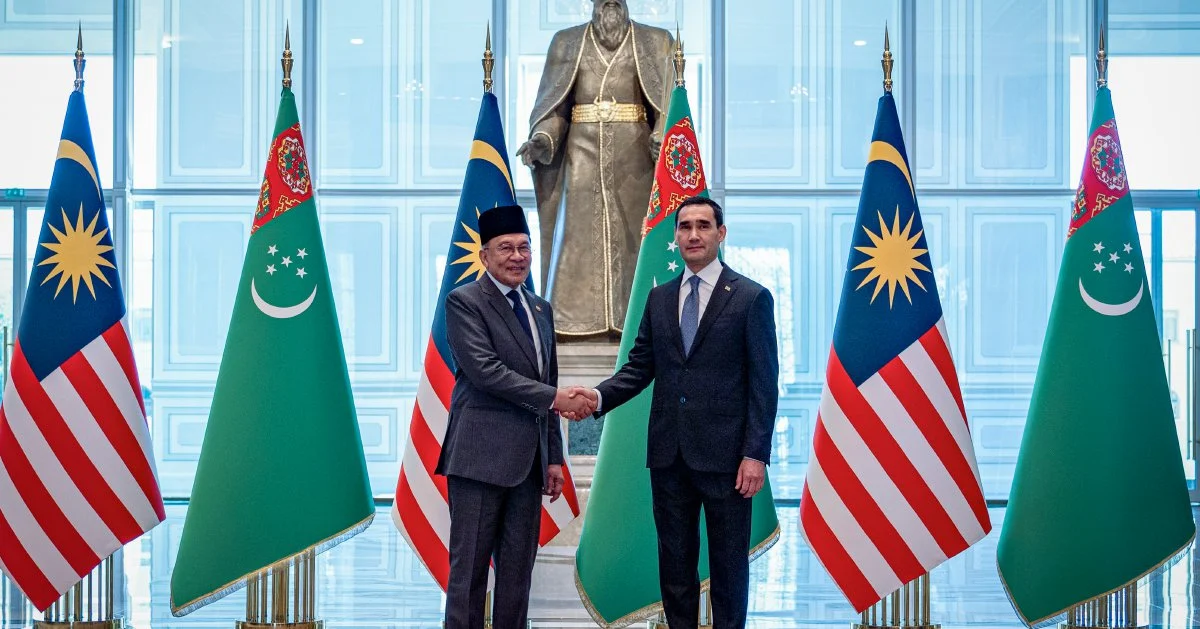
Malaysia's strategic engagement with Turkmenistan has gained fresh momentum through Petroliam Nasional Bhd, with the national oil and gas giant poised to deepen cooperation in the resource-rich Central Asian nation. The expansion comes in the wake of Prime Minister Datuk Seri Anwar Ibrahim's recent official visit to Ashgabat, signalling a broader push to harness energy partnerships and economic opportunities in a region increasingly vital to Asia's long-term energy security.
Petronas has maintained a consistent foothold in Turkmenistan for years, building technical expertise and operational relationships that now position the company to expand its involvement across multiple sectors within the energy landscape. This presence extends beyond simple contract fulfilment; it represents accumulated institutional knowledge of local market dynamics, regulatory frameworks, and partnership models that prove invaluable in navigating Central Asian business environments. The company's historical engagement provides a foundation upon which Malaysia can construct deeper bilateral ties with a nation sitting atop vast natural gas reserves.
The timing of this partnership expansion reflects broader geopolitical and economic calculations. Turkmenistan possesses some of the world's largest proven natural gas reserves, making it an increasingly important player in global energy markets, particularly as Asian economies seek to diversify their energy sourcing and reduce supply-chain dependencies. For Malaysia, establishing stronger energy ties with Turkmenistan addresses long-term resource security concerns while positioning Malaysian companies as preferred partners in Central Asian development projects. Petronas's involvement signals confidence that bilateral energy cooperation can yield sustained returns across multiple commodity cycles.
Beyond hydrocarbon extraction and trade, the Petronas-Turkmenistan relationship opens pathways for technology transfer and human capital development. Malaysian expertise in downstream operations, liquefied natural gas processing, and petroleum engineering could address gaps in Turkmenistan's industrial capability. Conversely, Turkmenistan's vast hydrocarbon endowments offer Petronas growth opportunities that may be limited in its traditional operating regions. This complementary arrangement creates a foundation for mutually beneficial collaboration extending across the value chain.
Prime Minister Anwar Ibrahim's visit symbolises Malaysia's broader strategic recalibration towards Central Asia, a region historically overlooked by Southeast Asian policymakers despite its geopolitical significance. The diplomatic mission underscores recognition that Malaysia's prosperity increasingly depends on relationships extending far beyond its immediate neighbourhood. Central Asia sits at the intersection of global energy markets, emerging supply routes, and evolving security arrangements, making engagement strategically prudent for a trading nation dependent on stable commodity flows.
The partnership also carries implications for Malaysia's position within regional and global energy networks. By strengthening ties with Turkmenistan, Malaysia enhances its standing among energy-producing nations and improves its ability to influence international commodity markets and pricing discussions. Petronas serves as both a commercial entity and a soft-power instrument, advancing Malaysian interests while pursuing legitimate business objectives. This dual capacity makes energy companies invaluable to middle-power diplomacy.
Turkmenistan's perspective on deepening Malaysia cooperation reflects its own strategic interests in diversifying export markets and reducing dependence on traditional energy partners. The Central Asian nation has historically oriented its energy exports towards Russia, China, and regional players, but increased Malaysian involvement provides alternative markets and reduces vulnerability to geopolitical shifts affecting traditional trading relationships. For Turkmenistan, expanded cooperation with Malaysia and other Southeast Asian economies represents prudent portfolio diversification.
The economic dimensions extend beyond energy production alone. Joint ventures involving Petronas could catalyse broader Malaysian corporate presence in Turkmenistan, spurring investments across telecommunications, construction, financial services, and technology sectors. Southeast Asian companies often follow major anchor investors into new markets, and Petronas's expanded role may encourage other Malaysian enterprises to explore opportunities in Central Asia. This clustering effect amplifies the economic benefits of the initial energy partnership.
Within the broader context of Malaysia-Turkmenistan relations, energy cooperation serves as a cornerstone upon which diplomatic, cultural, and educational exchanges can develop. Successful business relationships typically generate goodwill that facilitates cooperation across other domains. Personnel exchanges, training programmes, and scientific collaboration often emerge organically from sustained commercial engagement. In this sense, Petronas's expanded operations contribute to comprehensive bilateral relationship-building extending well beyond commercial transactions.
The investment climate and regulatory environment for Petronas's operations in Turkmenistan will significantly influence the partnership's trajectory. Turkmenistan, like many Central Asian nations, operates under governance structures that differ substantially from Southeast Asian democracies, requiring international companies to navigate distinct political and institutional frameworks. Petronas's experience managing operations in diverse regulatory environments positions it well to address these challenges, but sustained success requires maintaining strong relationships with government stakeholders and adapting to evolving policy requirements.
For Malaysia's energy security and broader economic strategy, the Turkmenistan engagement represents part of a larger portfolio approach to regional cooperation. Rather than concentrating relationships within Southeast Asia alone, Malaysia increasingly recognises value in cultivating partnerships across Asia's broader geography. Petronas's role in this expansion demonstrates how state-owned enterprises can advance national strategic objectives while pursuing legitimate commercial opportunities that benefit shareholders and stakeholders.
Looking ahead, the success of Malaysia-Turkmenistan energy cooperation will depend on translating diplomatic goodwill into concrete commercial outcomes. Initial agreements and frameworks must evolve into operational projects generating tangible economic benefits and employment opportunities for both nations. Petronas's track record suggests the company possesses the technical capability and management expertise to deliver results, though long-term success requires sustained political commitment and adaptation to changing market conditions. The partnership represents a significant step towards deeper Malaysian engagement with Central Asia.

