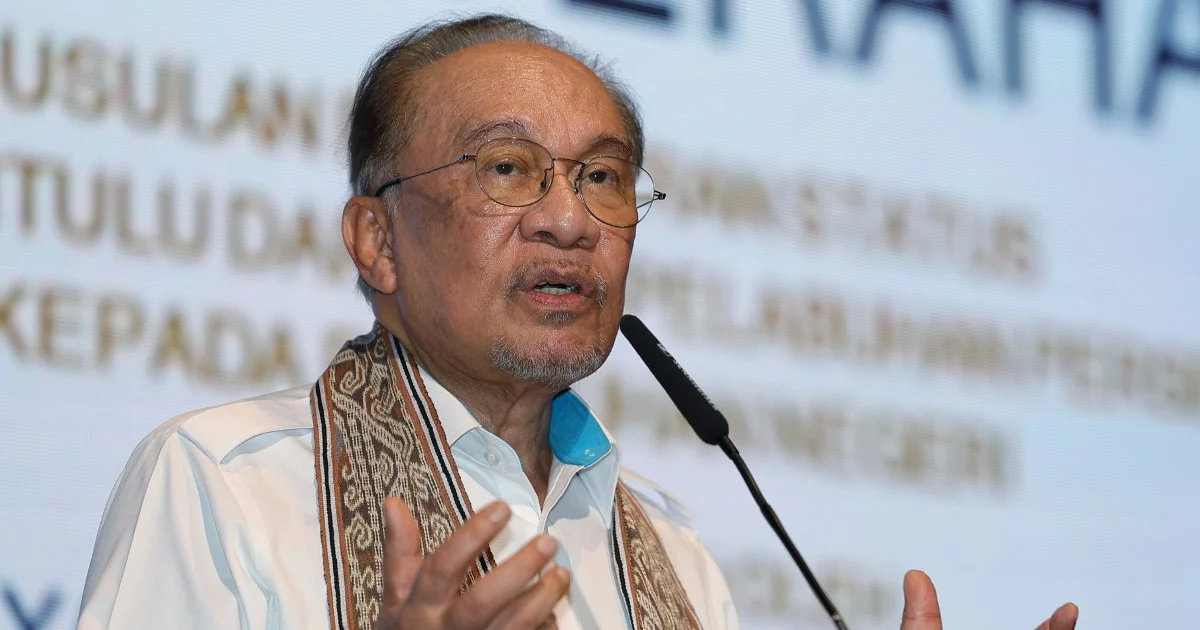
Prime Minister Datuk Seri Anwar Ibrahim indicated that discussions between Petronas and Petros are progressing in a constructive direction, marking what officials characterise as an encouraging development in negotiations between the nation's leading petroleum corporations.
The talks between the two energy giants represent a significant juncture for Malaysia's oil and gas sector. Petronas, the state-owned national oil company that operates globally, and Petros, the state-owned enterprise established to manage Malaysia's petroleum wealth, have been working through a complex set of issues that touch on resource management, operational frameworks, and the allocation of revenue from the country's hydrocarbon reserves.
Anwar's statement from Kuching carries particular weight given his position as Prime Minister and his known focus on economic repositioning and efficient governance. His public acknowledgement of positive momentum suggests that behind-the-scenes discussions have moved beyond preliminary posturing into substantive territory. The timing of such remarks also underscores the government's intent to demonstrate forward movement on matters affecting Malaysia's fiscal health and energy security.
The negotiations between Petronas and Petros are not merely administrative matters confined to corporate hierarchies. They touch fundamental questions about how Malaysia manages its finite petroleum resources and distributes the financial benefits derived from them. Sarawak's position is particularly relevant in this context, as the state has historically retained constitutional rights over its petroleum resources, complicating the dynamics between federal authorities and state-level interests. Anwar's choice to make these remarks in Kuching rather than elsewhere suggests deliberate engagement with Sarawak's concerns and priorities.
For Malaysian investors and stakeholders monitoring the energy sector, clarity on Petronas-Petros relations carries immediate implications. The two entities operate in overlapping domains, and their coordination—or tensions—directly influence investment confidence, project timelines, and the efficiency with which Malaysia develops its offshore and onshore reserves. Unresolved disputes or bureaucratic friction between them can delay projects worth billions of dollars and diminish Malaysia's competitiveness as operators jostle for clearer investment parameters.
Regionally, Malaysia's energy negotiations deserve attention from Southeast Asian counterparts facing similar questions about resource governance. Indonesia, Thailand, and Vietnam all grapple with comparable issues of state corporation consolidation and optimal management structures for maximising national benefit from hydrocarbon wealth. The Malaysian model being refined through the Petronas-Petros negotiations may offer instructive lessons or cautionary tales for neighbouring states contemplating their own energy governance frameworks.
The broader economic context amplifies the importance of these negotiations. Global crude oil prices remain volatile, affected by geopolitical tensions and energy transition dynamics. Malaysia must ensure that its internal structures for managing petroleum assets are sufficiently coherent and efficient to capitalise on market opportunities and withstand downturns. Organisations operating at cross-purposes or with unclear mandates waste valuable time and resources that could be directed toward exploration, infrastructure development, or shareholder returns.
Anwar's characterisation of progress suggests that the government has identified a pathway forward that accommodates the interests of both entities whilst serving the nation's broader economic objectives. Whether the negotiations ultimately produce a formal restructuring, clarified operational protocols, or other forms of institutional alignment remains to be disclosed, but the signal of positive movement is itself significant after periods of uncertainty or stalled discussions.
Investors contemplating entry into Malaysia's energy sector or expansion of existing operations will be attentive to further announcements. Completion of these negotiations, accompanied by transparent communication about the new arrangements, would strengthen Malaysia's position in attracting capital and talent to projects in a competitive global marketplace where clarity and predictability carry tangible commercial value.
The road ahead will likely involve continued negotiations on technical matters and structural details. Anwar's public encouragement of progress serves a dual function: maintaining stakeholder confidence whilst subtly pressuring negotiating teams to maintain momentum and reach closure on outstanding issues. The Prime Minister's involvement at the political level reflects recognition that the Petronas-Petros relationship transcends corporate management and touches core questions of national economic strategy.

