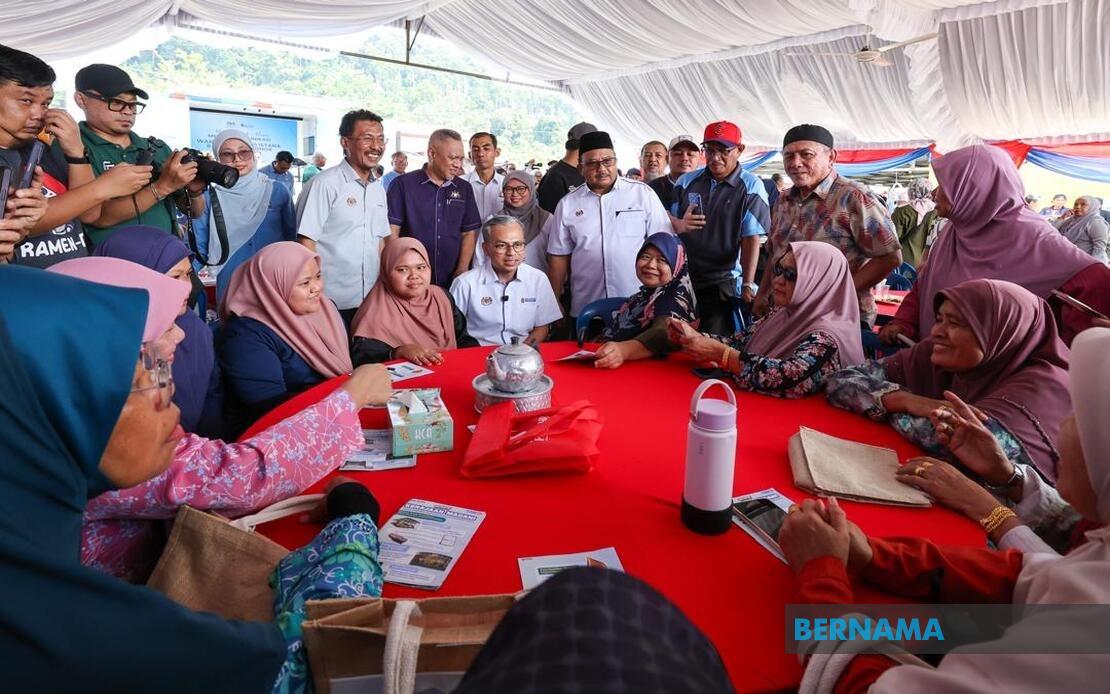
Pakatan Harapan's Communications Minister Datuk Fahmi Fadzil has vigorously defended the coalition's decision to unveil its 'Johor for All' manifesto during the second week of campaigning for the Johor state election, dismissing concerns that the delayed release might hamper its electoral prospects. Speaking after a grassroots engagement session in Batu Pahat on July 4, Fahmi characterised the timing as strategically appropriate, emphasising that the manifesto had undergone rigorous internal vetting before receiving approval from the coalition's senior hierarchy, including Prime Minister Datuk Seri Anwar Ibrahim.
The defence comes in response to commentary from former Bangi MP Ong Kian Ming, who had suggested that PH faced an uphill battle in the upcoming contest due to several compounding factors. Ong's assessment included the absence of a declared menteri besar candidate, the comparative invisibility of senior party figures among the slate of contenders, and what he characterised as a fragmented campaign narrative that lacked coherence and electoral appeal. These structural weaknesses, combined with the later-than-optimal manifesto rollout, had prompted Ong to predict that Barisan Nasional would achieve a decisive victory in the July 11 poll.
Fahmi dismissed such reservations as fundamentally disconnected from ground realities, arguing that the coalition had deliberately chosen not to rush the manifesto release. Instead, PH opted to ensure the document represented a thorough policy platform that enjoyed consensus among all participating parties within the alliance. The minister contended that timing the announcement to coincide with the formal introduction of candidates and the commencement of reciprocal policy pledges by competing blocs represented sound campaign management rather than electoral vulnerability.
Turning his attention to a separate line of attack, Fahmi directly challenged former UMNO Youth chief Khairy Jamaluddin's characterisation of the PH manifesto as derivative material merely rehashed from BN's existing platform. Rather than engaging substantively with the allegation, Fahmi deployed a pointed observation regarding Khairy's elevated campaign profile relative to Johor Menteri Besar Datuk Onn Hafiz Ghazi. The communications chief suggested that if Khairy's dynamism and institutional standing could be transferred to the sitting menteri besar, BN's electoral positioning might be substantially fortified. This retort carried unmistakable implications about the comparative weakness of the incumbent state leadership.
The Johor contest represents a significant inflection point in Malaysian electoral politics, with 172 candidates contending across 56 state seats in a race that has already consumed considerable political energy and media scrutiny. For PH, the election offers an opportunity to demonstrate renewed vigour following recent organisational turbulence and defections that have characterised the opposition bloc's performance over the preceding months. The coalition's capacity to mobilise voters and translate grassroots enthusiasm into actual seat gains will provide important indicators of whether the Anwar-led government enjoys sustained voter confidence in peripheral territories beyond the urban heartlands.
Fahmi's assertions regarding strong grassroots reception at PH campaign events suggest the coalition has successfully cultivated momentum at the local level, notwithstanding structural disadvantages and organisational challenges that observers have documented. The minister cited robust attendance and enthusiastic participation across multiple campaign stops as evidence that messaging difficulties and internal discord within DAP had failed to penetrate voter consciousness at the community engagement level. This distinction between elite-level political discourse and grassroots sentiment carries significant implications for how campaign dynamics will ultimately translate into electoral returns.
The minister also addressed concerns about potential reputational damage to DAP stemming from social media allegations regarding party leadership positions on former Prime Minister Datuk Seri Najib Tun Razak's potential pardon. These allegations appeared to have prompted former Skudai assemblyman Marina Ibrahim to announce her retirement from politics, expressing disillusionment with what she characterised as performative conduct by DAP functionaries on this sensitive issue. Fahmi's confidence that such developments would not materially constrain PH's campaign momentum rests substantially on his observation of undiminished enthusiasm for party candidates, including DAP representatives such as Bentayan state seat contender Ng Yak Howe.
The timing of these various attacks and counter-attacks reflects the high-stakes nature of the Johor election for both BN and PH. For the ruling coalition, a decisive performance would provide reassurance that voter backing remains durable despite inflation concerns and ongoing political polarisation. For Barisan Nasional, conversely, a strong showing would validate its recovery narrative and reinforce the messaging that the opposition remains internally fractious and electorally unviable in peninsular strongholds where the coalition traditionally commands structural advantages through territorial organisation and administrative incumbency.
The election represents a meaningful test of whether PH can sustain electoral viability in state-level contests conducted outside the framework of federal government leverage. Johor historically constitutes core BN territory, with the ruling coalition holding substantial organisational depth and institutional credibility among the state's predominantly Malay and Bumiputera voter demographics. Any gains by PH would therefore carry disproportionate symbolic significance, suggesting the coalition's capacity to erode BN's traditional base rather than merely consolidating support among urban and younger voter cohorts.
Fahmi's public statements reflect a broader PH communications strategy focused on projecting confidence and organisational cohesion despite documented internal tensions and leadership uncertainties. By framing the manifesto timing as deliberate and strategically sound rather than reactive and circumstantial, the coalition seeks to recapture narrative control in the face of BN messaging that has emphasised opposition fragmentation and leadership vacuum. Whether this rhetorical repositioning proves sufficient to overcome structural disadvantages that observers have identified will become apparent following the July 11 polling, which will offer concrete evidence regarding voter responsiveness to competing campaign frameworks and policy platforms across the Johor electoral landscape.

