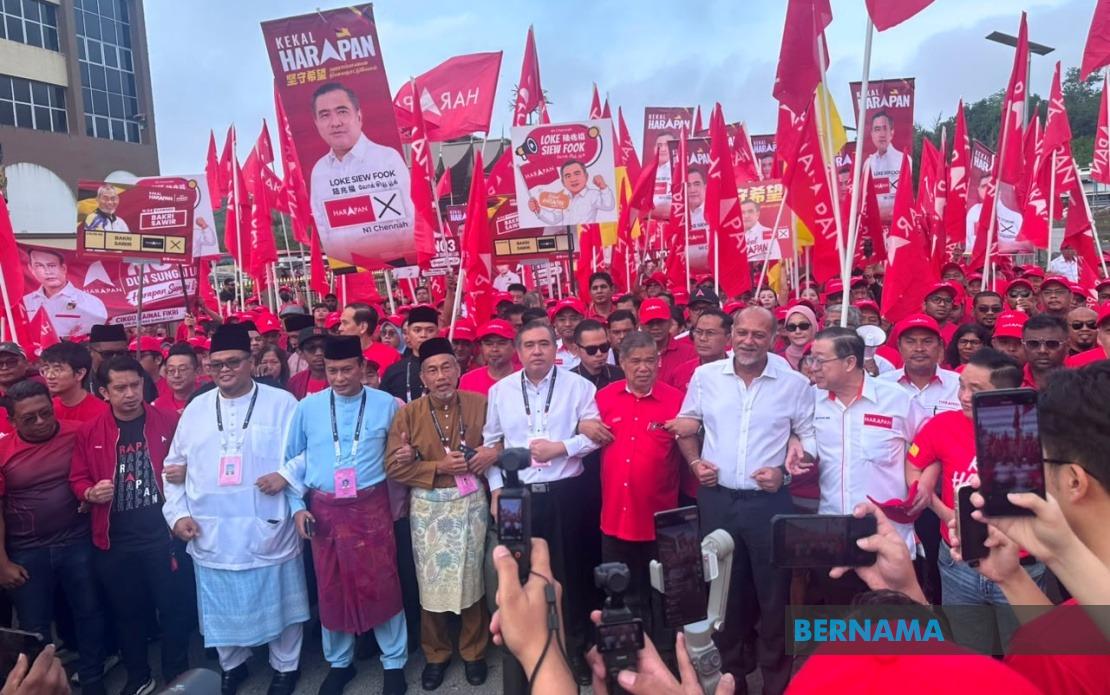
The Pakatan Harapan coalition demonstrated its organisational readiness for the looming Negeri Sembilan state election yesterday, deploying key ministerial figures and party executives across four nomination centres to bolster candidates submitting their papers for the August 1 polls. The coordinated show of support underscored the coalition's confidence heading into the contest, though it also highlighted the competitive nature of the race in a state where PH holds a slender advantage following the 2023 elections.
Transport Minister Anthony Loke, who simultaneously serves as DAP secretary-general, led proceedings in the Jelebu district, filing nomination papers for the Chennah seat at Dewan Besar Kuala Klawang. Loke's appearance carried particular symbolic weight, drawing fellow DAP officials including party chairman Gobind Singh Deo and policy adviser Lim Guan Eng, while Amanah president Datuk Seri Mohamad Sabu's presence signalled the broader coalition's unity behind the nomination process. The gathering of senior figures at a single constituency suggested PH views certain seats as strategically crucial, warranting concentrated attention from the party hierarchy.
Across the Jempol district, a parallel mobilisation unfolded around the Bahau seat, where Deputy Communications Minister and Wanita DAP chief Teo Nie Ching escorted candidate Teo Kok Seong through the nomination filing at the Jempol District and Land Office. The appearance of Communications Minister Fahmi Fadzil at the same centre expanded the operation's scope, as he simultaneously supported four separate candidates contesting different constituencies—Serting, Palong, Jeram Padang and Bahau. This multi-candidate approach reflects the tactical reality facing PH, which must defend ground across geographically dispersed areas with minimal administrative overlap between contest zones.
The composition of candidates accompanying Fahmi Fadzil illustrates a generational transition within the coalition's electoral strategy. While Teo Kok Seong brings incumbent experience from the previous general election contest in Bahau, the other three nominees—Yaacob Mahmood, Muhammad Zahin Zinal Abidin and Manivanan Gowin—represent fresh deployments into state-level politics. This mixing of seasoned and novice candidates suggests PH believes it can leverage established constituency relationships while simultaneously injecting new energy and demographics into its representative base.
Menteri Besar Datuk Seri Aminuddin Harun anchored the coalition's presence at Port Dickson, the administrative hub of the state, where he filed for the Linggi seat whilst overseeing the nominations of two incumbent legislators. Aminuddin's personal candidacy carries particular gravity, as his re-election would effectively serve as a referendum on his stewardship of state government since 2023. The attendance of DAP deputy secretary-general Hannah Yeoh and PKR secretary-general Datuk Dr Fuziah Salleh, alongside the Prime Minister's political secretary Datuk Farhan Fauzi, indicated that Kuala Lumpur's political establishment views the Negeri Sembilan outcome as consequential for the broader stability of the federal coalition.
The nomination of incumbent representatives Yew Boon Lye (Chuah), Choo Ken Hwa (Lukut) and G. Rajassekaran (Sri Tanjung) alongside the Menteri Besar suggests PH intends to defend its existing strongholds rather than expand territory aggressively. Retaining seats where the coalition already holds office represents the baseline objective, particularly given the slender mathematics of state assembly politics in Negeri Sembilan. With only 36 seats distributed across the legislature, losing even two or three constituencies could fundamentally alter the balance of power.
Minister of Entrepreneur and Cooperatives Development Steven Sim orchestrated the largest concentration of nominations at the Seremban nomination centre, accompanying six PH candidates for submission of papers at Wisma Majlis Bandaraya Seremban. The attendance of Selangor State Legislative Assembly Speaker Lau Weng San and Bukit Gelugor MP Ramkarpal Singh, alongside PKR vice-president Datuk Seri R. Ramanan, extended the inter-state coordination of the nomination effort. This cross-state representation suggests the coalition views the Negeri Sembilan result as having implications beyond the state itself, potentially affecting political calculations in neighbouring Selangor and the broader calculation of PH's organisational strength.
The backdrop for this nomination day centres on PH's hold on state power following the 2023 election cycle, when the coalition secured 17 of 36 assembly seats compared to Barisan Nasional's 14 and Perikatan Nasional's five. This distribution leaves PH vulnerable to relatively modest swings in voter preference, particularly if defections or abstention rates shift across specific constituencies. The coalition's decision to deploy ministerial resources so visibly suggests internal polling may indicate a tighter race than previous public statements suggested, or conversely, confidence that concentrated organisation can secure victory margins in contested areas.
The Negeri Sembilan State Legislative Assembly's dissolution on June 5—following consent from Yang Dipertuan Besar Tuanku Muhriz Tuanku Munawir—initiated the formal election timeline, with early voting scheduled for July 28 and general polling on August 1. This compressed campaign period of less than two months requires efficient deployment of party machinery, and the nomination day presentations offered the first substantive evidence of each coalition's organisational preparedness. For Malaysian political observers, the state contest will serve as an important indicator of voter sentiment before any potential federal election call, making the seemingly routine nomination process carry disproportionate significance.
The turnout of senior federal ministerial figures in support of state candidates reflects a broader pattern in Malaysian politics, where state elections increasingly function as proxy contests for assessing support for federal governments. PH's decision to position Transport, Communications and Entrepreneur ministers at nomination events amplifies the message that federal fortunes and state governance are inseparably linked in voters' minds. This integration of state and federal political actors suggests the coalition intends to campaign on both its record in Putrajaya and its management of Negeri Sembilan, creating an interconnected narrative around PH's overall governance capacity.

