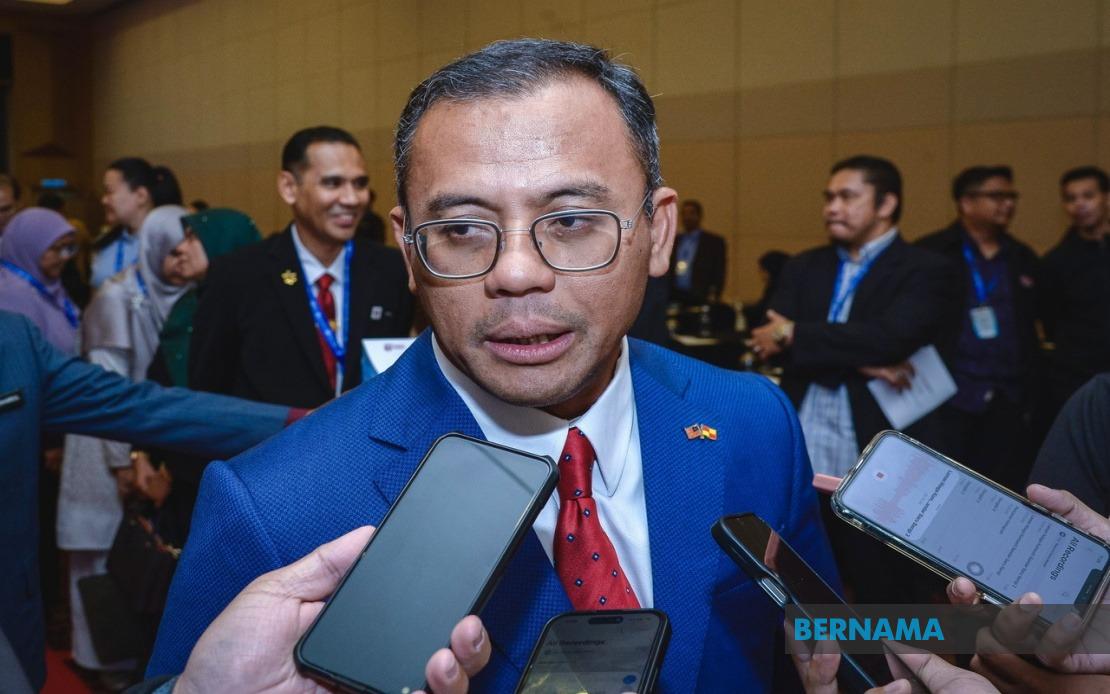
Pakatan Harapan has signalled readiness to engage in political dialogue with rival coalitions and independent parties, though any arrangement would need to meet strict criteria centred on governance stability and the public interest. Datuk Seri Amirudin Shari, a senior figure within PH's presidential council and Vice-President of PKR, outlined this position while attending an international ecology conference in Bangi, emphasising that the coalition's approach to potential alliances remains principled rather than opportunistic.
Amirudin's remarks represent a measured response to speculation about backroom negotiations between PH and Bersatu, Malaysia's largest Malay-Muslim party and a key component of the Perikatan Nasional bloc. Rather than dismissing collaboration outright, the Selangor Menteri Besar framed the coalition's stance as pragmatic, suggesting that discussions could extend beyond Perikatan Nasional to encompass any political entity willing to commit to shared governance priorities. This nuance matters in Malaysia's fractious political landscape, where coalition-building often determines electoral outcomes and legislative control.
The timing of Amirudin's comments is significant. Earlier reports had suggested that Selangor's PH machinery appeared receptive to working arrangements with Bersatu at the state level, raising questions about whether the coalition was fracturing or adapting to shifting political dynamics ahead of anticipated elections. By clarifying that no formal negotiations have commenced, Amirudin sought to control the narrative while leaving space for future discussions without appearing rigid or dismissive of potential partners.
Amirudin explicitly stated that Selangor PH has not formalised any understanding with Bersatu, cautioning against reading too much into circulating reports or informal statements. He described current speculation as external commentary and conjecture, possibly reflecting wider realignments within the national political system or responses to forthcoming state-level contests. This distinction between rumour and actual negotiation is crucial in Malaysian politics, where media reports and party leaks often precede formal policy shifts.
Crucially, Amirudin underscored that strategic decisions involving potential cooperation cannot be made unilaterally at the state level. As Selangor Menteri Besar, he would defer to PH's central leadership on any substantial shifts in coalition architecture. This hierarchical approach reflects Malaysia's power structures, where major political decisions flow from centralised party organs rather than individual states, even those as politically significant and resource-rich as Selangor. His commitment to consultation with party headquarters suggests that PH's leadership is actively considering its options but has not yet reached consensus.
The framing of cooperation around two pillars—political stability and public welfare—attempts to elevate the discussion beyond mere seat-sharing or electoral calculation. In theory, stability serves voters concerned with governance continuity and predictable policy-making, while the public interest criterion provides cover for pragmatic alliances that might otherwise appear opportunistic. However, defining these terms in practice remains contentious, particularly when different parties invoke them to justify contradictory positions.
Amirudin's comments occur against the backdrop of Malaysia's volatile political landscape, where coalition governments have proven fragile and electoral fortunes shift rapidly. The prospect of general elections and state contests, including polling in Melaka, has intensified jockeying among major political players. Perikatan Nasional, which includes Bersatu, UMNO, and PAS, currently controls federal government. Pakatan Harapan, comprising PKR, DAP, and Amanah, represents the principal opposition, though their grip on certain states remains precarious.
The suggestion that cooperation might be evaluated with reference to election timing and contextual factors reveals the transactional nature of Malaysian coalition politics. Rather than principled, permanent alliances, political arrangements are negotiated around specific electoral cycles and strategic considerations. This flexibility frustrates voters seeking stable governance but reflects the reality that Malaysian parties often prioritise power acquisition and retention over ideological consistency or long-term institutional stability.
For Selangor specifically, any PH arrangement with Bersatu would carry profound implications. The state, Malaysia's most economically dynamic and populous after Kuala Lumpur, has been governed by PH since 2018, delivering policies and development projects that have shaped the coalition's brand. A partnership with Bersatu could either strengthen PH's position ahead of future state elections or signal weakness and fragmentation to voters.
Regionally, Malaysia's coalition dynamics influence Southeast Asian political discourse around hybrid governance, coalition stability, and the capacity of non-authoritarian systems to maintain consistent policy direction. The willingness of parties to negotiate suggests democratic flexibility, but frequent realignments raise questions about institutional depth and the coherence of programmatic commitments to voters.
Amirudin's statements also reflect internal PH discussions about whether the coalition can maintain sufficient electoral strength without broadening its base. DAP's dominance in urban areas and PKR's Malay-centric positioning create structural constraints that sometimes necessitate cooperation with other Malay-Muslim parties. Bersatu, despite its troubled history within PH, remains a potential counterweight to UMNO and PAS in Malay-Muslim constituencies.
Ultimately, Amirudin's carefully calibrated remarks suggest that PH's door remains ajar but not wide open. The coalition is hedging its bets, maintaining optionality while avoiding public commitment to any specific arrangement. This strategy buys time for clearer electoral calculations while preserving PH's image as the serious, principled alternative to Perikatan Nasional.

