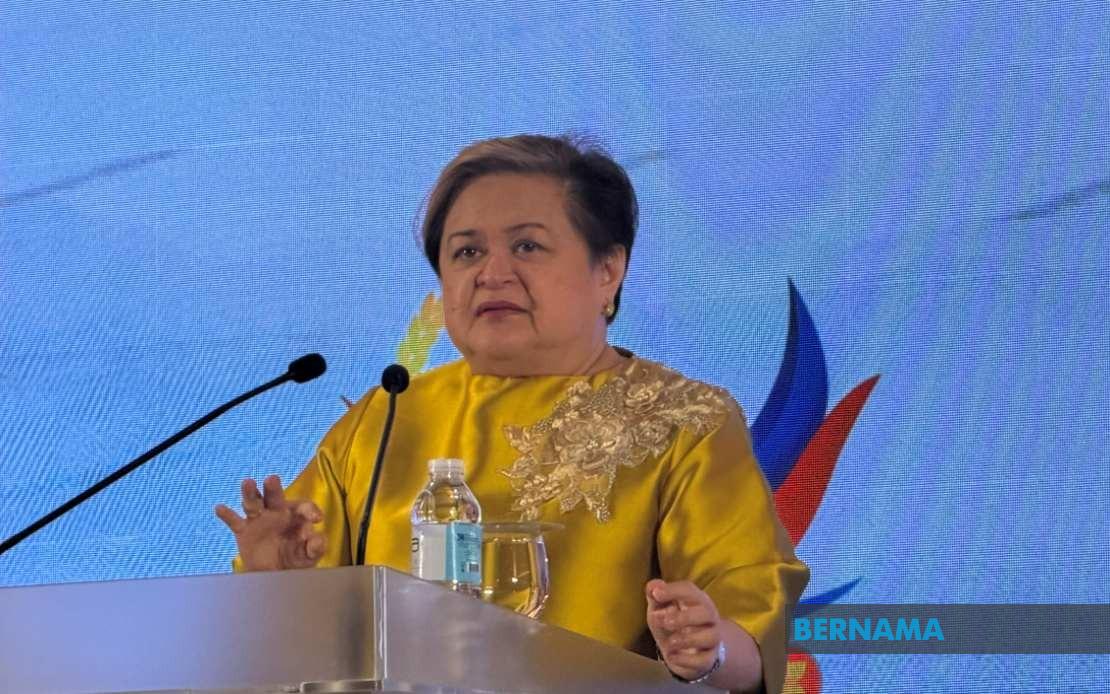
The Philippines has launched a pointed appeal for ASEAN to elevate its defensive posture on maritime affairs, warning that disruptions to key shipping corridors could unleash cascading economic damage across the region. Speaking to regional media, Philippine Foreign Affairs Secretary Ma. Theresa P. Lazaro highlighted how fragile Asia's integrated trading ecosystem has become, particularly given the continent's heavy reliance on unobstructed passage through strategically vital waterways. Her intervention signals Manila's growing concern that the bloc must move beyond reactive crisis management toward systematic, coordinated preparedness.
The timing of the Philippines' push reflects observable vulnerabilities exposed by recent events in the Middle East. When the Strait of Hormuz experienced disruptions, the ripple effects proved immediate and severe: energy prices spiked, inflation accelerated, and global supply chains experienced measurable strain. For ASEAN—a region where trade dependency runs exceptionally high and food security concerns loom perpetually—such scenarios represent an existential economic risk. Lazaro's argument carries particular weight because Southeast Asia's member states, including Malaysia with its own critical position in the Strait of Malacca, face disproportionate exposure to any breakdown in maritime stability.
The interconnectedness of ASEAN's economies to global commerce means that what happens in distant waters directly affects manufacturing hubs, agricultural exports, and consumer prices across the region. A sustained shipping crisis would drive operational costs higher for factories, delay production schedules for export-dependent industries, and compress the competitive margins that many Southeast Asian firms rely upon. For nations like Malaysia, Singapore, and Thailand, whose economies pivot heavily on logistics and manufacturing, the prospect of repeated maritime disruptions represents a tangible threat to growth trajectories and employment stability.
Lazaro's diagnosis of the problem extends beyond mere acknowledgment of risk. She explicitly framed the challenge as requiring institutional innovation within ASEAN's architecture. The Foreign Affairs Secretary proposed developing enhanced crisis communication channels operating at the foreign ministers' level, enabling the bloc to mobilize coordinated responses when emergencies materialize. This institutional dimension matters because ASEAN's traditional consensus-based decision-making, while politically sound, often moves slowly when urgency is paramount. A dedicated communication protocol could compress reaction times and ensure that member states act in concert rather than pursuing fragmented, self-interested responses that could amplify regional instability.
The proposed mechanisms extend into technical domains as well. Lazaro emphasized the necessity for improved information-sharing infrastructure and early warning systems that would allow ASEAN to detect emerging crises before they metastasize into full-blown disruptions. Greater transparency and predictability in maritime communications would bolster confidence among traders and investors who currently factor geopolitical risk premiums into shipping decisions. For Malaysian ports and businesses, clearer signals about maritime stability could reduce hedging costs and attract sustained investment to regional logistics networks.
Energy security emerged as a critical pillar in Lazaro's framework, underscoring that maritime stability transcends shipping interests alone. Southeast Asian nations collectively depend heavily on imported fuel and liquified natural gas, much of which transits routes vulnerable to disruption. A blockade or sustained instability in key waterways would immediately threaten electricity generation, industrial operations, and household energy access. This dimension makes maritime cooperation not merely a trade facilitation matter but a fundamental security concern that ought to command the same diplomatic attention typically reserved for territorial or military issues.
Food security receives parallel emphasis in Lazaro's argument, reflecting the region's structural dependence on agricultural imports and the role of maritime logistics in distributing perishable goods. ASEAN nations collectively feed populations exceeding 650 million people, and disrupted shipping routes translate directly into food price inflation, malnutrition risks, and potential social instability. The Philippines itself, facing recurring typhoons and geographic constraints on domestic agricultural output, faces particular vulnerability to maritime supply chain disruptions that would limit food imports and availability.
The Philippines' proposed establishment of an ASEAN Maritime Centre, positioned as a flagship initiative for Manila's 2026 ASEAN Chairship, represents an institutional attempt to embed maritime cooperation more deeply within ASEAN's operating framework. This centre would function as a coordinating body for maritime-related challenges across ASEAN mechanisms, theoretically breaking down silos that currently prevent holistic approaches to shared maritime concerns. Cross-sectoral collaboration—integrating perspectives from defense, trade, environment, and energy portfolios—could generate more sophisticated policy responses than individual sectoral approaches permit.
For Malaysian readers, the Philippines' advocacy carries particular resonance given Malaysia's geographic centrality to regional maritime architecture. The Strait of Malacca handles roughly one-third of global maritime trade, and any serious disruption would immediately threaten Malaysian port revenues, shipping employment, and energy security. Malaysian policymakers would benefit from the enhanced coordination protocols Lazaro proposes, as they would formalize mechanisms for protecting the Strait's stability and ensuring equitable burden-sharing among ASEAN beneficiaries. Similarly, Malaysia's own supply chain resilience depends crucially on the broader regional cooperation framework that the Philippines advocates.
The geopolitical context underlying these maritime security concerns involves multiple dimensions. While Lazaro's public statements emphasize generic "geopolitical uncertainty," the underlying reference encompasses great power competition in the South China Sea, ongoing Middle East tensions, and the prospect of supply chain decoupling between Western and Chinese economic blocs. ASEAN's stated desire to remain non-aligned becomes considerably more challenging when critical maritime routes become contested zones or when external powers pressure the bloc to take sides in larger strategic competitions. A robust ASEAN maritime framework, properly institutionalized and equipped with credible coordination mechanisms, could theoretically insulate the region from external coercion while protecting collective interests.
The challenge moving forward lies in translating Lazaro's proposals into binding commitments with teeth. ASEAN's consensus-based culture, while preserving unity, often dilutes implementation vigor. The Philippines' 2026 Chairship will provide a critical window to operationalize the Maritime Centre and formalize the crisis communication protocols. Member states must navigate the competing pressures of national sovereignty concerns and collective security imperatives—a balance particularly delicate in disputes spanning the South China Sea where territorial claims diverge sharply.
Lazaro's emphasis on openness, transparency, and predictability as foundational principles for maritime cooperation addresses a deeper anxiety within ASEAN about whether the region can maintain the institutional clarity necessary for stable commerce in an increasingly contested geopolitical environment. If the bloc cannot credibly assure traders and investors that key shipping routes will remain secure and that disruption management will be coordinated rather than chaotic, capital will flee elsewhere and regional competitiveness will erode. In this sense, maritime security cooperation represents not merely a technical domain for ASEAN but a test of the bloc's capacity to evolve institutionally and respond coherently to twenty-first century challenges.

