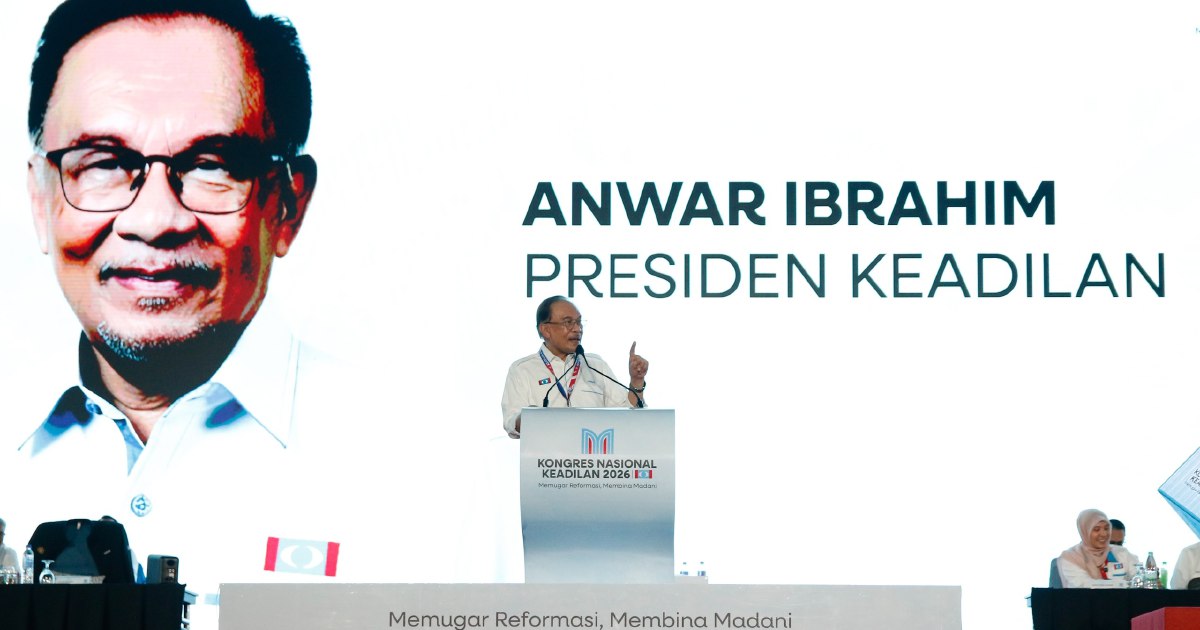
PKR president Datuk Seri Anwar Ibrahim has reiterated his party's intention to sustain its working relationship with Barisan Nasional and Umno at the national level, whilst concurrently honouring its undertakings to Pakatan Harapan partners DAP and Amanah. The statement, delivered during an event in Ayer Keroh, underscores the delicate equilibrium that Anwar continues to navigate as the nation's Prime Minister, managing competing political interests within Malaysia's fragmented coalition landscape.
The ongoing configuration of Malaysian federal politics has forced significant reassessment of traditional alliance structures since the 2022 general election. PKR's position has become increasingly pivotal in determining the stability and trajectory of the current administration, as the party effectively serves as a bridge between competing factions. Anwar's explicit confirmation of PKR's dual-track approach reflects the pragmatic reality that no single bloc commands sufficient parliamentary numbers to govern independently, necessitating cross-coalition cooperation.
Pakatan Harapan, comprising PKR, DAP, and Amanah, had previously dominated opposition politics and briefly governed from 2018 to 2020. However, the electoral arithmetic has shifted dramatically, fragmenting the political landscape into competing interests requiring elaborate balancing acts. The decision by PKR to engage meaningfully with Barisan Nasional—historically its adversary—represents a fundamental realignment in Malaysian politics, one born from necessity rather than ideological convergence. This pragmatic collaboration has proven essential for maintaining government continuity and advancing legislative agendas.
Anwar's clarification addresses mounting speculation within political circles regarding PKR's actual priorities and allegiances. Opposition voices and even certain Pakatan Harapan members have periodically questioned whether the party's federal-level cooperation with Barisan Nasional and Umno might eventually supersede its commitment to DAP and Amanah. Such concerns are not unfounded, given the historical animosity between these political families and the structural incentives that might encourage realignment. By publicly reiterating his party's fidelity to Pakatan Harapan, Anwar seeks to assuage nervous partners whilst simultaneously signalling to Barisan Nasional that collaboration remains viable.
For Malaysian observers and regional analysts, PKR's positioning holds profound implications for institutional stability and policy implementation. The current arrangement has enabled passage of various legislative priorities, including constitutional amendments and budget approvals, though sometimes with difficulty. The fragile consensus requires constant negotiation, compromise, and occasionally painful concessions from all participating parties. This reality constrains the government's ability to pursue transformative reform, as every initiative must navigate competing interests.
DAP and Amanah, as junior partners within the Pakatan Harapan framework, have occasionally expressed frustration with PKR's willingness to accommodate Barisan Nasional demands in exchange for parliamentary support. These tensions have surfaced publicly during debates over appointment of key positions, judicial matters, and policy directions. Anwar's reassurance attempts to prevent further deterioration of these relationships, which remain essential components of the ruling coalition architecture.
The broader Southeast Asian context renders Malaysia's coalition dynamics particularly noteworthy. Within a region experiencing democratic pressures and occasional institutional instability, Malaysia's multiethnic democracy has endured competing power centres through negotiated settlement rather than authoritarian consolidation. This approach, whilst inefficient and sometimes frustrating for policymakers seeking decisive action, has preserved pluralistic governance structures and prevented outright political domination by any single faction.
Anwar's governing strategy reflects lessons learned from his previous political experiences, including periods of intense rivalry and conflict with Umno leadership. His current role as Prime Minister depends fundamentally upon maintaining these multiple political relationships simultaneously, a challenge that requires extraordinary diplomatic skill and political dexterity. The stakes are considerable—collapse of either the Pakatan Harapan partnership or the Barisan Nasional-Umno working arrangement could precipitate government instability and potential constitutional crises.
The practical implications of this dual commitment manifest across various policy domains and institutional appointments. Cabinet composition itself represents a compromise reflecting both Barisan Nasional and Pakatan Harapan interests, with positions and portfolios carefully allocated to prevent excessive domination by any single bloc. Budget allocations, infrastructure projects, and regulatory appointments all reflect the necessity of accommodating diverse coalition partners simultaneously.
Scepticism regarding Anwar's ability to maintain these commitments indefinitely remains widespread among analysts and political observers. Historical precedent suggests that coalition arrangements of this complexity frequently deteriorate as individual parties pursue narrower interests or external pressures mount. The upcoming electoral cycle and various by-elections will test these relationships further, potentially precipitating realignments as parties calculate their individual electoral prospects and strategic positioning.
For Malaysian businesses and international investors, the continuation of this arrangement provides relative predictability despite its inherent fragility. Political stability, however contingent and delicately maintained, remains preferable to the uncertainty of government collapse or premature elections. Anwar's statement serves partly as reassurance to this constituency that the current governing framework will persist, enabling continued economic planning and policy implementation.

