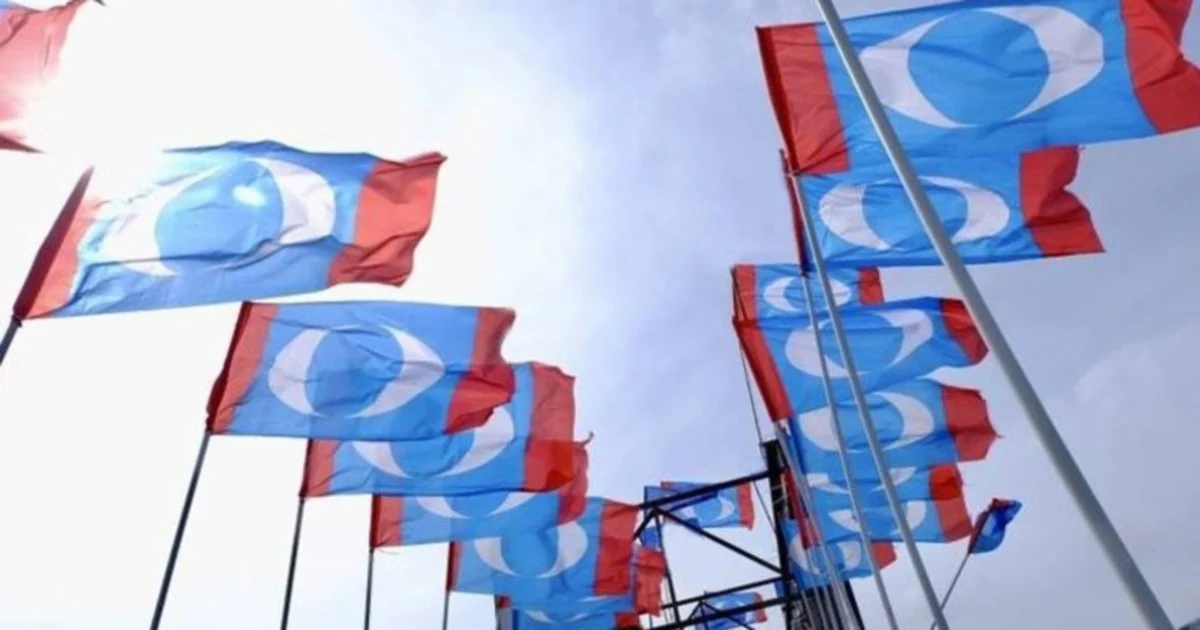
The People's Justice Party (PKR) stands on the cusp of unveiling its full roster of candidates for the concurrent Johor and Negeri Sembilan state elections, marking a significant milestone in the party's pre-election preparations. Party secretary-general Datuk Dr Fuziah Salleh confirmed that the candidate selection process has reached 99 per cent completion, signalling that the party has navigated the intricate task of fielding contenders across multiple constituencies in two strategically important states.
The finalisation of PKR's candidate list carries considerable weight for the party's electoral prospects, particularly given its role within the broader Pakatan Harapan (PH) coalition framework. The detailed vetting and selection process reflects the party's commitment to fielding competitive candidates capable of contending against entrenched rivals and winning voter confidence. With the list nearly locked in, PKR can now transition from internal deliberation to campaign mobilisation, a critical phase where momentum often determines electoral performance.
For Malaysian observers tracking political developments, the timing of this announcement underscores the heightened activity across the nation's political landscape. Both Johor and Negeri Sembilan represent constituencies of considerable significance—Johor as the nation's second-most populous state with substantial economic clout, and Negeri Sembilan as a strategically positioned central state with considerable political influence within the broader peninsula. PKR's performance in these elections will serve as a bellwether for coalition cohesion and voter sentiment ahead of any prospective federal-level contests.
The near-completion of the candidate selection process also illuminates the logistical complexity underpinning modern Malaysian electoral contests. Identifying, vetting, and nominating candidates across numerous state constituencies demands meticulous coordination, intra-party consensus-building, and careful consideration of local political dynamics, demographic composition, and incumbent performance. The fact that PKR has achieved this milestone suggests effective internal management, though the remaining one per cent likely involves resolving contested selections or addressing procedural finalities.
Within the PH alliance framework, PKR's candidate readiness holds implications for coalition unity and resource allocation. The tripartite PH configuration—comprising PKR, DAP, and Amanah—requires careful negotiation over seat allocation and candidate deployment to maximise collective electoral performance while maintaining inter-party equilibrium. PKR's advanced preparations in these two states may influence coalition strategy elsewhere, as the party demonstrates its organisational capacity and electoral readiness.
For Johor specifically, PKR's candidate slate will face competition from the Barisan Nasional establishment, which retains considerable structural advantages across the state. Similarly, in Negeri Sembilan, the political terrain remains competitive, with multiple parties vying for dominance. PKR's candidate selections will therefore need to balance ideological commitment with electability, positioning individuals capable of resonating with local constituencies whilst advancing the party's broader reform agenda.
The completion of candidate nominations also enables PKR to crystallise its narrative and messaging strategy for the forthcoming campaigns. With named candidates in place, the party can articulate specific platforms tied to individuals, build grassroots support networks, and begin intensive campaign preparation. This phase typically determines whether the party can translate its organisational readiness into electoral gains or whether structural disadvantages prove insurmountable.
From a broader perspective, PKR's progress in finalising its candidate list reflects the maturation of Malaysia's political ecosystem post-2018. The party, which emerged from reform movements and Anwar Ibrahim's personal political trajectory, has transitioned into an established coalition component capable of executing complex electoral mechanics. This evolution carries significance for understanding contemporary Malaysian politics—the capacity to field competitive candidates across multiple states demonstrates institutional development beyond personality-driven politics.
The remaining one per cent of the candidate selection process, whilst seemingly inconsequential numerically, may encompass the most contentious decisions. Unresolved disputes over candidate selection often generate intra-party tensions that can manifest during campaigns, potentially undermining cohesion when unity matters most. The final stages of candidate finalisation thus warrant careful attention from political analysts monitoring PKR's internal dynamics and coalition stability.
Looking ahead, PKR's near-completed candidate list positions the party to enter active campaigning with clarity regarding its electoral offering. Whether this translates into tangible electoral success depends upon multiple variables beyond candidate nomination—campaign execution, voter turnout, demographic shifts, and incumbent performance all influence outcomes. Nevertheless, the party's advancement toward full candidate finalisation represents a prerequisite step in any serious electoral contest, and Datuk Dr Fuziah Salleh's confirmation signals that PKR has met this essential requirement with sufficient time for subsequent campaign activities.

