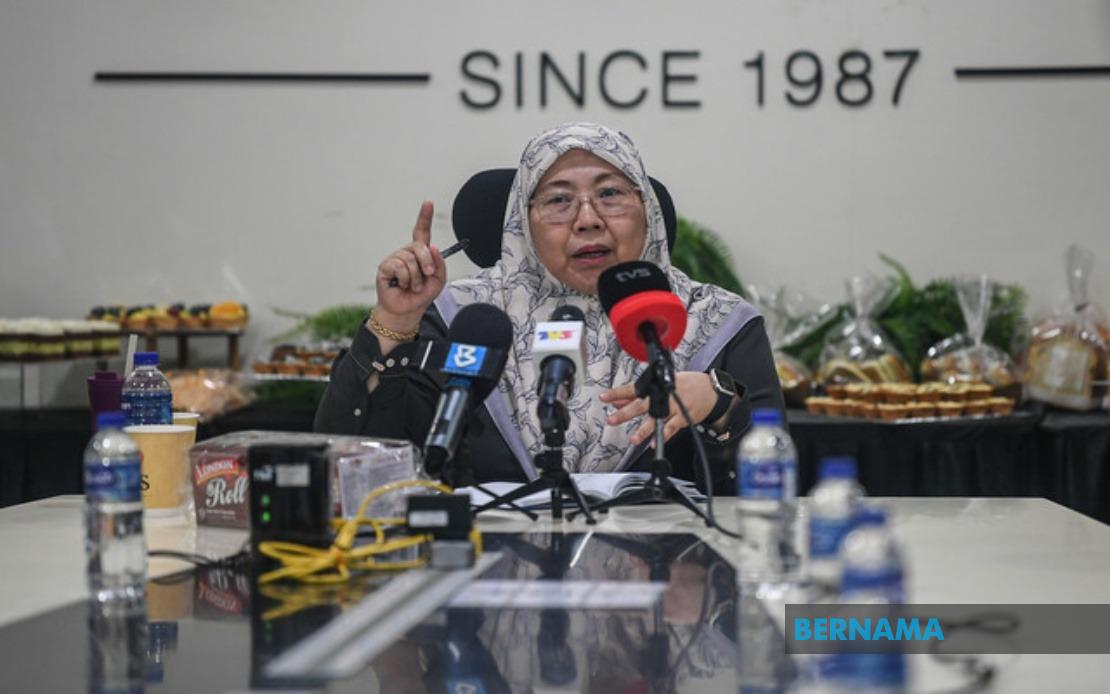
The departure of a significant faction from PKR to join the Malaysian Indian Congress has drawn scrutiny from party leadership, with PKR secretary-general Datuk Dr Fuziah Salleh offering an explanation rooted in intra-party dissatisfaction. Speaking after a working visit to an industrial facility in Skudai, Fuziah characterised the movement as "rather strange," suggesting that party investigations had uncovered a straightforward motivation: members felt overlooked when the party distributed leadership roles and positions.
On June 28, M. Murugan, who held the position of vice-chairman on the Johor PKR State Leadership Council, announced that approximately 200 supporters would transfer their allegiances to MIC's Iskandar Puteri division. The move represents one of several defections that have tested party cohesion during a critical electoral period. Fuziah's response framed the departures as a consequence of unmet expectations about advancement within the party hierarchy, rather than fundamental ideological disagreements or policy disputes. This diagnosis suggests that retention challenges facing the party are partly structural and administrative in nature, rooted in how opportunities are allocated among competing factions.
The timing of these defections coincides with intensifying activity surrounding the 16th Johor state election, scheduled for July 11, with early voting beginning July 7. The contest will distribute 56 state assembly seats among 172 candidates, making it a high-stakes competition that demands unity across the ruling coalition. Fuziah's candid assessment, rather than dismissing the departures, implicitly acknowledges that position-seeking is a legitimate feature of Malaysian party politics, and that members judge their party membership partly through the lens of career advancement opportunities.
Beyond the immediate question of PKR's internal management, Fuziah's comments at the press conference addressed broader coalition dynamics in Johor. She referenced PAS president Tan Sri Abdul Hadi Awang's recent call for voters to reject Pakatan Harapan, interpreting this statement as a potential harbinger of rekindled cooperation between Barisan Nasional and PAS. Such alignment would represent a significant shift in the political landscape, as it would scramble existing coalition arrangements and create new competitive configurations in the state contest.
Fuziah took the opportunity to counsel Johor voters to deliberate carefully before casting ballots, essentially signalling that the political situation remains fluid and that voters should base decisions on careful analysis rather than established habit or party loyalty. This appeal to rational deliberation suggests PKR recognises that the electoral terrain is less secure than it might appear on the surface, and that complacency could prove costly. The intervention by PAS, in this reading, represents an attempt to fracture the ruling coalition by peeling away support from Barisan Nasional through a shared Islamist agenda.
Perikatan Nasional's strategy has drawn Fuziah's particular scrutiny, with the PKR secretary-general characterising its approach as an attempt to poach support from Barisan Nasional. However, she suggested that this tactic carries significant downside risk for PN, potentially triggering internal strains within the coalition itself. The statement attributed to PAS president—urging voters away from Pakatan Harapan—could undermine PN's own partners, creating friction between component parties that theoretically share power-sharing arrangements.
According to Fuziah's analysis, the confusing political messaging and tactical maneuvering initiated by PAS and executed through PN actually redounds to Pakatan Harapan's advantage. By creating chaos and uncertainty within rival coalitions, these maneuvers may inadvertently consolidate support for the ruling alliance among voters seeking political stability. This counterintuitive dynamic illustrates how Malaysian electoral politics often produces winners through opponents' self-inflicted damage rather than through direct persuasion or superior policy presentation.
The broader context for these developments involves the delicate balance that PKR must maintain as a multiethnic coalition party operating within a larger political alliance. The defection to MIC, particularly of a leader representing Indian community interests, could signal fissures in how PKR manages representation and resource distribution among its diverse membership base. If significant portions of the Indian-Malaysian constituency perceive better advancement opportunities elsewhere, PKR faces challenges in retaining its cross-communal appeal, a cornerstone of Pakatan Harapan's electoral strategy.
Fuziah's framing of the departures as essentially mercenary—driven by position-seeking rather than principle—carries both reassuring and worrying implications for party management. On one hand, it suggests that defectors lack deep ideological commitment and may be persuadable to return if circumstances change. On the other hand, it indicates that the party's internal incentive structures are not sufficiently calibrated to retain ambitious members, raising questions about whether PKR's leadership development pipeline is adequate for an organisation aspiring to govern.
The Johor state election thus unfolds against a backdrop of coalition stress, internal party management challenges, and what appears to be a deliberate effort by opposition coalitions to engineer maximum disruption through tactical announcements. Fuziah's public comments serve not only to explain away defections but also to signal confidence that PKR and its allies retain sufficient organisational capacity and voter support to weather these challenges. Whether this optimism proves justified will become clear when voters cast their ballots on July 11.

