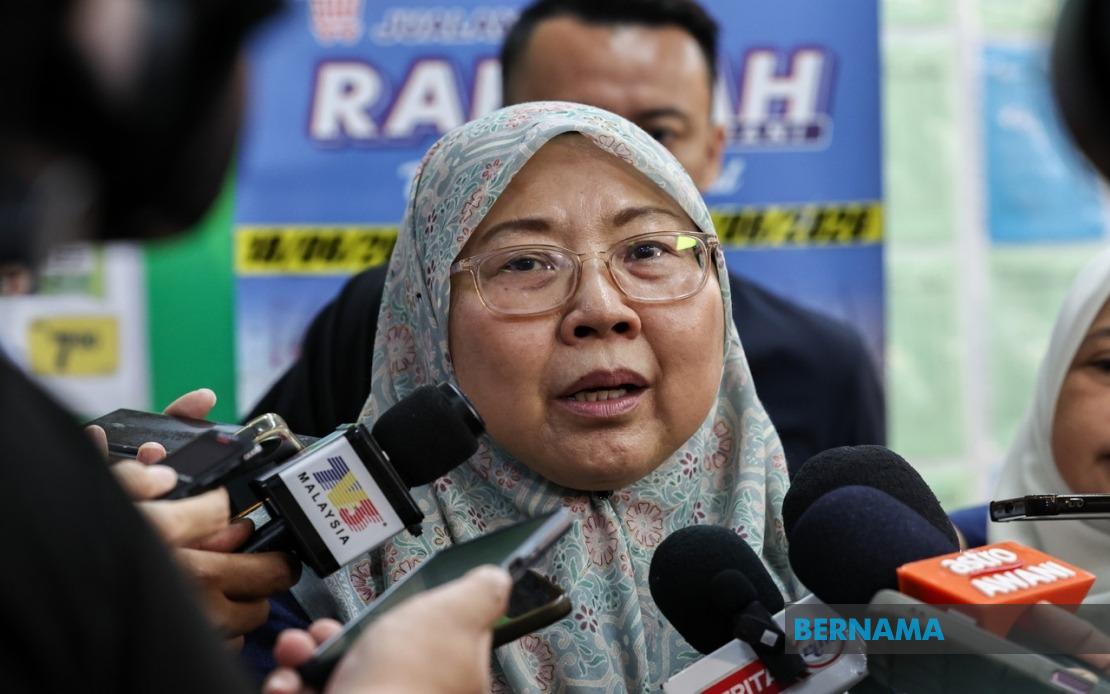
PKR's preparations for the upcoming state elections in Johor and Negeri Sembilan have entered their final phase, with party secretary-general Datuk Dr Fuziah Salleh confirming that the candidate roster stands at 99 per cent completion. The announcement of the full slate is anticipated within the coming days, marking a significant milestone in the opposition coalition's electoral strategy as it braces for contests in two major states that will substantially reshape the political landscape in the region.
The party has committed to contesting 20 state seats in Johor, where voters will head to the polls on July 11 following the dissolution of the 56-seat State Legislative Assembly on June 1. In Negeri Sembilan, PKR will seek 16 of the 36 available assembly seats, with the election pencilled in for August 1. These numbers represent PKR's formal bid for representation across what remains competitive political terrain in both states, where demographic shifts and voter sentiment have created both opportunities and vulnerabilities for established parties.
In characterising the makeup of its candidate list, Fuziah emphasised that PKR would present a balanced composition encompassing both experienced politicians and emerging voices, with deliberate inclusion of women and younger aspirants. This approach reflects broader conversations within Malaysia's major political formations about generational renewal and gender representation, though the precise percentage breakdown of fresh faces versus incumbent or previously unsuccessful candidates will only become clear when the official roster is unveiled. Such decisions typically reflect both party organisational strength and the calculus of electoral viability in specific constituencies.
A significant complication within the broader Johor campaign has emerged over the Puteri Wangsa seat, where Amanah, PKR's coalition partner within Pakatan Harapan, has staked a competing claim. Johor Amanah vice chairman Dr Zuhan Zain has resisted PKR's assertion that the seat rightfully belongs to the larger party, a dispute that traces back to the 2022 state election when Amanah and PKR allocated it to MUDA as part of their electoral arrangement. Fuziah acknowledged the tension but deferred resolution to the highest echelons of both component parties, suggesting that coalition mechanics within Pakatan Harapan remain subject to negotiation even as nominations approach.
The coalition's internal dynamics have been further strained by discipline matters within PKR itself. Subang MP Wong Chen has become embroiled in a party disciplinary probe, which he responded to by publicly challenging PKR to terminate his membership. Fuziah confirmed that the matter has been escalated to the party's Disciplinary Board, underscoring how individual dissent can create complications during critical electoral preparation periods. The board's eventual decision will test the party's cohesion and its capacity to manage ideological or procedural disagreements without fracturing its credibility.
The Johor state assembly dissolution on June 1 came as the assembly composition stood heavily tilted toward Barisan Nasional, which held 40 of 56 seats. Pakatan Harapan controlled 12 seats, Perikatan Nasional held three, and MUDA represented a single seat. This distribution indicates that opposition forces face an uphill struggle in the state, where BN's dominance has persisted despite national electoral shifts. Reclaiming even a modest number of additional seats would require PKR and its allies to perform substantially better than their current representation suggests.
In Negeri Sembilan, the mathematical challenge appears somewhat less daunting for the opposition. Before dissolution on June 5, PH held 17 seats, BN controlled 14, and PN secured five across the 36-seat assembly. These numbers position Pakatan Harapan as the incumbent administration with a narrow majority, though far from commanding dominance. Defending this position while attempting to expand will require focused organisation and the deployment of both popular and strategic candidates.
The electoral calendars for both contests have now crystallised. Johor's nomination day is set for June 27, with early voting absent from the schedule ahead of the July 11 polling day. Negeri Sembilan presents a more extended timeline, with nomination scheduled for July 18, early voting on July 28, and the general election on August 1. These staggered schedules offer distinct advantages and complications for campaign management, as resources and media attention cannot be concentrated simultaneously across both contests.
For Malaysian political observers, these elections carry significance beyond state-level governance. Johor remains a crucial political battleground where national parties test messaging and machinery, while Negeri Sembilan offers insight into how Pakatan Harapan manages administration at the state level. The composition of candidates unveiled by PKR will signal the party's confidence in particular constituencies and its vision for demographic representation in elected office. The extent to which the party successfully balances generational renewal with institutional continuity will reverberate through both state campaigns and help shape perceptions about coalition stability heading into any future national electoral cycle.

