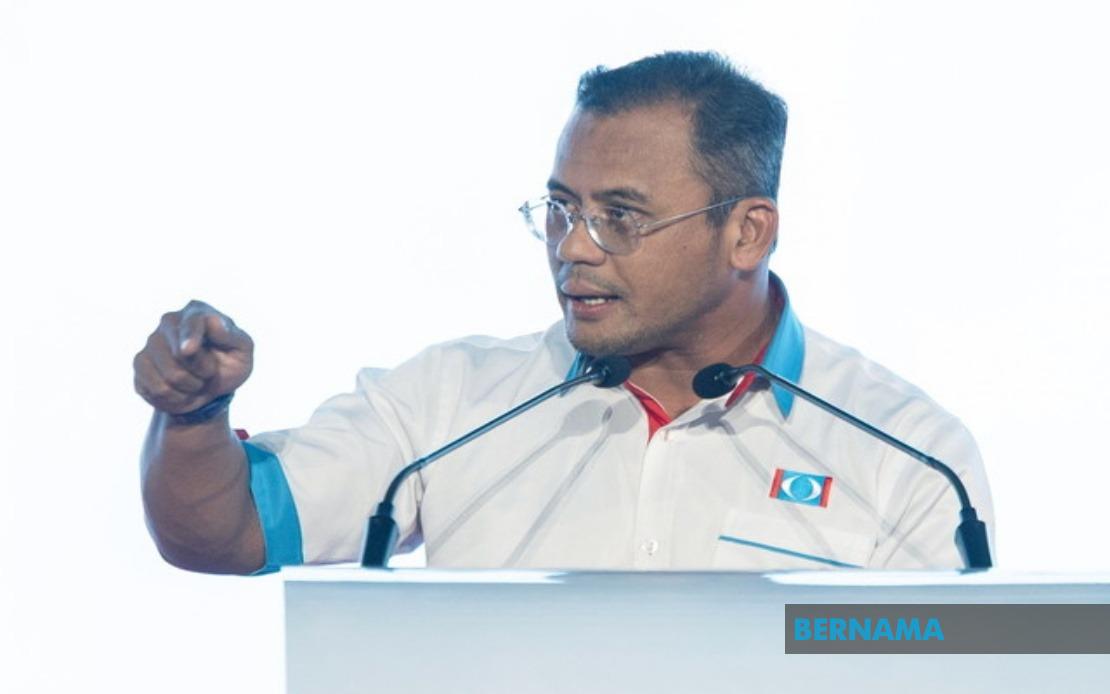
The People's Justice Party (PKR) must remain steadfast in championing fair governance that serves all communities equitably, while upholding the constitutional position of Islam and the Malays, party leaders insisted at the party's national congress in Melaka. Speaking at the two-day gathering at Melaka International Trade Centre, senior party figures articulated a vision of politics rooted in substantive reform rather than divisive identity campaigns—a message that carries particular resonance at a time when racial and religious narratives have increasingly dominated Malaysian electoral discourse.
PKR vice president Datuk Seri Amirudin Shari, who serves as Selangor's chief minister, framed the party's foundational commitment as one that balances constitutional protections with genuine plurality. He emphasised that respecting Islam's position and the special rights of Malays, enshrined in the Federal Constitution, need not conflict with equitable treatment of all citizens regardless of ethnicity or faith. This articulation attempts to navigate the persistent tension in Malaysian politics between constitutional provisions favoring the majority Malay-Muslim population and the imperative of multi-ethnic nation-building in a diverse society.
Amirudin drew a historical arc connecting PKR's roots to its present mission, noting that Anwar Ibrahim's 1998 reform movement had successfully brought substantive issues to the forefront of Malaysian politics. These included strengthening democratic institutions, protecting fundamental rights, ensuring fair distribution of economic opportunities, and establishing government accountable to the public. By repositioning PKR's narrative around these institutional and governance concerns, the party appears to be attempting a strategic pivot away from identity-based competition toward competency and results-driven governance.
Datuk Seri R. Ramanan, PKR vice president and Human Resources Minister, took a more direct stance against what he characterised as cynical deployment of racial sentiment by political rivals. He cautioned that competitors deliberately weaponise communal anxieties to accumulate votes and fracture national unity for narrow partisan advantage. Ramanan's warnings reflect growing alarm among the coalition government's leadership about opposition parties' use of identity politics, particularly as the country approaches future electoral contests.
Ramanan stressed that preserving Malaysia's ethnic and religious harmony requires PKR to remain a bulwark against such tactics, rejecting the instrumentalisation of racial narratives that he sees as fundamentally corrosive to social cohesion. He framed the defence of diversity not as a concession to minority interests but as essential to national stability and prosperity. This framing attempts to reposition inclusive politics as a strength beneficial to the majority, rather than as a compromise imposed upon them.
Beyond external competition, Ramanan also addressed internal party dynamics, calling on leadership and members to subordinate personal ambitions to collective party strength. His remarks suggest awareness that fractious internal divisions weaken PKR's capacity to deliver on its political message and governance agenda. He warned that leadership conflict creates confusion throughout party structures, demoralises grassroots members, and ultimately benefits political opponents by creating space for alternative political forces.
Another PKR vice president, Datuk Chang Lih Kang, offered empirical evidence to support the party's contention that inclusive politics can successfully mobilise cross-ethnic support. He highlighted the Chennah state seat in Negeri Sembilan, where DAP secretary-general Anthony Loke, leading an opposition coalition, achieved increased support from Malay voters despite facing what Chang characterised as identity-politics attacks. This example serves as a concrete counterargument to the notion that Malaysian voters inevitably vote along rigid communal lines when presented with identity-based campaigns.
The Chennah case illustrates the potential for individual performance and credibility to transcend manufactured divisions, though critics might contend that a single seat cannot definitively demonstrate broad patterns of voter behaviour. Nevertheless, Chang's invocation of this instance reflects PKR's broader strategic argument that demonstrable service delivery and honest governance can outweigh identity-based messaging in voter calculations.
The emphasis on unity and inclusive governance articulated at the PKR congress reflects the coalition government's broader challenge in maintaining public confidence while managing multiple competing pressures. The party must simultaneously reassure majority-community constituencies that constitutional provisions are respected, while demonstrating to minority communities and swing voters that their interests receive genuine consideration in policymaking. This balancing act becomes more complicated when opposition parties successfully frame inclusive policies as threats to communal interests.
For Malaysian politics more broadly, the PKR leadership's position represents one vision for how the country navigates its multi-ethnic reality. Whether that vision can effectively counter the demonstrated electoral appeal of identity-based campaigns remains contested, particularly in constituencies where communal anxieties run high. The party's success in sustaining this approach will likely depend substantially on whether it can deliver tangible improvements in governance, economic opportunity, and services that benefit communities across demographic lines.
The congress also underscores ongoing internal debates within Malaysia's ruling coalition about appropriate strategies for electoral competition and governance legitimacy. As the country approaches potential electoral contests, how effectively PKR and its coalition partners can mobilise voters around governance and delivery rather than identity will be a significant factor in determining political trajectories. The party's stated commitment to inclusive politics reflects not merely ideological preference but a calculated bet that Malaysians increasingly favour substance over sentiment.

