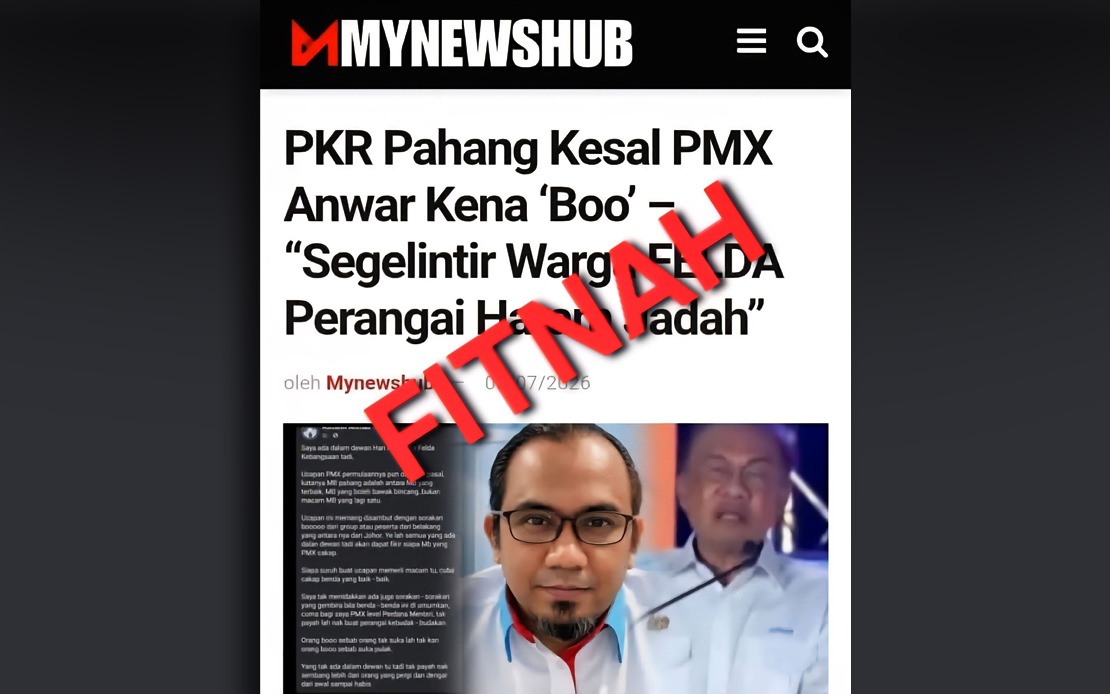
PKR Pahang has categorically rejected allegations circulated through an online portal claiming the party expressed dismay at Prime Minister Datuk Seri Anwar Ibrahim's reception during FELDA Settlers' Day and the federal land development scheme's 70th anniversary commemoration held in Jengka. The party's information chief, Datuk Dr Suhaimi Ibrahim, stressed that no such official statement had been issued by the Pahang chapter, describing the report as fundamentally misleading and divorced from the actual events that unfolded.
Dr Suhaimi, who personally attended the gathering at Stadium Tun Abdul Razak in Jengka, offered a detailed eyewitness account contradicting the online narrative. He emphasised that throughout the entire programme, from its commencement to conclusion, nothing resembling the alleged negative incidents occurred. The claim that the Prime Minister was "booed" was dismissed as a distorted characterisation designed to sensationalise proceedings and misrepresent the atmosphere prevailing at the venue on the day.
The PKR Pahang leader painted a contrasting picture of the event itself, describing it as dynamically organised and characterised by robust enthusiasm from the assembled FELDA settler population. Tens of thousands of settlers attended the celebration, and the atmosphere remained energetic and engaged throughout the proceedings, according to his account. This directly contradicts the implication in the online report that the gathering had generated unfavourable reception toward the Prime Minister's presence.
According to Dr Suhaimi, announcements concerning settler welfare initiatives and development programmes were consistently greeted with applause and supportive responses from the crowd. The positive reception extended to all major announcements delivered during the event, suggesting that FELDA community members were receptive to the messages conveyed. This collaborative environment stands in stark contrast to the conflict narrative that the online portal had attempted to construct and attribute to PKR Pahang.
PKR Pahang raised serious concerns about the misuse of the party's identity in generating false impressions regarding its purported position. The invocation of the party's name to lend credibility to unsubstantiated claims was characterised as an irresponsible and ethically questionable practice that risked damaging the party's standing and relationship with the broader FELDA community. The party firmly asserted that it had neither issued the disputed statement nor employed language that could be construed as demeaning toward settlers.
Dr Suhaimi articulated a broader critique of the report's apparent motivation, arguing that its construction and dissemination appeared calculated to manipulate political perception rather than convey factual information. This observation points to a concerning trend in contemporary media ecosystems where partisan narratives sometimes override commitment to balanced and accurate reporting. The statement suggests that PKR Pahang views the episode as illustrative of deliberate distortion rather than innocent misunderstanding.
The information chief issued a comprehensive call for greater responsibility among all parties engaged in information dissemination, explicitly naming media professionals and social media participants. He emphasised the critical importance of verification procedures before sharing information, particularly when claims carry potential political implications or concern public figures. This appeal reflects growing frustration with the speed and carelessness with which unverified narratives gain traction in digital spaces.
The underlying context of the FELDA event itself merits consideration for Malaysian observers. The Prime Minister's attendance underscored the government's continued engagement with the FELDA community, a politically significant constituency that has traditionally exercised considerable influence in electoral outcomes across several states. FELDA settlements represent a substantial population bloc with distinct interests in agricultural development, land administration, and settler welfare programmes.
During the Jengka gathering, the Prime Minister unveiled seven incentive packages designed to advance development initiatives and strengthen welfare provisions benefiting the FELDA community. These announcements constituted substantive policy measures rather than ceremonial gestures, indicating government commitment to addressing settler concerns through concrete administrative mechanisms. The packages presumably addressed priorities identified through engagement with FELDA leadership and settler representatives.
The episode highlights vulnerabilities in information verification ecosystems in Malaysia and the broader Southeast Asian region. The rapid circulation of unverified claims, particularly those alleging political discord or public rejection of leaders, demonstrates how digital platforms can amplify misinformation before fact-checking mechanisms engage. This phenomenon has acquired increasing significance as political stakeholders compete for narrative dominance ahead of elections or policy announcements.
For Malaysian readers, this incident serves as a reminder of the importance of consulting multiple information sources and approaching sensationalised claims with appropriate scepticism. The distinction between verified reporting and speculative narrative construction carries real implications for public understanding of political developments and community sentiment. In an era of abundant information availability, cultivation of critical assessment skills becomes increasingly essential.
The PKR Pahang response also reflects broader questions about media ethics and platform responsibility in contemporary Malaysia. When online portals publish unverified claims and falsely attribute them to political organisations, fundamental principles of journalistic integrity come into question. The episode raises expectations that both professional media outlets and platform operators should implement more rigorous verification standards before publishing information that could mislead public understanding.

