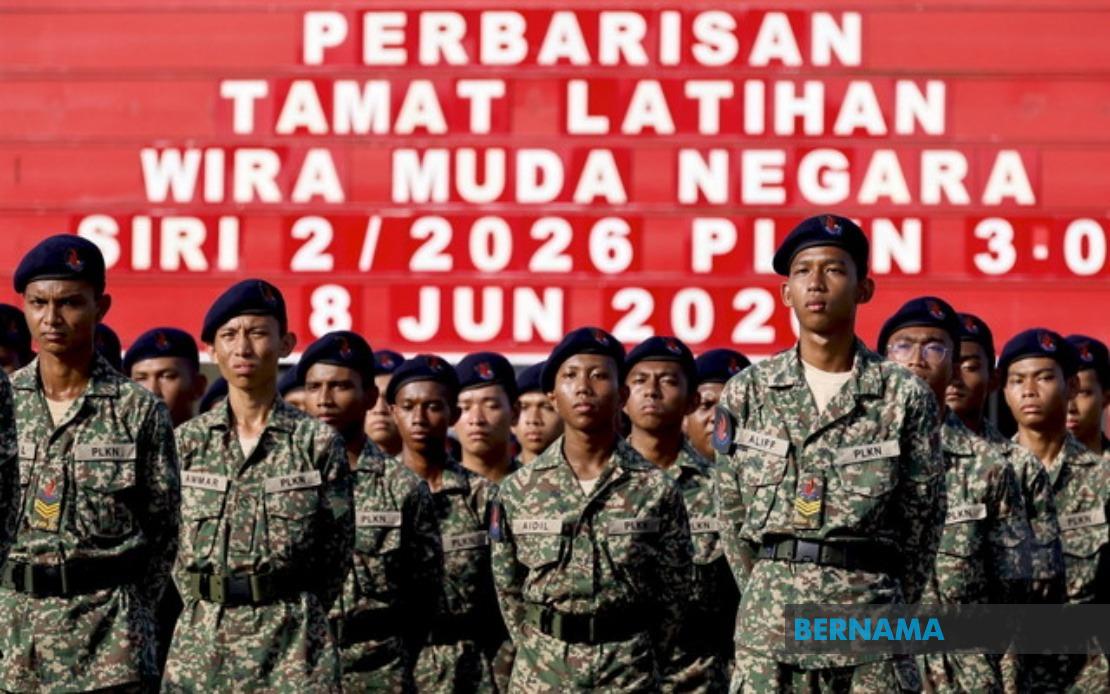
The National Service Training Programme 3.0 has fulfilled its comprehensive performance targets, with independent impact studies documenting measurable gains in participant development across six distinct competency areas, Deputy Defence Minister Adly Zahari announced in Parliament this week. The programme requires trainees to achieve a minimum 80 per cent benchmark in patriotism, national unity, discipline and personal transformation, psychological resilience and combat readiness, military competency, and community service engagement. These performance standards are rigorously assessed through comparative surveys administered before and after the training period, conducted jointly with Universiti Malaysia Sabah and the National Defence University of Malaysia.
The second cohort of trainees this year demonstrated particularly encouraging progress, with military knowledge registering the most dramatic improvement trajectory. Starting from a baseline of 56 per cent proficiency, participants achieved 84 per cent competency upon completing their service obligations—a substantial 28-percentage-point advancement that underscores the effectiveness of the curriculum's technical and tactical components. Volunteerism metrics similarly strengthened, climbing from 75 per cent to 83 per cent as young Malaysians developed greater commitment to civic responsibility and community contribution during their training experience.
National pride indicators improved noticeably, with patriotism scores rising from an initial 82 per cent to 88.98 per cent, reflecting the programme's success in fostering deeper attachment to the nation's values and identity among diverse participant groups. Unity awareness expanded by nine percentage points following participation, a meaningful indicator given Malaysia's multicultural composition and the programme's explicit emphasis on building cross-communal understanding. Discipline and personal development exhibited the programme's most substantial transformation, jumping from 77.36 per cent to 92.6 per cent—nearly a 15-point increase that suggests the intensive regimented environment successfully cultivates self-regulation and maturity. Mental resilience and psychological preparedness similarly strengthened, rising from 71 per cent to 83 per cent as trainees developed greater emotional fortitude and stress management capabilities through graduated exposure to challenging scenarios.
The programme has expanded its reach progressively since relaunching under the current framework. Approximately 3,404 young Malaysians have participated to date, with 1,202 completing the initial cohort last year and 2,202 enrolling in the expanded second series throughout 2024. The Defence Ministry projects completing 4,200 total participations by year-end utilising its three operational training facilities, demonstrating systematic capacity growth. Infrastructure development remains a priority, with nine additional camp facilities under construction nationwide to elevate annual throughput to 9,200 participants beginning next year—a more than twofold expansion that reflects government commitment to reaching a broader demographic cross-section.
Recognising that service training alone cannot guarantee employment outcomes, the government has negotiated complementary incentive arrangements with five major public sector recruiting bodies. These appointing authorities have committed to awarding additional merit consideration to qualified PLKN 3.0 alumni during recruitment competitions and interview assessments, creating tangible career pathways without formally designating the programme as an employment scheme. This strategic partnership approach acknowledges the practical realities facing programme graduates while maintaining the stated educational and civic development objectives.
Accessibility has been deliberately woven into programme design, with particular attention to including economically disadvantaged youth and those from geographically remote areas. Integration of Technical and Vocational Education and Training components throughout the curriculum provides practical skill development alongside civic and military instruction, expanding relevance for participants pursuing non-university educational pathways. This deliberate inclusion strategy reflects recognition that national service should be genuinely representative of Malaysia's demographic diversity rather than concentrated among privileged urban populations.
Participant attrition data illuminates systemic constraints affecting programme completion. Health complications and ongoing academic commitments emerge as the primary reasons cited by selected trainees who subsequently decline or fail to report for their assigned training periods. These competing obligations highlight the necessity for flexible scheduling mechanisms and medical accommodation protocols that balance programme integrity with genuine personal circumstances—particularly for young people navigating final secondary school examinations or managing chronic health conditions requiring ongoing management.
The PLKN 3.0 results represent a substantive reorientation from previous incarnations of mandatory national service, emphasising measurable human capital development through structured assessment rather than undifferentiated military socialisation. By establishing explicit KPI frameworks and commissioning independent academic evaluation, policymakers have created accountability mechanisms that transcend purely anecdotal success narratives. The 28-point advancement in military knowledge particularly resonates for a regional context where defence capacity increasingly depends on sophisticated technical competency rather than merely mobilisable manpower reserves.
For Malaysian youth broadly, these outcomes suggest that intensive short-duration interventions can produce meaningful behavioural and attitudinal changes when grounded in pedagogically sound design and delivered through adequately resourced facilities. The discipline improvements particularly matter for labour market competitiveness, as employers consistently identify reliability and self-regulation as scarcer than technical capabilities alone. As the programme scales substantially over coming years, maintaining quality standards while expanding access will present the central implementation challenge facing Defence Ministry administrators.

