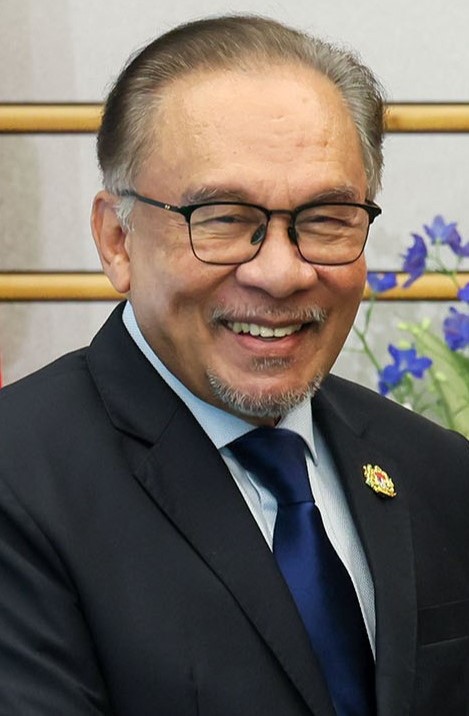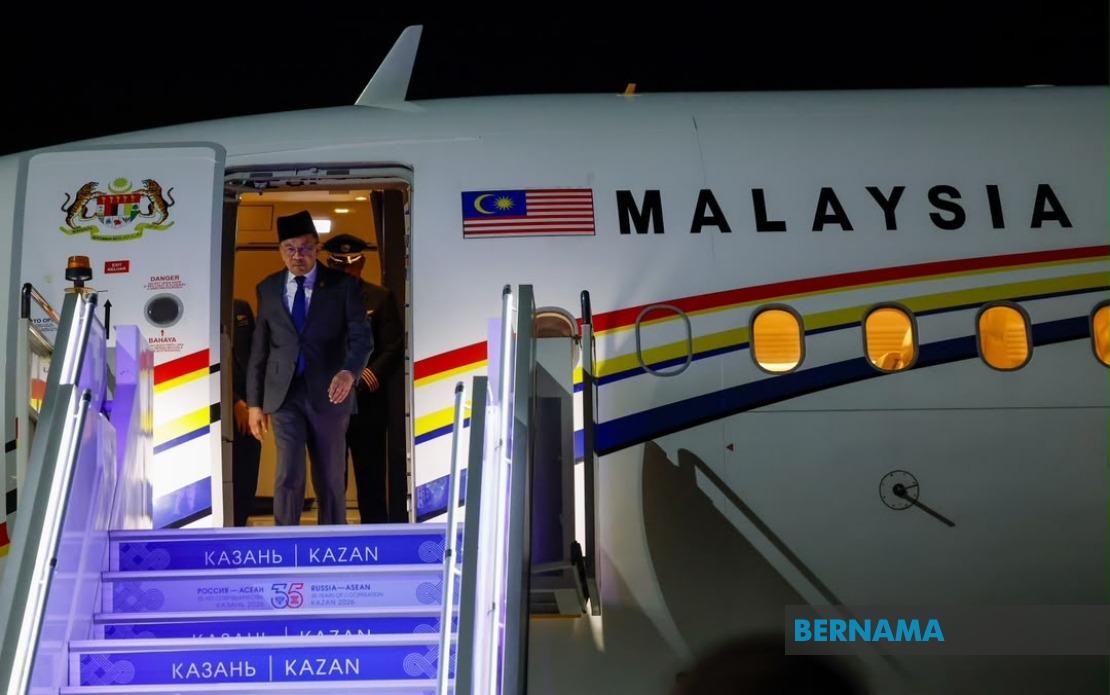
Prime Minister Datuk Seri Anwar Ibrahim landed in Kazan on Sunday evening to begin a two-day working visit focused on regional diplomacy and strengthening ties between Southeast Asia and Russia. The Malaysian leader touched down at Kazan International Airport at 10.20 pm local time, accompanied by a high-level delegation that includes Minister of Investment, Trade and Industry Datuk Seri Johari Abdul Ghani and Minister of Economy Akmal Nasrullah Mohd Nasir, along with officials from both the Prime Minister's Office and Malaysia's Foreign Ministry. Upon arrival, Malaysia's Ambassador to Russia Datuk Cheong Loon Lai received the premier, while the local Russian reception was headed by the Minister of Digital Development of Tatarstan Ilya Nachvin and Kazan Mayor Ilsur Metshin.
The centrepiece of Anwar's visit is the ASEAN-Russia Commemorative Summit scheduled for June 17-18, which assumes particular significance as it marks three and a half decades of formal diplomatic relations between the 10-nation Southeast Asian bloc and the Russian Federation. The relationship was formally established in 1991 in Kuala Lumpur, making this gathering in Russia's Tatarstan capital an occasion for both reflection and future-oriented planning. This summit represents a critical juncture for reassessing the strategic value of the partnership and identifying areas where cooperation can be expanded and deepened across multiple sectors that are vital to both regions' economic and security interests.
Malaysia's presence at this gathering underscores its commitment to maintaining ASEAN Centrality in regional and global affairs, particularly at a time when geopolitical tensions and economic uncertainties shape international relations. The Kingdom's participation demonstrates its recognition that constructive engagement with major powers like Russia, even amid global divisions, serves Southeast Asia's broader interests in maintaining dialogue channels and promoting stability. For Malaysian policymakers, this visit reflects a pragmatic approach to balancing relations with various international partners while advancing the bloc's collective agenda in an increasingly multipolar world order.
The substantive discussions at the summit are expected to encompass a comprehensive agenda spanning multiple dimensions of bilateral and multilateral cooperation. Trade and investment remain cornerstones of the relationship, offering opportunities for Malaysian and regional businesses to explore expanded commercial ties with Russia despite existing international sanctions. Beyond commerce, the summit will address critical challenges including energy security, a matter of acute relevance to Malaysia and ASEAN given the region's energy import dependencies and exposure to global market volatility. Food security discussions likewise carry urgency for Southeast Asia, where many nations face vulnerabilities in agricultural production and supply chain stability.
Digital economy cooperation represents an emerging frontier in ASEAN-Russia relations, reflecting both regions' recognition that technological advancement and digital transformation are central to future competitiveness and development. Science and technology partnerships, spanning fields from agriculture to aerospace and potentially renewable energy, could yield practical benefits for Malaysian research institutions and industries. Cultural and educational exchanges foster mutual understanding between peoples and create networks that benefit citizens of both ASEAN member states and Russia, while tourism collaboration can generate economic benefits and strengthen people-to-people connections that transcend governmental relations.
The summit is anticipated to produce four significant outcome documents that will provide a framework for cooperation extending through 2030. These include the Kazan Declaration commemorating the 35-year milestone, bilateral statements on energy and cultural cooperation, and a comprehensive action plan that operationalizes the ASEAN-Russia Strategic Partnership across the decade ahead. These instruments are designed not merely as ceremonial products but as working blueprints that will guide concrete initiatives, allocate resources, and establish accountability mechanisms for the implementation of agreed cooperation frameworks.
During his Kazan sojourn, Anwar is slated to hold a bilateral meeting with Russian President Vladimir Putin, providing a platform to discuss Malaysia-specific interests and bilateral matters affecting both nations. Such high-level engagements afford Malaysian leadership opportunities to advocate priorities including dialogue-based approaches to regional conflicts, economic resilience in the face of external shocks, and mutual interests in energy and food security. Additional meetings with the Rais of Tatarstan and fellow ASEAN leaders attending the summit will enable Anwar to coordinate regional positions and address issues of shared concern affecting Southeast Asian nations' strategic interests.
This Kazan visit constitutes Anwar's third trip to Russia since assuming the office of Prime Minister in November 2022, indicating a pattern of sustained engagement with Moscow despite the geopolitical challenges facing Russian-Western relations. His previous visit to Vladivostok in September 2024 for the Eastern Economic Forum, followed by an official Moscow visit in May 2025 where discussions covered trade, investment, agriculture, education, aerospace and energy cooperation, demonstrate Malaysia's intent to maintain active diplomatic channels and explore mutually beneficial cooperation initiatives. The frequency of these engagements suggests that the Malaysian government views Russia as a significant partner deserving high-level attention despite regional and international complexities.
For Malaysia and ASEAN more broadly, maintaining constructive relations with Russia serves strategic purposes aligned with the region's interests in peace, stability, and prosperity. The forums and dialogues facilitated through ASEAN-Russia channels provide platforms where Southeast Asian perspectives on global issues can be heard by major powers, potentially influencing outcomes in ways that safeguard regional interests. Moreover, ASEAN nations benefit from diversified international partnerships that reduce excessive dependence on any single power and provide alternative sources of technology, investment, and markets that can strengthen regional autonomy and resilience.
The summit's focus on practical cooperation across trade, energy, food security, and digital domains reflects a pragmatic approach to international relations that prioritizes tangible outcomes benefiting citizens and businesses over ideological alignment. For Malaysian stakeholders in particular, expanded cooperation in areas like renewable energy technology, agricultural innovation, and digital economy development could generate competitive advantages and create new opportunities for growth. The emphasis on people-to-people exchanges also recognises that sustained cooperation ultimately depends on building mutual understanding and positive relationships among citizens, not merely governmental transactions.
Anwar's participation in this 35th-anniversary summit signals Malaysia's reaffirmation of its commitment to maintaining and strengthening ASEAN-Russia relations at a time when global polarisation presents both risks and opportunities for regional actors. By actively engaging with Russia and advocating for dialogue-based approaches to international challenges, Malaysia reinforces ASEAN's role as a stabilising force in regional geopolitics and demonstrates that Southeast Asian nations can maintain productive relationships with major powers across different alignments. The outcomes of this summit, to be crystallised in the four outcome documents, will likely shape the trajectory of ASEAN-Russia cooperation for years to come, with potential implications for Malaysian trade flows, energy security, technological advancement, and broader regional stability.