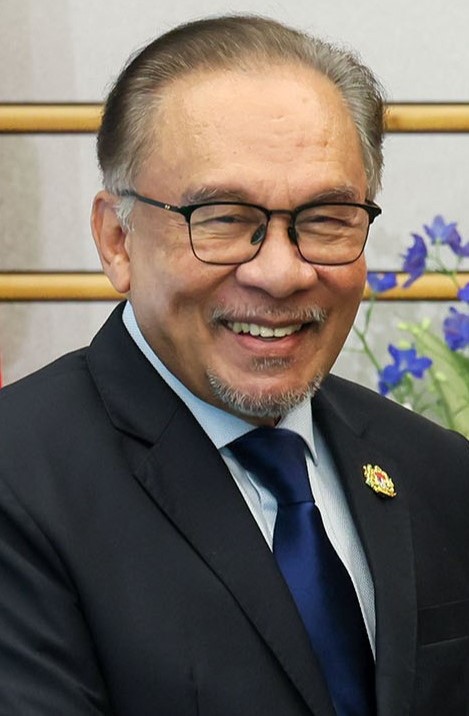
Prime Minister Datuk Seri Anwar Ibrahim has issued a nationwide appeal for Malaysians to adopt the spiritual and philosophical principles embodied in Hijrah, framing the concept as essential to the country's collective advancement. Speaking from Kuala Lumpur, the Prime Minister positioned Hijrah—the Islamic concept of migration or transformation toward a righteous path—as a unifying framework that transcends religious boundaries and speaks to universal values of integrity, economic wellbeing, and social stability.
The call reflects Anwar Ibrahim's broader vision for national cohesion at a time when Malaysia faces complex challenges spanning economic resilience, social fragmentation, and institutional trust. By invoking Hijrah, the Prime Minister tapped into a concept deeply rooted in Islamic tradition whilst simultaneously attempting to reframe it as applicable to all Malaysians, regardless of faith. This rhetorical approach underscores a deliberate strategy to anchor national discourse in shared ethical principles rather than divisive identity politics.
The emphasis on truth as a pillar of Hijrah carries significant implications for governance and public trust. In the Malaysian context, where concerns about political integrity, financial accountability, and institutional credibility have featured prominently in recent discourse, Anwar's invocation of truth-centred values signals a commitment to transparency and honourable conduct across all sectors. This messaging appears designed to rebuild confidence in government institutions and encourage citizens to engage with the state and each other on a foundation of honesty and mutual respect.
Prosperity emerged as a second defining element in the Prime Minister's framing of Hijrah. Malaysia's economy has navigated turbulent waters, contending with inflationary pressures, labour market shifts, and the imperatives of digital transformation. By linking Hijrah to prosperity, Anwar positioned the spiritual concept as inseparable from material wellbeing and economic opportunity. This fusion suggests that national development cannot be divorced from ethical foundations, and that sustainable economic progress depends upon establishing proper values within society and its institutions.
Security constitutes the third dimension of Anwar's Hijrah framework. In Southeast Asia's strategic landscape, security encompasses physical safety, borders, cybersecurity, and social cohesion. The Prime Minister's invocation of security as part of Hijrah messaging addresses concerns about internal stability and external vulnerabilities. By grounding security within a values-based narrative, rather than framing it purely through enforcement mechanisms, Anwar attempted to present a holistic vision where citizens feel protected not merely by state apparatus but by shared commitment to ethical conduct and collective responsibility.
The timing of this appeal carries particular significance. Malaysia continues to navigate post-pandemic economic recovery whilst managing social healing following periods of significant political tension. The nation's multicultural, multi-faith composition renders inclusive messaging critical to political stability and national unity. Anwar's effort to present Hijrah as a universal framework applicable across Malaysia's diverse communities represents an attempt to transcend sectarian divides and locate common ground in shared aspirations for honest governance, economic opportunity, and personal security.
Historically, the Hijrah concept has served as inspiration for personal and communal transformation across Islamic societies. Its application to contemporary Malaysia, however, requires careful calibration. The Prime Minister's framing suggests not literal migration but rather a metaphorical and practical journey toward establishing better systems, stronger institutions, and more trustworthy relationships between government and governed. This interpretation democratises the concept, making it accessible to citizens of all backgrounds who share commitment to these foundational values.
For regional observers, Anwar's address underscores Malaysia's attempt to position itself as a nation where development proceeds hand-in-hand with ethical governance and social responsibility. The appeal resonates within a broader Asian context where questions about balancing economic growth with institutional integrity continue to occupy policymakers and citizens alike. Malaysia's particular configuration as a Muslim-majority nation with significant non-Muslim populations adds complexity to how values-based national narratives are constructed and received.
The practical implications of this messaging extend across multiple policy domains. In education, embracing Hijrah spirit might translate to curricula emphasising ethical reasoning and honest intellectual inquiry. Within business and finance, it could underpin regulatory frameworks designed to prevent corruption and ensure market fairness. Public administration and law enforcement could leverage this framework to motivate institutional reforms centred on transparency and accountability. Whether and how these principles translate from rhetoric into substantive policy change will determine the genuine impact of Anwar's call.
Looking forward, the resonance of Anwar's Hijrah appeal depends significantly upon the government's ability to demonstrate concrete progress in delivering the three pillars he identified. Citizens and observers will scrutinise whether governance becomes more truthful and transparent, whether economic policies genuinely generate shared prosperity, and whether security—both personal and national—strengthens. In this sense, the Prime Minister's invocation of Hijrah principles essentially sets a benchmark against which his administration will be evaluated.