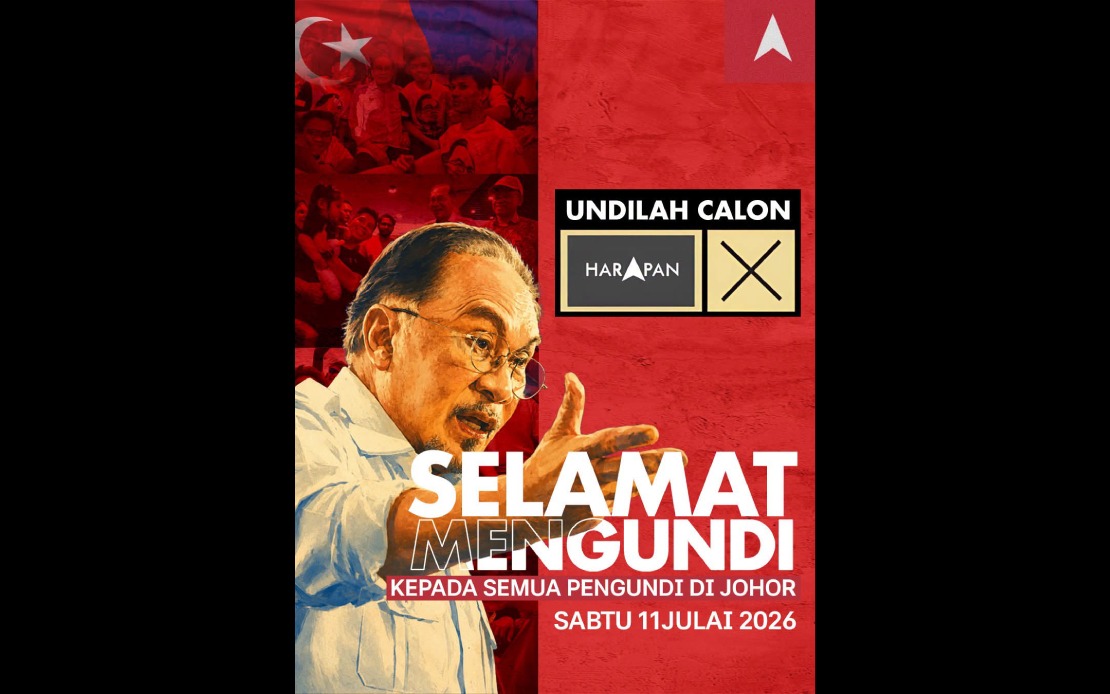
Prime Minister Datuk Seri Anwar Ibrahim is making a final push to mobilise voters across Johor ahead of tomorrow's state election, urging citizens both at home and abroad to participate in what he characterises as a defining moment for the state's future. Speaking through social media, the Pakatan Harapan chairman emphasised the significance of the 16th Johor state election as an opportunity for residents to shape the direction of their state for the next five years.
Anwar's appeal carries particular weight given the migration of working-age Johoreans to other states and overseas for employment opportunities. By specifically calling on expatriate voters to return, the Prime Minister is attempting to maximise turnout in a competitive election where every vote may prove decisive. The emphasis on "people's power" and civic duty frames voting as both a democratic responsibility and a collective investment in Johor's development trajectory.
The government's message centres on performance and delivery. Anwar highlighted the MADANI Government's record of institutional reforms, foreign investment inflows, wage improvements, and completion of long-stalled infrastructure projects. This narrative positions Pakatan Harapan as a force for tangible economic and social progress, a critical argument in state elections where voter concerns typically focus on employment, local services, and quality of life.
International standing has become part of the government's domestic political messaging. Anwar contended that Malaysia's restored reputation on the world stage—a reference to improvements in the country's governance perception following the 2022 transition of power—represents dividends that should extend to state-level governance. This argument attempts to connect federal-level achievements to state-level voting choices, suggesting that rewarding the coalition at Johor's level will perpetuate reform momentum.
The Prime Minister's framing of the election as a choice between integrity and corruption is notably blunt. By calling voters to reject those who "defend the theft of public funds," Anwar directly references the 1Malaysia Development Berhad scandal and associated convictions that dominated Malaysian politics. This language activates memories of governance failures under previous administrations and positions the current election as a referendum on accountability standards.
Anwar further distinguished Pakatan Harapan by criticising political approaches that rely on "racial and religious incitement" to mobilise voters. This critique, while not naming specific opponents, appears aimed at the Perikatan Nasional coalition and its component parties, particularly those using communal appeals. The Prime Minister's framing suggests that modern Malaysian politics should move beyond identity-based mobilisation toward policy-based competition.
The invocation of religious blessing and the inclusion of a traditional Malay poem in his appeal demonstrate Anwar's effort to connect with cultural and spiritual values central to Johor's predominantly Malay-Muslim electorate. This stylistic choice balances the modernising, reform-oriented messaging with acknowledgment of traditional modes of political communication, potentially broadening his appeal across demographic segments.
With 172 candidates contesting 56 seats, the Johor election represents significant competition. The number of candidates per seat suggests multi-cornered contests in many constituencies, potentially fragmenting votes and creating opportunities for candidates to win with relatively modest support levels. This dynamic makes turnout and vote consolidation critical factors determining which coalition prevails.
Johor's strategic importance in Malaysian politics cannot be overstated. As the nation's second-largest state by population and a significant economic contributor, the election result will influence perceptions of Pakatan Harapan's durability and resilience. A strong showing would reinforce the coalition's federal position, while setbacks could embolden opposition claims that the government has lost voter confidence. For Southeast Asian observers monitoring Malaysian political stability, the Johor outcome will signal whether the 2022 power transition has produced sustainable governance improvements or merely temporary shifts in factional balance.
Anwar's final appeal emphasises unity and inclusive prosperity—invoking "Bangsa Johor" as a cross-communal identity and pledging a future that is "prosperous, fair and secure for all communities." This language reflects an attempt to transcend narrow factional politics and position Pakatan Harapan as a steward of shared interests rather than sectional advantage. Whether such messaging proves persuasive to voters will become apparent once polls close, with the result likely reverberating through Malaysian politics well beyond Johor's borders.

