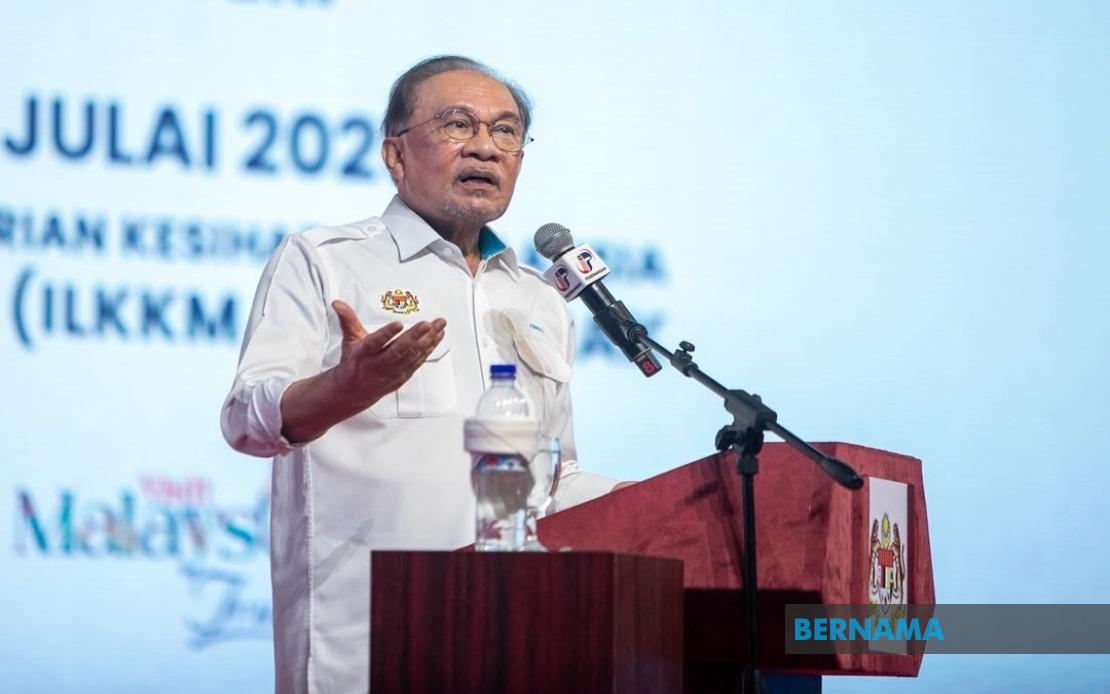
Prime Minister Datuk Seri Anwar Ibrahim has issued a pointed call for Malaysia's younger generation to reconnect with the country's independence struggle and grasp the profound significance of the freedoms they inherit today. Speaking at the formal launch of the 2026 National Month and Fly the Jalur Gemilang Campaign in Ipoh on July 19, Anwar framed national pride not as empty pageantry but as a conscious reckoning with history—one he suggested contemporary Malaysians have begun to overlook.
The Prime Minister's remarks come as Malaysia approaches the 69th year of independence, a milestone that carries weight for policymakers concerned about generational disconnect from founding narratives. Anwar emphasised that the ease and material comfort enjoyed by Malaysians in 2024 stands in stark contrast to the hardship endured by independence pioneers. He articulated this tension explicitly, noting that an entire generation has grown up in a nation already independent, lacking direct witness to the sacrifices that secured that status. This gap between lived experience and historical inheritance, he suggested, creates a moral imperative for deliberate education and reflection.
At the heart of Anwar's message was a three-part framework for national remembrance. First, he stressed the necessity of revisiting historical narratives—essentially calling for Malaysians to actively study and discuss the independence movement rather than passively accepting their national status. Second, he tied this intellectual exercise to symbolic action, positioning the flying of the national flag as more than decoration but as a tangible affirmation of unity rooted in shared history. Third, he oriented both historical reflection and symbolic practice toward future nation-building, suggesting that understanding the past provides moral guidance for the challenges ahead.
The language Anwar employed—invoking the "blood, sweat and tears" of independence fighters—carried deliberate emotional weight. By repeating this phrase and directly addressing young people as "children," he sought to personalise the message and create a sense of intergenerational obligation. His rhetoric implied that forgetting or minimising the struggle would constitute a betrayal of those who died for the nation, a framing that has deep resonance in Malaysian political discourse.
The launch event brought together several senior government figures, signalling the administration's commitment to the 2026 National Month campaign as a whole-of-government initiative. Communications Minister Datuk Seri Fahmi Fadzil, National Unity Minister Datuk Aaron Ago Dagang, and Perak Menteri Besar Datuk Seri Saarani Mohamad were present, indicating that the message carries endorsement across multiple ministerial portfolios concerned with communications, social cohesion, and state-level governance. This orchestration suggests the government views national remembrance not as a ceremonial nicety but as a strategic priority.
The timing of the campaign launch is politically significant. Malaysia has witnessed rising polarisation along ethnic, religious, and partisan lines over recent years, with younger voters sometimes appearing detached from the nation-building consensus that characterised earlier decades. By explicitly targeting the younger generation and framing historical knowledge as foundational to national unity, Anwar's intervention addresses a perceived gap in civic consciousness. The campaign name itself—incorporating both "National Month" (the familiar August celebration) and the Jalur Gemilang (national flag)—suggests an effort to revitalise and expand what might otherwise be a routine observance.
For Malaysian readers, particularly younger citizens navigating questions of national identity in an increasingly complex world, Anwar's address raises important questions about how societies transmit values across generations. The Prime Minister's concern reflects broader anxieties across Southeast Asia about whether post-independence generations can be custodians of founding principles without having experienced the struggles that produced them. This challenge is not unique to Malaysia—Singapore, Indonesia, and Thailand all grapple with similar questions about how to keep independence narratives alive and meaningful.
The emphasis on appreciation and understanding rather than mere celebration also warrants attention. Anwar avoided nationalist bombast or calls for uncritical reverence. Instead, he positioned historical knowledge as a prerequisite for genuine patriotism and future progress. This framing suggests that the government believes young Malaysians are sophisticated enough to engage with complex narratives about struggle and sacrifice, and that doing so will deepen rather than diminish their commitment to the nation.
The National Month campaign, running through 2026, will likely feature educational initiatives, media campaigns, and community events designed to operationalise Anwar's exhortation. Whether these efforts will meaningfully shift generational attitudes toward national history remains to be seen, but the launch demonstrates that Malaysia's political leadership recognises historical consciousness as integral to contemporary governance challenges. In an era marked by rapid social change and competing narratives about national identity, the government's determination to anchor present-day Malaysians in the independence struggle reflects a calculation that shared historical understanding remains essential for national cohesion.

