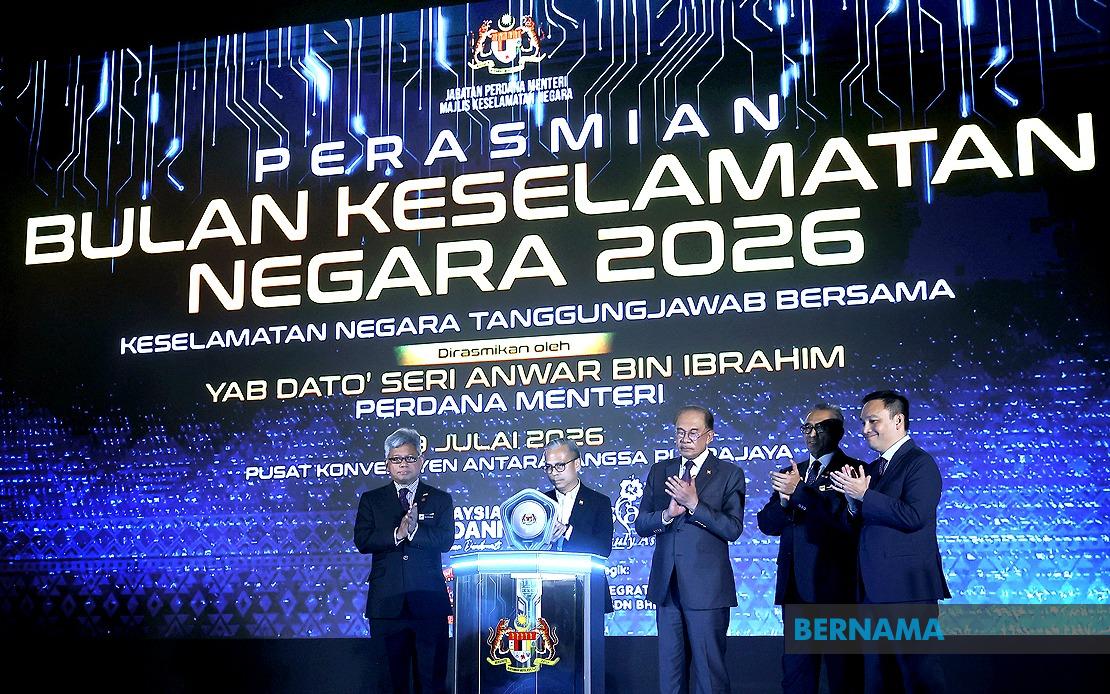
Prime Minister Datuk Seri Anwar Ibrahim has sounded an urgent call for national unity, warning that prolonged focus on divisive identity-based politics risks undermining Malaysia's capacity to address more pressing security challenges. Speaking at the National Security Month 2026 launch in Putrajaya, the Prime Minister expressed alarm at the persistence of state, racial and religious narratives in political discourse, arguing that such preoccupations divert governmental attention and resources from threats that demand immediate action.
The warning reflects a strategic shift in how the government is framing national discourse. Anwar's remarks suggest frustration with what he perceives as outdated political debates that continue to dominate parliamentary discussions and public conversation, despite their diminishing relevance to contemporary security realities. He emphasised that Malaysians should resist becoming ensnared by old political polemics, particularly as the nation grapples with technological and digital threats that were barely contemplated a generation ago. The Prime Minister's intervention suggests an administration seeking to redirect the national conversation away from identity-based grievances and towards an agenda centred on institutional modernisation and threat mitigation.
Anwar's comments carry particular weight given Malaysia's recent experiences with cyber-attacks, social media-driven misinformation, and transnational security challenges. The nation has confronted escalating digital threats targeting critical infrastructure, alongside more conventional security concerns. By positioning these emerging threats as the legitimate focus of political leadership, Anwar is attempting to establish a hierarchy of national priorities that prioritises technological and digital resilience over traditional identity politics. This framing also aligns with broader regional concerns about digital sovereignty and information warfare, issues affecting Southeast Asian governments increasingly.
The event brought together key government figures including Communications Minister Datuk Fahmi Fadzil, Chief Secretary to the Government Tan Sri Shamsul Azri Abu Bakar, and National Security Council director-general Datuk Raja Nurshirwan Zainal Abidin, underscoring the government's commitment to presenting a united front on security matters. The presence of the Communications Ministry suggests recognition that information management and digital narrative control form critical components of contemporary security strategy. This institutional alignment reflects evolving understanding among Malaysian policymakers that traditional security challenges now intertwine inseparably with information and communications domains.
Beyond the rhetoric of unity, Anwar's address signalled a fundamental reconceptualisation of what constitutes a security threat in the Malaysian context. He stressed that contemporary security challenges demand not merely reactive responses but proactive institutional adaptation across all government departments and agencies. This represents a departure from historical patterns where security policy often responded to crises after they materialised. The Prime Minister explicitly rejected what he characterised as routine bureaucratic approaches, instead calling for accelerated learning and understanding of emerging technologies and novel threat vectors among governmental leadership.
The emphasis on proactive governance carries implications for how Malaysian institutions allocate resources and prioritise strategic planning. Anwar's insistence that departmental leaders must actively engage with new security challenges suggests potential restructuring of government operations and reallocation of budgetary priorities. For a nation managing diverse regional interests and developmental objectives, such reorganisation could reshape policy trajectories across multiple domains. The call for departments and ministries to move beyond conventional approaches implies recognition that siloed institutional responses prove insufficient for addressing interconnected digital and technological threats.
Anwar's warnings also reflect broader international trends where democratic societies confront rising social polarisation and disinformation campaigns that exploit existing identity divisions. By urging Malaysians to transcend state and religious sentiments, the Prime Minister positions the government as seeking to build resilience against external actors who might seek to weaponise internal divisions. This framing acknowledges that in an interconnected world, domestic social fragmentation creates vulnerabilities that sophisticated adversaries can exploit. The integration of national unity rhetoric with security concerns suggests a sophisticated understanding of how internal cohesion and external security resilience interconnect.
For Malaysian readers and regional observers, the Prime Minister's message carries implications extending beyond immediate security policy. His public emphasis on moving beyond traditional identity-based politics, articulated through the security lens, indicates the administration's assessment that continued focus on racial and religious grievances inhibits national capacity for modernisation and development. This positioning potentially signals forthcoming policy initiatives that de-emphasise identity-based political mobilisation in favour of technocratic governance approaches. Whether such messaging translates into meaningful institutional change remains uncertain, but the public articulation suggests ideological commitment to reframing national priorities.
The timing of these remarks during National Security Month programming suggests deliberate messaging strategy intended to establish security imperatives as overriding considerations in national discourse. By framing divisive identity politics as obstacles to security, the government attempts to delegitimise such discourse on pragmatic rather than normative grounds. This rhetorical manoeuvre potentially proves more effective than direct moral appeals for unity, as it grounds the call for cohesion in material security concerns rather than abstract ideals. The approach acknowledges that Malaysian political discourse frequently rewards appeals to group identity, and therefore reframes such appeals as counterproductive to collective security interests.
Moving forward, the extent to which governmental messaging translates into transformed institutional behaviour will indicate whether Anwar's warnings represent genuine strategic reorientation or primarily rhetorical positioning. The involvement of communications and security agencies in the National Security Month programme suggests efforts to operationalise the Prime Minister's messaging through coordinated government communications. However, entrenched institutional interests and political constituencies invested in identity-based narratives may resist substantive transformation regardless of official messaging. The coming months will reveal whether Malaysia's government can translate the Prime Minister's articulated priorities into coherent policy action across its diverse agencies and departments.

