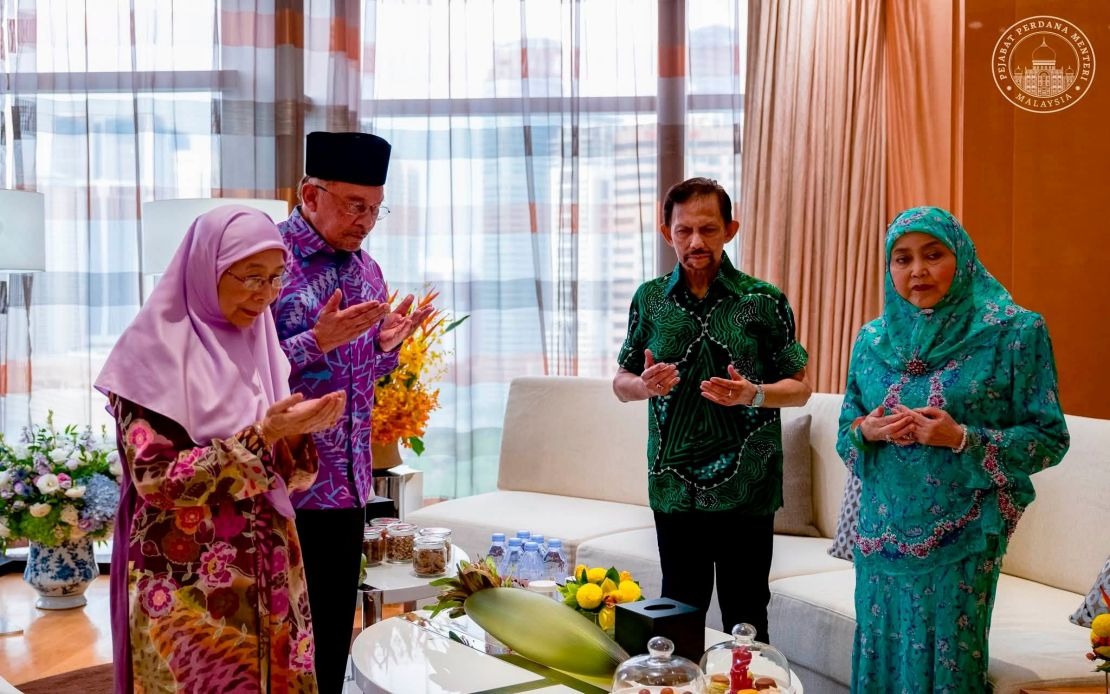
Prime Minister Datuk Seri Anwar Ibrahim marked the 80th birthday of Sultan Hassanal Bolkiah with formal congratulations, underscoring the significance Malaysia places on its relationship with the neighbouring Sultanate. The message, delivered through a Facebook post on July 15, came on behalf of both the Malaysian Government and its people, reflecting the diplomatic weight assigned to the milestone celebration.
The gesture carries particular meaning given the historical and cultural ties binding Malaysia and Brunei Darussalam. As an Islamic monarchy with deep-rooted traditions similar to Malaysia's own constitutional framework, Brunei remains a key regional partner in Southeast Asia. Anwar's public acknowledgement of the Sultan's personal milestone serves not merely as a courtesy but as a reaffirmation of bilateral goodwill at the highest political level, signalling continuity in diplomatic relations between the two nations.
In his message, Anwar expressed hope that Sultan Hassanal Bolkiah would continue exercising his leadership "with wisdom and prudence," language that reflects both respect for the monarch's long tenure and an acknowledgement of the challenges facing regional governance. The phrasing suggests recognition of the Sultan's extensive experience in steering Brunei through decades of geopolitical shifts, economic transitions, and evolving regional dynamics.
A central element of Anwar's statement focused on strengthening bilateral cooperation. The Prime Minister specifically invoked the prospect of deepened ties "for the benefit of both countries and their people," acknowledging that enhanced Malaysia-Brunei relations extend beyond governmental interaction to encompass broader mutual prosperity. This framing appeals to shared interests in trade, security, cultural exchange, and regional stability—areas where both nations collaborate within frameworks like the Association of Southeast Asian Nations (ASEAN).
Sultan Hassanal Bolkiah's longevity on the throne places him in rarefied historical company. Born on July 15, 1946, in Bandar Brunei, the city now known as Bandar Seri Begawan, he ascended to power in 1967 as the 29th Sultan of Brunei. His reign has spanned more than five decades of independent nationhood, having led Brunei through its transition to full sovereignty and into its contemporary role as a resource-rich nation with significant influence within ASEAN forums.
The Sultan's status as the world's longest-reigning monarch still actively reigning represents a remarkable achievement. Following the death of Queen Elizabeth II in September 2022, he assumed this distinction, a development that elevated his profile in global monarchical circles. This international standing enhances Brunei's diplomatic weight and, by extension, positions the nation as a voice of continuity and stability within Southeast Asian councils.
For Malaysia, maintaining strong relations with Brunei serves several strategic interests. The two nations share maritime boundaries, common ASEAN commitments, and overlapping security concerns including maritime safety and regional prosperity. Economic ties, whilst sometimes overshadowed by larger regional trading partners, remain significant, particularly in energy sectors and cross-border commerce. Cultural and religious affinity also underpins the relationship, with both nations serving as custodians of Malay-Muslim heritage within the wider region.
Anwar's public recognition of the Sultan's milestone also reflects the Malaysian Government's broader diplomatic strategy under his leadership. Since assuming office, Anwar has consistently emphasised Malaysia's commitment to regional partnership and multilateral engagement. His intervention in acknowledging significant events in neighbouring nations' calendars demonstrates a hands-on approach to diplomacy and an understanding that ceremonial gestures carry substantive diplomatic value in maintaining relationships with long-standing neighbours.
The timing of the message, released on the exact date of the Sultan's birth, underscores the formal nature of the gesture. Rather than arriving as a delayed afterthought, the immediate acknowledgement signals that the milestone received proper attention at the highest levels of Malaysian government, suggesting the event warranted direct Prime Ministerial focus despite the numerous competing demands on his office.
Looking forward, Anwar's expressed hope for strengthened Malaysia-Brunei cooperation carries practical implications. Both nations face common regional challenges, from maritime security to economic diversification, areas where enhanced collaboration could yield mutual benefits. The Sultan's continued leadership, combined with Malaysia's own political direction under Anwar's stewardship, creates an opportunity for deeper engagement across multiple domains, from trade and investment to educational and cultural exchanges.
The exchange also reflects broader patterns in Southeast Asian diplomacy, where ceremonial acknowledgements of national leaders' milestones serve as touchpoints for reinforcing bilateral relationships. In a region where personal relationships between leaders often carry weight in shaping policy directions, such public recognition helps maintain the goodwill necessary for addressing more substantive issues requiring interstate cooperation. Anwar's message thus functions simultaneously as birthday greeting, diplomatic statement, and implicit invitation for continued collaboration.

