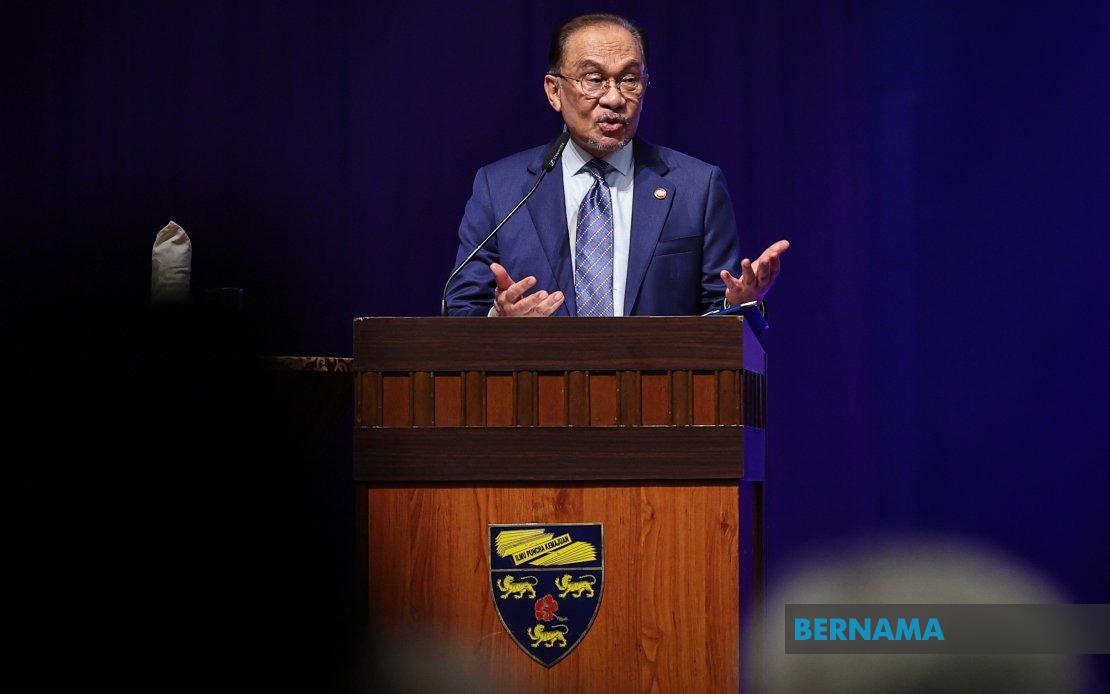
Prime Minister Datuk Seri Anwar Ibrahim has demonstrated personal engagement with the struggles of ordinary Malaysians by extending financial assistance to a gravedigger in Kuala Terengganu who is fighting a losing battle against mouth cancer. Through the Implementation Coordination Unit (ICU) of the Prime Minister's Department, a contribution of RM2,000 in cash was handed to Rosli Abdullah, 52, during a presentation at the Flat Batas Baru surau, highlighting how leadership intervention can sometimes bridge critical gaps in social welfare coverage for the nation's most vulnerable citizens.
Rosli's plight represents a sobering reminder of how individuals operating in the informal economy often fall through the cracks of Malaysia's safety net. The gravedigger has been battling mouth cancer for three years, a prolonged and debilitating condition that has progressively stripped away his capacity to work and sustain himself. Over recent months, his health deterioration has accelerated dramatically—he has been unable to speak for the past month due to severe swelling affecting his mouth and right cheek, and for two weeks he has consumed only liquids through a feeding tube, unable to manage solid food whatsoever. This cascade of medical complications demands immediate surgical intervention, yet the financial burden of such treatment had been placing him in an increasingly desperate situation.
According to Azhar Abd Hamid, deputy director of the Terengganu Federal Development Department, the Prime Minister's donation was specifically intended to alleviate the immediate financial pressures surrounding Rosli's upcoming surgery and ongoing treatment costs. However, the intervention extends beyond the cash assistance itself. Officials conducting a review of Rosli's circumstances discovered a significant administrative gap: despite his obvious need, he had not been registered as a recipient of e-Kasih, Malaysia's electronic assistance program for low-income households. This oversight meant he had been ineligible for periodic social assistance that could have eased his burden substantially over time. Recognising this lapse, the implementing agency committed to registering him immediately, opening the pathway for sustained government support moving forward.
The medical trajectory of Rosli's condition underscores the complexity of managing advanced cancer cases within Malaysia's healthcare system. The Sultanah Nur Zahirah Hospital in Terengganu, unable to provide the specialist intervention his case requires, has referred him to the Universiti Sains Malaysia Hospital in Kubang Kerian, Kelantan—a transfer that speaks to the regional distribution of tertiary medical facilities and the sometimes arduous journeys patients must undertake to access appropriate care. That Rosli has already undergone two surgical procedures yet the cancer has returned demonstrates both the aggressive nature of his malignancy and the often limited prognosis associated with advanced oral cancers, particularly when diagnosed at a stage requiring multiple interventions.
Rosli's personal circumstances compound the severity of his medical crisis. The 52-year-old lives alone and has never married, meaning he lacks the family support networks that typically sustain Malaysians through serious illness. He has resided at the Flat Batas Baru surau for more than three decades, having built his life around modest employment—first as a gravedigger, later supplementing this with cleaning work at the surau itself. His deteriorating health has rendered both occupations impossible, severing his only sources of income and leaving him entirely dependent on the charity and goodwill of the surau's management for his basic survival needs.
The surau community has responded to Rosli's crisis with compassion, recognising their collective obligation to support one of their own. Mohd Radzali Mohamad, deputy chairman of the surau management, has publicly acknowledged the dire nature of Rosli's circumstances and confirmed that mosque officials have launched a dedicated donation fund to cover both medical and surgical costs. Yet the mechanism of community fundraising, while morally commendable, has proven insufficient to meet the mounting financial requirements. This gap between community capacity and actual need is precisely where government intervention becomes essential, and where the Prime Minister's office intervention carries particular weight.
The case of Rosli Abdullah raises important questions about the reach and responsiveness of Malaysia's social safety mechanisms, particularly for workers in informal or unregistered sectors. Gravediggers and other workers performing essential but low-status labour often operate in occupational categories that leave them vulnerable to administrative invisibility. They may lack formal employment records, consistent income documentation, or proactive outreach that would ensure their eligibility for assistance programs. That Rosli had not been registered for e-Kasih despite three years of documented illness suggests systemic gaps in how social workers and community health officials identify and enrol vulnerable individuals, especially those without strong institutional connections beyond their immediate surau or residential communities.
For Southeast Asian readers, Rosli's circumstances reflect challenges that extend across the region—the precarious position of informal workers when confronted with serious illness, the uneven geographic distribution of medical expertise and facilities, and the tension between community-based charity and state-provided assistance. Malaysia's positioning as a middle-income country with relatively developed health infrastructure makes such cases particularly instructive: even in comparatively advanced systems, cracks exist where vulnerable individuals can fall through. The Prime Minister's personal intervention, while providing immediate relief, also serves as a signal that such cases merit high-level attention—a message that carries implications for how government agencies throughout Terengganu and other states might approach outreach to vulnerable populations.
The broader policy implication of this case centres on the importance of proactive identification and enrollment mechanisms for assistance programs. If a man who has been visibly struggling with terminal cancer for three years remained unregistered for e-Kasih, the question arises regarding how many other vulnerable individuals similarly lack access to assistance they are entitled to receive. Community institutions like suraus, mosques, and religious organisations are often the first to recognise such need, yet they frequently lack formal linkages to government welfare bureaucracies that could translate recognition into expedited assistance. Strengthening these institutional pathways—perhaps through dedicated liaison officers or simplified referral mechanisms—could prevent future cases from reaching such acute stages before receiving government support.
The financial contribution itself, while meaningful in Rosli's immediate circumstances, remains modest relative to the likely costs of treating advanced oral cancer. Cancer treatment in Malaysia, whether pursued through public facilities like USM Hospital or private providers, typically involves substantial outlays for chemotherapy, radiation, surgery, and post-operative care. A RM2,000 donation addresses urgent near-term needs but cannot comprehensively cover the full arc of treatment. The more significant long-term intervention lies in the commitment to register Rosli for e-Kasih, which will provide recurring monthly assistance that could aggregate into meaningful support throughout his treatment journey and any subsequent palliative care needs. This combination of immediate crisis response and systematic integration into ongoing assistance structures offers a model that could usefully inform how government agencies respond to similar cases elsewhere.
Rosli Abdullah's story, while individualised in its particulars, encapsulates broader patterns concerning health security, economic vulnerability, and social protection in Malaysia. His experience demonstrates both the capacity of government leadership to intervene meaningfully in individual hardship and the remaining gaps in systematic coverage that leave vulnerable citizens exposed to catastrophic consequences when serious illness strikes. The surau community's mobilisation around his care reflects Islamic principles of collective responsibility that remain deeply embedded in Malaysian society, yet the inadequacy of community resources to meet his needs illustrates why state-level social protection remains essential. As Malaysia continues developing its social welfare architecture, cases like Rosli's suggest the value of strengthening formal mechanisms that ensure no vulnerable citizen—regardless of occupational status or community visibility—slips through without access to the assistance they require.

