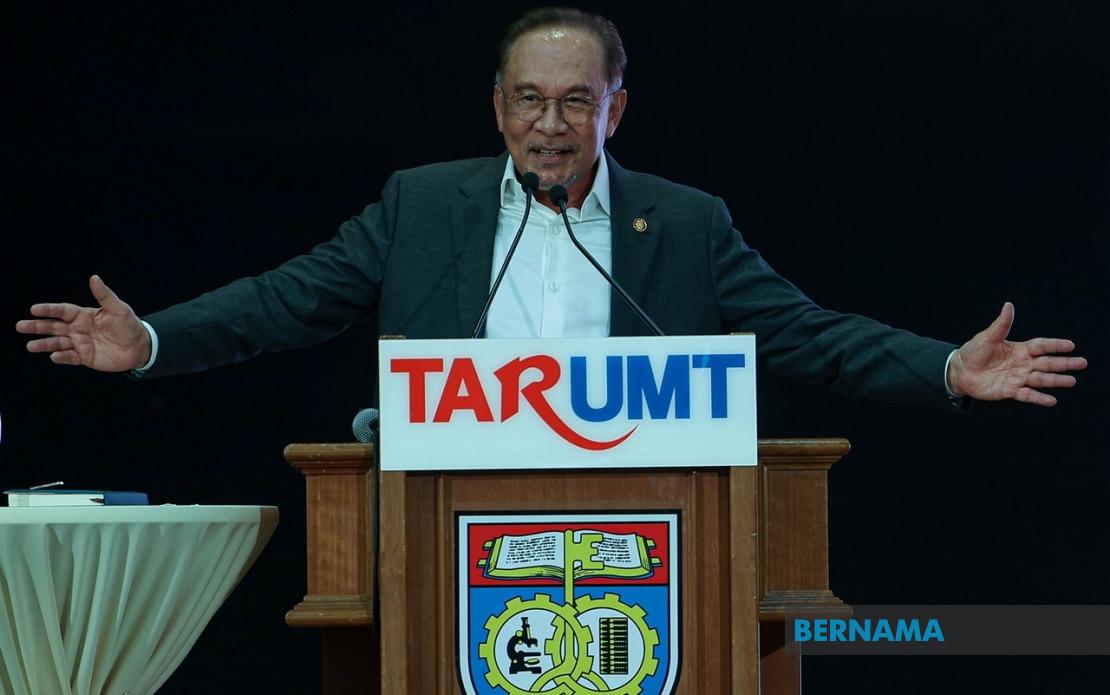
Prime Minister Datuk Seri Anwar Ibrahim has granted Tunku Abdul Rahman University of Management and Technology (TAR UMT) a 10-year extension of its tax exemption status, a decision that underscores the Government's commitment to supporting quality private higher education providers. The Cabinet formally reviewed and endorsed the extension during its routine meeting in Kuala Lumpur on July 8, signalling its backing for the institution's educational mission across Malaysia's private university landscape.
The approval represents a continuation of the MADANI Government's broader strategy unveiled earlier in the year to strengthen the nation's higher education ecosystem. During a visit to TAR UMT's campus on February 4, Prime Minister Anwar had announced that all educational bodies and foundations, including universities, would benefit from a 10-year tax exemption framework. The Cabinet's decision on July 8 operationalizes this commitment for TAR UMT specifically, though the extension comes with measurable conditions attached.
Communications Minister Datuk Fahmi Fadzil, serving as the MADANI Government's official spokesperson, detailed the Cabinet's appreciation for TAR UMT's contributions to Malaysia's education sector. The university has positioned itself as a provider of quality yet affordable private higher education, bridging an important gap between public institutions and expensive private alternatives. This role resonates with Government priorities around accessibility and economic inclusivity in tertiary education.
However, the extension is not unconditional. TAR UMT must undergo compliance reviews throughout the entire 10-year period to ensure it continues meeting prescribed standards. This mechanism protects the public interest while maintaining the tax exemption benefit. The university is required to submit independently audited financial statements on an annual basis, a requirement anchored in Subsection 44(6) of the Income Tax Act 1967. Such transparency measures ensure accountability and guard against potential misuse of tax-exempt status.
The compliance framework reflects a broader Government philosophy of conditional support. Rather than providing blanket exemptions without oversight, the Cabinet has structured the extension to demand ongoing transparency. Annual audited financial statements serve as the primary verification tool, allowing authorities to monitor whether the institution continues operating in alignment with its educational mission and public benefit obligations. This approach balances fiscal responsibility with support for private education.
For TAR UMT, the approval provides crucial financial predictability for the next decade. Tax exemption status directly impacts operational costs and allows universities to channel resources into academic programmes and student facilities rather than taxation obligations. With a 10-year runway, the institution can plan capital investments, curriculum development, and faculty expansion with greater confidence. This stability benefits not only the university but also its students, who may see improved services and educational quality.
The decision also signals Government confidence in TAR UMT's governance and performance. Selection for this extension, while applied to all eligible educational bodies, nonetheless represents an endorsement of the university's track record. The institution has maintained its reputation as a credible alternative to public universities, attracting students seeking specialized programmes and flexible learning arrangements. The tax exemption extension validates this positioning within Malaysia's education marketplace.
Within the broader context of Malaysia's higher education strategy, such extensions matter significantly. Private universities contribute meaningfully to the nation's tertiary education capacity, accommodating students who might otherwise struggle to find places in public institutions. By supporting efficient, compliant private providers through tax incentives, the Government extends educational access without directly bearing full operational costs. This public-private approach leverages market dynamics to serve public goals.
The announcement also carries implications for other educational institutions seeking similar exemption status. The Cabinet's willingness to extend tax exemptions for qualified providers suggests that performance-based compliance frameworks may become more common in Government support structures. Institutions not yet enjoying exemption status may view this decision as an opportunity to demonstrate their credentials for future consideration.
Looking forward, the 10-year timeframe provides both stability and a natural review checkpoint. By 2034, when this extension expires, TAR UMT and the Government can reassess whether the institutional landscape has shifted, whether the university continues meeting its mission, and whether tax exemption remains the optimal support mechanism. This built-in sunset provision encourages institutional accountability without creating permanent, unchangeable entitlements.
For Malaysian students and families, the approval's most tangible benefit lies in the continued cost predictability of private higher education. Universities operating on stable financial footing can maintain competitive fees and direct savings toward student scholarships and facility improvements. The extension therefore supports wider access to quality higher education across Malaysia's increasingly diverse student population.
The Cabinet's July 8 decision ultimately represents pragmatic governance: recognizing TAR UMT's public contribution, providing sufficient financial certainty for institutional planning, while maintaining rigorous compliance mechanisms that protect taxpayer interests. This balanced approach may serve as a template for Government support of private educational enterprises moving forward, combining incentive structures with accountability measures that ensure public benefit from private investment in Malaysia's education system.

