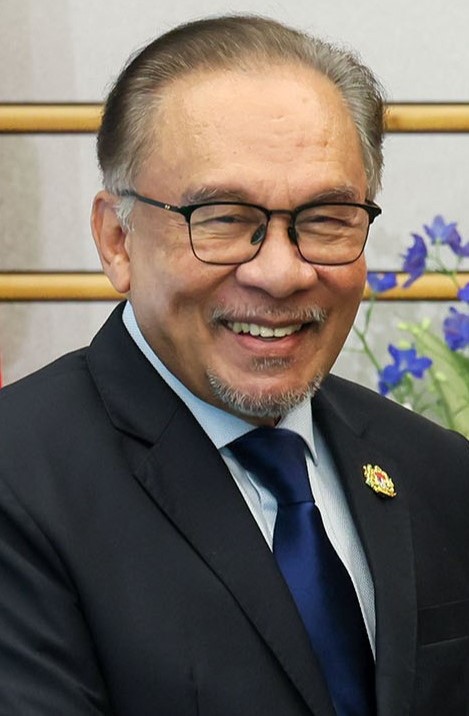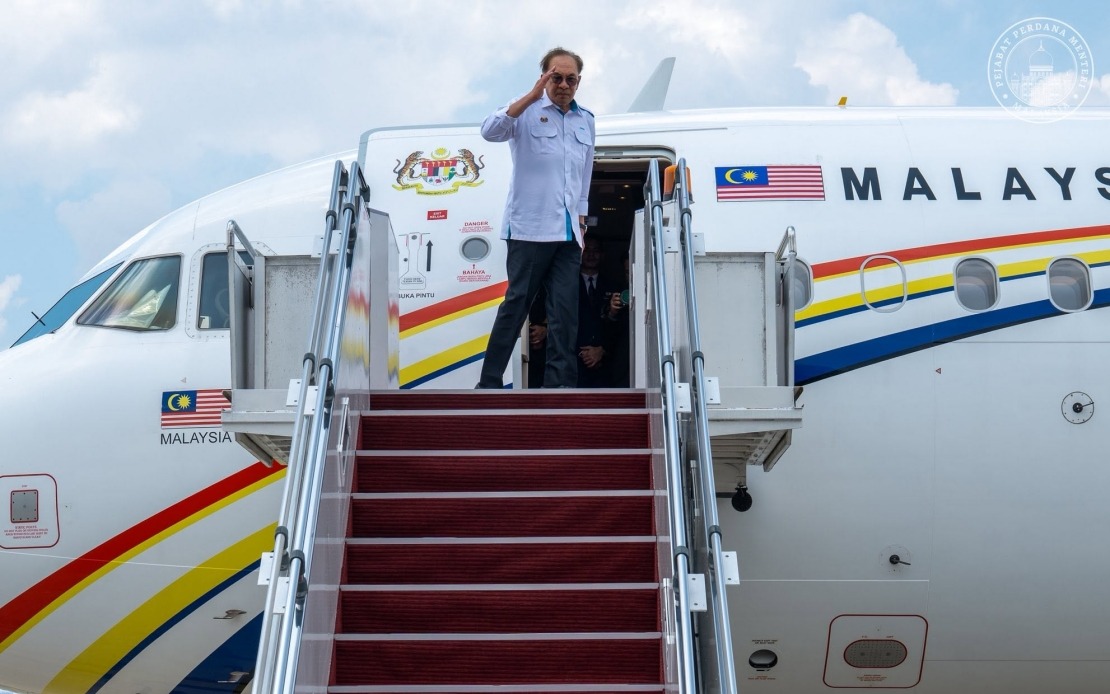
Prime Minister Datuk Seri Anwar Ibrahim left Subang Air Base on Sunday to lead Malaysia's delegation to the ASEAN-Russia Commemorative Summit in Kazan, underscoring the region's commitment to deepening ties with Moscow at a time of significant geopolitical realignment in Asia. The two-day gathering marks a milestone moment in the 35-year relationship between the ten-member regional bloc and Russia, a partnership that formally commenced in Kuala Lumpur in 1991 and has grown into a strategically significant framework for coordinating interests across multiple sectors.
Anwar's participation signals Malaysia's active role in shaping ASEAN-Russia engagement during a period when Moscow is seeking to strengthen economic and diplomatic connections across the Indo-Pacific following Western sanctions. The Prime Minister will hold bilateral discussions with Russian President Vladimir Putin, providing an opportunity to address bilateral concerns and explore expanded cooperation. Beyond the formal summit sessions, Anwar is scheduled to participate in the Russia-ASEAN Business Forum, where regional and Russian investors will discuss commercial opportunities spanning energy, agriculture, technology, and manufacturing sectors that hold particular relevance for Malaysian companies seeking to diversify markets and supply chains.
The Malaysian delegation includes heavyweight economic officials who will help shape discussions on trade and investment frameworks. Minister of Investment, Trade and Industry Datuk Seri Johari Abdul Ghani and Minister of Economy Akmal Nasrullah Mohd Nasir will accompany the Prime Minister, reflecting the government's intention to use the summit as a platform for advancing Malaysia's economic interests. Their presence signals that trade negotiation and commercial partnership development will occupy substantial space in bilateral and multilateral conversations, moving beyond diplomatic ceremony into practical business engagement.
The summit agenda encompasses a broad spectrum of cooperation domains, revealing how ASEAN-Russia relations have matured beyond Cold War-era security posturing into comprehensive strategic partnership. Energy cooperation remains especially significant for Malaysia, given Russia's dominance in global oil and liquefied natural gas markets and the region's substantial energy import requirements. Food security discussions carry particular weight in Southeast Asia, where multiple countries depend heavily on imports and face supply chain vulnerabilities exacerbated by global disruptions and climate-related agricultural challenges. The inclusion of digital economy and science-technology collaboration reflects both parties' recognition that 21st-century partnership requires innovation-focused engagement alongside traditional trade.
Cultural and educational exchanges feature prominently in the summit's framework, acknowledging that sustainable international relations rest on people-to-people connections and mutual understanding. Tourism cooperation between ASEAN nations and Russia presents considerable growth potential, particularly as travel patterns shift and Russian tourists seek diverse Asian experiences. These softer dimensions of engagement often generate goodwill and create constituencies within each nation invested in maintaining positive relations, providing stability to the partnership even when political circumstances shift.
The timing of this commemoration reflects Russia's intensifying efforts to pivot toward Asia as European markets become increasingly inaccessible due to sanctions regimes. For ASEAN, the summit represents an opportunity to maintain constructive relations with a major power while preserving the region's cherished strategic autonomy. Malaysia, as chair of ASEAN in 2023 and a consistent voice for non-alignment, is particularly well-positioned to bridge differing perspectives within the bloc regarding engagement with Russia, helping to forge consensus that respects both the region's interests and international law principles.
Following the Kazan summit, Anwar will proceed to Ashgabat for an official visit to Turkmenistan, where he has been invited by President Serdar Berdimuhamedow. This extension illustrates Malaysia's broader engagement strategy with Central Asian nations, regions often overlooked in Southeast Asian foreign policy despite their growing economic importance and connectivity to Belt and Road Initiative frameworks. The Turkmenistan leg of the journey suggests Malaysia is pursuing a more expansive regional diplomacy that extends beyond traditional Southeast Asian and East Asian partners.
The ASEAN-Russia Strategic Partnership framework has evolved significantly from its 1991 inception. Early Cold War-era caution has given way to pragmatic engagement across multiple dimensions. Russia's role as a permanent UN Security Council member lends it continued diplomatic weight despite economic challenges, while ASEAN's centrality to Indo-Pacific strategic calculations makes the bloc an attractive partner for Moscow. The relationship reflects broader trends in which middle powers and regional organizations craft independent foreign policies responsive to their own circumstances rather than binary alignment pressures.
For Malaysian stakeholders, this summit carries several implications. The business community gains visibility into Russian market opportunities and potential joint venture possibilities, while policymakers obtain direct channels to influential Russian decision-makers. Energy security discussions may yield concrete outcomes supporting Malaysia's long-term supply diversification objectives. The emphasis on digital economy cooperation aligns with Malaysia's Vision 2050 technological advancement goals and could facilitate knowledge transfer and investment flows in high-technology sectors.
The summit also reflects Malaysia's confidence in managing relationships with major powers while maintaining principled positions on international matters. Anwar's participation demonstrates that engagement with Russia need not compromise ASEAN's commitment to regional peace, rule of law, or support for international humanitarian norms. This balancing act has become increasingly delicate but remains essential for ASEAN nations seeking to preserve strategic options while upholding international standards.
As Anwar's delegation engages in Kazan, their contributions to discussions on practical cooperation will help determine whether ASEAN-Russia relations remain largely ceremonial or develop into substantive partnerships generating tangible benefits for both sides. Malaysia's role in these conversations, combining advocacy for regional interests with openness to Russian perspectives, positions the nation as a key voice in shaping the strategic partnership's future trajectory during a transformative period in global geopolitics.