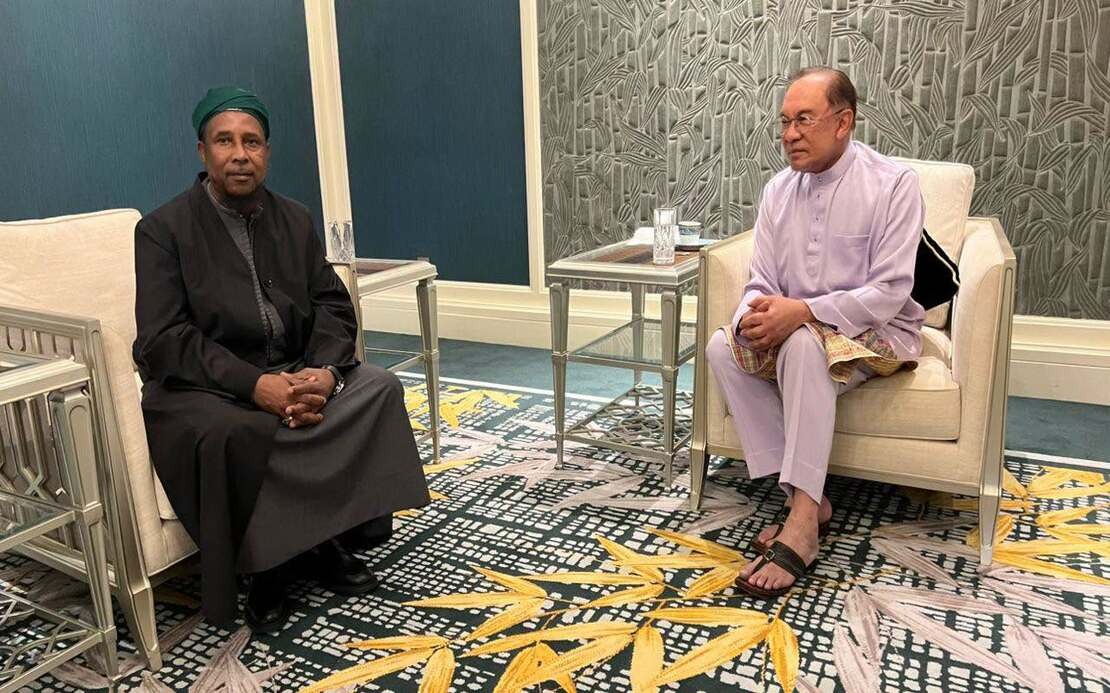
Prime Minister Datuk Seri Anwar Ibrahim hosted a farewell audience with Gambian Islamic scholar Sheikh Muhammad Haydara Al-Jilani on June 26, marking the conclusion of an extended visit that saw the West African religious leader conduct intensive knowledge-sharing and spiritual gatherings throughout Malaysia. The meeting, which took place amid the observance of the Day of Ashura on Friday, provided an occasion for dialogue between Malaysia's political leadership and international Islamic scholarship.
According to an official statement posted on Anwar's social media platforms, the Prime Minister utilised the encounter to request spiritual supplications for the Malaysian people and nation. The appeal centred on prayers for continued national prosperity, internal peace, and the maintenance of Allah's divine protection and blessings across the country. This public acknowledgement underscores the Malaysian government's integration of Islamic spiritual dimensions into its broader governance framework and public messaging.
Sheikh Muhammad Haydara Al-Jilani's presence in Malaysia stretched across a full month, during which he traversed multiple locations nationwide conducting religious educational sessions and dhikr programmes—intimate spiritual recollection gatherings deeply rooted in Islamic tradition. The scholar's itinerary represented a coordinated dakwah, or Islamic outreach initiative, designed to engage diverse Malaysian communities in theological reflection and scriptural study. Such visiting scholar programmes have become increasingly significant within Malaysia's Muslim-majority landscape, facilitating cross-cultural Islamic intellectual exchange and strengthening community religious participation.
The timing of the farewell meeting—coinciding with the Day of Ashura—carries particular spiritual significance within the Islamic calendar. Ashura, commemorating the tenth day of Muharram, holds profound meaning in Islamic history and is observed with varying traditions across Muslim communities worldwide. By conducting the farewell on this auspicious day, the meeting acquired additional symbolic weight, positioning it beyond mere diplomatic courtesy as a meaningful convergence of spiritual calendars and intentions.
For Malaysia, hosting visiting Islamic scholars from across the Muslim world reflects the nation's self-positioning as a centre of Islamic learning and interfaith dialogue within Southeast Asia. These engagements facilitate the exchange of theological perspectives, educational methodologies, and spiritual practices that enrich Malaysia's Muslim communities while projecting the country's commitment to Islamic scholarship and religious knowledge dissemination. The inclusion of West African Islamic traditions, represented through Sheikh Al-Jilani's Gambian heritage, diversifies Malaysia's engagement with global Islamic intellectual currents.
Sheikh Muhammad Haydara's selection as a visiting scholar suggests careful consideration of his scholarly credentials and spiritual standing within Islamic circles. Gambia, despite its relatively small Muslim population percentage, possesses a rich Islamic scholarly tradition influenced by Sufi spiritual lineages and Islamic educational networks spanning West Africa. The scholar's month-long residential engagement across Malaysia's regions indicates institutional backing and coordinated logistical support from local Islamic organisations and religious authorities.
The knowledge-sharing component of the scholar's visit addressed both contemporary Islamic intellectual discourse and classical religious sciences. Dhikr gatherings, in particular, represent a devotional practice aimed at spiritual renewal and communal religious bonding. Their inclusion alongside formal knowledge sessions suggests a comprehensive approach to Islamic engagement encompassing both intellectual and experiential dimensions of faith. This dual emphasis resonates with growing Malaysian interest in holistic religious education transcending textual study alone.
Anwar's public engagement with the visiting scholar also carries political dimensions. As Prime Minister leading a coalition government that includes Islamic-oriented political parties, Anwar's visible support for international Islamic scholarly exchange reinforces his administration's credentials within Malaysia's religious constituencies. The public documentation of the meeting through social media ensures broad awareness among Malaysian Muslims of the government's investment in facilitating Islamic learning opportunities and international religious cooperation.
The conclusion of Sheikh Al-Jilani's Malaysian sojourn represents a completed cycle of religious educational outreach that likely generated substantial community participation and spiritual engagement across the nation. The intensity and geographic scope of his programmes suggest thousands of Malaysian Muslims benefited from direct interaction with the visiting Islamic scholar, attending lectures, participating in spiritual gatherings, and absorbing perspectives rooted in West African Islamic traditions. The ripple effects of such engagement extend beyond the scholar's departure, as participants integrate acquired knowledge and spiritual experiences into their ongoing religious lives.
Looking forward, the positive reception accorded to Sheikh Muhammad Haydara Al-Jilani's visit may encourage additional international Islamic scholarly exchange programmes within Malaysia. Such initiatives strengthen the country's position as a welcoming environment for Islamic learning while expanding the intellectual networks through which Malaysian Muslims access global Islamic scholarship. The collaboration between government leadership, local Islamic institutions, and international scholars demonstrates Malaysia's multi-layered approach to fostering religious education and community spiritual development within an organised, structured framework. The farewell meeting thus concludes not merely a visit but represents continuity within Malaysia's broader commitment to Islamic knowledge dissemination and international religious cooperation.

