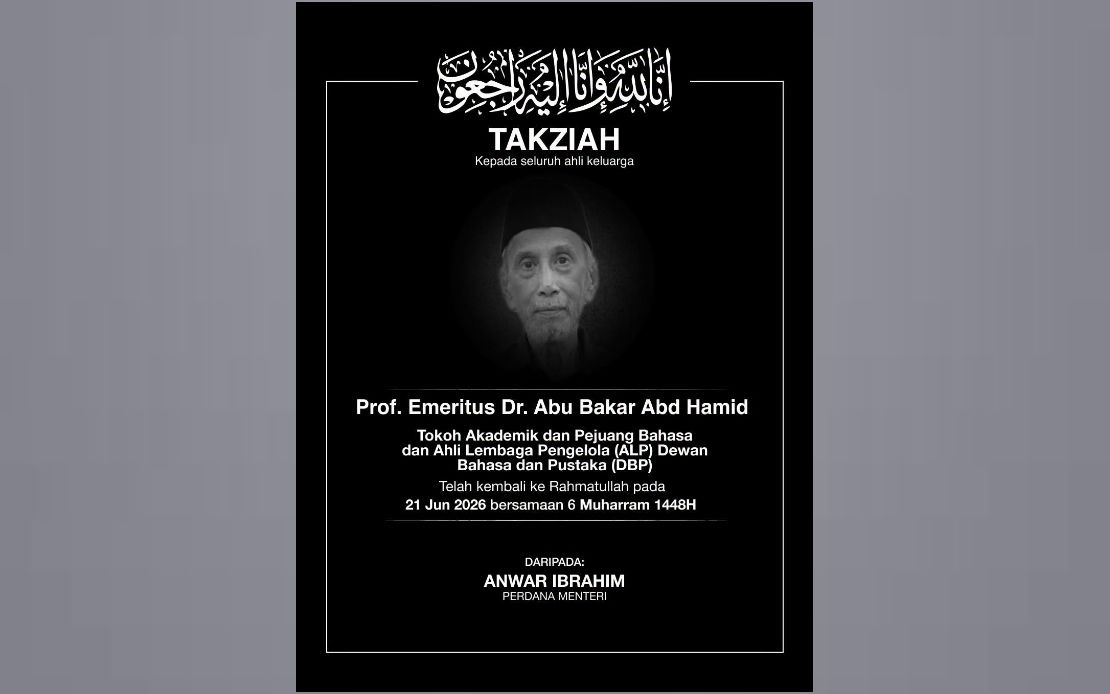
Prime Minister Datuk Seri Anwar Ibrahim has expressed deep sadness over the death of Professor Emeritus Datuk Abu Bakar Abd Hamid, a scholar whose contributions to Malay literature and higher education shaped Malaysian intellectual discourse for decades. The renowned academic, a native of Johor, passed away on June 21 at his home in Petaling Jaya, Selangor, after suffering sudden respiratory distress. He was laid to rest at Bukit Kiara Muslim Cemetery the following Monday, marking the end of an era for Malaysia's literary establishment.
Anwar's tribute, shared publicly on social media, carried particular weight given his personal connection to the deceased. As one of Abu Bakar's former students, the Prime Minister reflected on the profound influence such mentors exert on their pupils. He characterised Abu Bakar not merely as an educator imparting academic knowledge, but as an intellectual force who embodied an unwavering commitment to scholarship and the cultivation of curiosity in those around him. This distinction speaks to the difference between conventional classroom instruction and the transformative relationship between a dedicated scholar and his disciples—a dynamic that has become increasingly rare in contemporary university settings.
Throughout his career, Abu Bakar held positions of considerable institutional responsibility and earned recognition befitting his stature. He served as deputy vice-chancellor at Universiti Malaya beginning in 1987, placing him at the helm during a critical period in Malaysian higher education's development. Beyond his university role, he chaired the Board of Governors of Bernama, the Malaysian National News Agency, from 1996 to 2000, demonstrating the breadth of his influence across both academic and media sectors. These appointments underscored the trust placed in him by successive governments to shape crucial national institutions.
Perhaps Abu Bakar's most lasting legacy lies in his instrumental role in establishing Universiti Kebangsaan Malaysia, Malaysia's national university. He served as joint secretary of the committee tasked with founding UKM in 1968, a period when Malaysian higher education was undergoing fundamental restructuring and expansion. UKM's creation represented a deliberate effort to build a university rooted in Malaysian identity and values, with particular emphasis on Malay language and culture. Abu Bakar's involvement in these formative years positioned him as part of the generation of scholars who architected the intellectual infrastructure modern Malaysia would depend upon.
Beyond administrative posts, Abu Bakar earned distinction as a literary figure whose scholarly work enriched understanding of Malay letters. Throughout his lifetime, he accumulated numerous prestigious awards acknowledging his contributions to literature and academia. These accolades were not mere ceremonial recognition but reflected genuine scholarly achievement and influence within both Malaysian and international academic communities. His work helped establish standards of literary criticism and historical scholarship that influenced how successive generations approached Malay literature.
Anwar's public mourning of his former teacher carries significance within Malaysia's political and intellectual landscape. The Prime Minister's willingness to share personal reflections about his student days and the formative impact of his education situates him within a continuum of leaders who value intellectual tradition and scholarly mentorship. In a contemporary context where political discourse often emphasises technical governance and policy implementation, Anwar's tribute reminds the nation of the importance of humanistic education and the enduring relationships between teachers and their students.
The passing of Abu Bakar represents a generational loss for Malaysian academia. Those who came of age during his tenure as a prominent intellectual figure are aging, and the direct transmission of knowledge and values that characterised his era of scholarship grows increasingly limited. Younger scholars must now engage with his work through publications and institutional memory rather than through direct mentorship. This transition underscores broader challenges facing Malaysian universities as they balance modernisation with preservation of intellectual heritage.
In his condolence, Anwar invoked Islamic prayer traditions, requesting God's forgiveness for Abu Bakar and peaceful rest for his soul. This spiritual dimension of the tribute reflects how individual loss in Malaysian society intersects with religious and communal values. The ritual of public mourning, particularly when initiated by the Prime Minister, serves to elevate the deceased's standing in national memory and affirms that contributions to scholarship and nation-building merit formal recognition.
The legacy Abu Bakar leaves encompasses both tangible institutional contributions and intangible influence on those he taught and guided. Universities like UKM continue operating according to principles he helped establish, while generations of Malaysian intellectuals carry forward scholarship traditions he helped shape. His life exemplifies the potential for individuals within academia to transcend institutional confines and impact broader national development. As Malaysia navigates contemporary challenges in education and cultural preservation, the example set by figures like Abu Bakar Abd Hamid remains relevant to ongoing conversations about the purpose and potential of higher learning.

