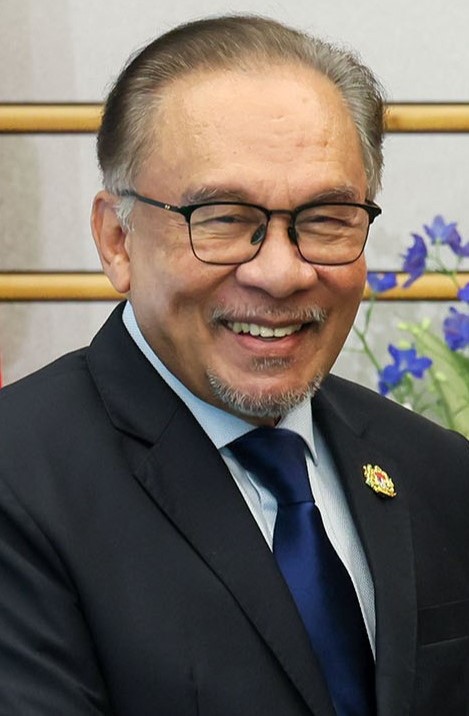
Prime Minister Datuk Seri Anwar Ibrahim has positioned the Islamic calendar's Hijrah anniversary as a moment for Malaysia to recommit to reform grounded in shared purpose and broad-based consensus. Speaking during Maal Hijrah 1448H commemorations in June, the Prime Minister argued that translating Hijrah's spiritual significance into tangible policy change demands far more than rhetorical commitment—it requires deliberate alignment across Malaysia's diverse political, religious, and social landscape.
Anwar's framing of Hijrah carries particular weight in the Malaysian political context, where his administration has staked significant legitimacy on delivering the MADANI framework and associated governance overhauls. By invoking the Prophet Muhammad's migration to Madinah as a historical precedent for transformational change, the Prime Minister positioned the contemporary reform agenda within an Islamic historical narrative that resonates deeply with Malaysia's Muslim-majority population and Muslim-led institutions. This rhetorical move serves to elevate systemic reforms beyond partisan politics and into a framework of religious and civilisational duty.
Central to Anwar's message was his explicit rejection of what he termed "rhetoric, slogans and individual effort" as sufficient catalysts for change. This phrasing carries implicit critique of fragmented or competitive approaches to reform—a not-subtle reference to the factional tensions that have historically undermined Malaysian policy implementation and institutional development. The Prime Minister's insistence on "patience towards victory" and "cooperation across a diverse community network" suggests recognition that Malaysia's plural composition, encompassing multiple ethnic, religious, and ideological constituencies, requires deliberate consensus-building rather than majoritarian imposition.
The historical Hijrah itself provided Anwar's template. Rather than highlighting solely the Prophet's leadership, he drew attention to the diverse contributors who made the migration successful: young men such as Saidina Ali Abi Talib who provided energy and commitment, women including Asma Abu Bakar who offered crucial logistical and moral support, and unnamed companions whose collective organising capacity proved essential. This deliberately inclusive reading of Hijrah's historical agents implicitly argues that contemporary Malaysian reform similarly depends on broad participation—youth engagement, women's contributions, and grassroots organisational capacity rather than top-down directive alone.
Anwar's citation of Quranic verse 100 from Surah An-Nisa, which addresses rewards for those who migrate for Allah's sake, added theological weight to the reform agenda. By connecting the historical Hijrah to Quranic teaching about sacrifice and spiritual struggle, the Prime Minister reframed government policy implementation as a form of religious devotion rather than mere administrative routine. This theological framing potentially strengthens popular legitimacy for unpopular reforms—including fiscal adjustments, institutional restructuring, or governance changes that might otherwise face resistance.
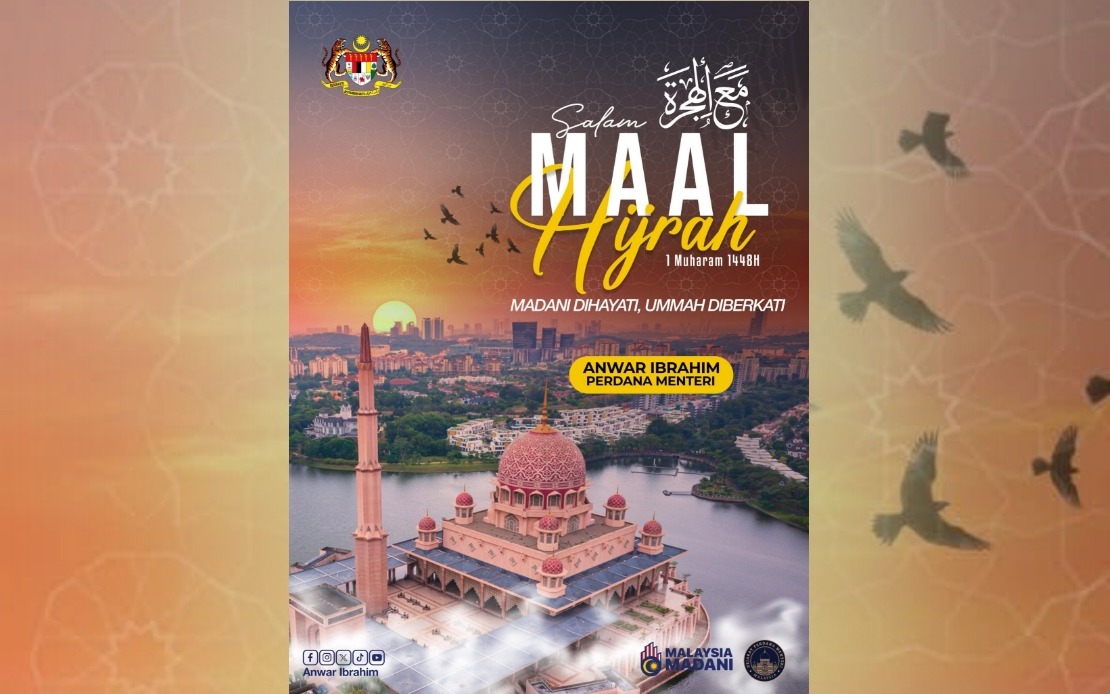
The theme chosen by the Department of Islamic Development Malaysia for the 1448H Maal Hijrah celebration—"MADANI Dihayati, Ummah Diberkati" (MADANI Embraced, The Ummah Blessed)—explicitly links Malaysia's governance framework with Islamic historical memory. This nomenclature reflects deliberate strategy to position MADANI not as a secular policy architecture but as an application of Hijrah principles to contemporary state-building. For Malaysian readers, this carries implications for how future policy initiatives, particularly those involving economic restructuring, institutional reform, or social change, will be framed and justified by the administration.
The emphasis on consensus reflects pragmatic recognition of Malaysia's political realities. Anwar's administration governs through a multiethnic, multiparty coalition whose unity frequently proves fragile. The repeated insistence that reform "will not come by any single party" acknowledges both the formal coalition structure and the deeper reality that sustainable change in a plural society requires buy-in from multiple constituencies, not merely executive decree or parliamentary arithmetic. This framing legitimises the compromise, negotiation, and patience required to maintain coalition coherence while pursuing substantive change.
For Southeast Asian observers, Anwar's approach to reform legitimation carries broader significance. As regional governments navigate pressures to modernise institutions, improve governance standards, and respond to public demands for accountability and efficiency, the Malaysian Prime Minister's invocation of religious and historical narrative as foundations for consensus reflects a distinctive regional approach to statecraft. Rather than relying solely on technocratic or liberal democratic justifications for reform, the approach roots institutional change in Islamic historical memory and contemporary religious practice—a strategy likely to gain traction across Muslim-majority Southeast Asia as governments seek locally resonant frameworks for governance improvement.
The practical implications for Malaysia's reform trajectory remain to be fully tested. Rhetorical emphasis on unity and consensus, while politically necessary and spiritually grounded, does not automatically resolve the substantive disagreements that often fracture coalitions or hinder implementation of complex policy changes. Future months will reveal whether the invocation of Hijrah principles translates into actual institutional cooperation, faster policy execution, and genuine compromise among competing interests. The success of this consensus-oriented approach will likely determine not only the trajectory of MADANI but also the durability of Anwar's coalition government and its capacity to deliver measurable improvements in Malaysian governance and prosperity.