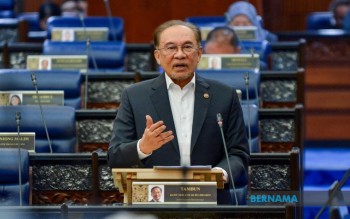
Prime Minister Datuk Seri Anwar Ibrahim has reassured Malaysians that the government will take an uncompromising stance against any instances of corruption or fraud connected to the Retirement Fund (Incorporated) (KWAP)'s substantial investment in eFishery, an aquaculture technology startup. Speaking in parliament, Anwar underscored that despite initial findings suggesting no fraudulent activity had taken place, the Malaysian Anti-Corruption Commission must conduct a rigorous examination of the entire investment process to maintain public confidence in how retirement savings are deployed.
The Prime Minister, who simultaneously serves as Finance Minister, emphasized that he had personally engaged with KWAP's leadership to demand their complete cooperation throughout the investigation. Anwar's remarks came during the question-and-answer session at the Dewan Negara, where he addressed concerns about protecting retirement savings amid global economic uncertainty. His statement signals the government's heightened sensitivity to public perception surrounding major fund investments, particularly those involving emerging technology companies that may carry higher risk profiles.
Anwar's position reflects broader anxieties about how Malaysia's two major retirement schemes manage their portfolios. The eFishery investment has drawn scrutiny partly because aquaculture technology represents a nascent sector with limited track records, making it a departure from traditional conservative retirement fund allocations. When legislators questioned whether adequate safeguards exist to shield workers' contributions from poorly considered investment decisions, the Prime Minister responded by committing to expanded oversight mechanisms rather than defensive justifications for past choices.
The investigation's scope extends beyond simple fraud detection. Anwar specifically highlighted the need for MACC scrutiny of both the investment decision-making process and the evaluation conducted by the investment panel, whose recommendations ultimately required board approval. This layered examination suggests recognition that improper governance or flawed due diligence could constitute a breach of fiduciary duty even without overt corrupt intent. The distinction matters because it acknowledges that substantial losses could result from negligence, inadequate expertise, or insufficient risk assessment rather than deliberate malfeasance.
For Malaysian workers and retirees, KWAP's investment decisions carry direct financial consequences. The fund manages contributions from state and federal government employees, representing a significant proportion of retirement income for this constituency. Unlike KWSP, which has broader membership across private and public sectors, KWAP's beneficiaries include essential personnel in education, healthcare, and administration. Any substantial losses to the fund directly diminish the retirement security of these workers, making questions about investment governance legitimately urgent.
The eFishery case illuminates the tension between fund diversification strategies and prudent risk management. Modern retirement fund management increasingly emphasizes exposure to growth assets and emerging sectors to generate superior long-term returns. However, allocating workers' money to early-stage technology ventures requires exceptional due diligence and clear articulation of the risk-return tradeoff. Anwar's comments suggest the government recognizes that public trust in retirement funds depends not merely on avoiding fraud but on demonstrating thoughtful, transparent decision-making processes that workers can understand and evaluate.
Senator Wan Martina Wan Yusoff's supplementary question about government transformation efforts to guide investment decisions points toward a systemic issue. The challenge facing Malaysia's sovereign wealth and retirement funds involves establishing clear criteria for identifying suitable investment opportunities while maintaining flexibility to pursue promising growth sectors. The government must balance accountability to beneficiaries against the need to avoid micromanaging fund managers, creating governance structures that protect workers' interests without unduly constraining portfolio strategy.
The timing of Anwar's parliamentary response carries political significance beyond the immediate investment controversy. As Finance Minister overseeing both economic policy and anti-corruption efforts, Anwar's emphatic stance demonstrates commitment to addressing public anxieties about financial governance. This represents an implicit acknowledgment that confidence in retirement fund management directly affects national financial stability and consumer sentiment. Citizens who doubt the security of retirement savings may adjust spending patterns and investment behaviors in ways that ripple through the broader economy.
MACC's investigation into the investment process will likely examine several dimensions: whether selection criteria were appropriately applied, whether conflict-of-interest protocols were followed, whether adequate due diligence occurred, and whether board members possessed sufficient expertise to evaluate the opportunity. These procedural questions matter regardless of whether funds were ultimately misappropriated, because they determine whether the investment reflected sound institutional judgment or represented a lapse in governance that could recur in future decisions.
The broader implications for Southeast Asia's financial governance are noteworthy. As developing economies expand their sovereign wealth and pension fund operations, questions about how these institutions allocate capital become increasingly important. Malaysia's approach to investigating its retirement fund investments could influence regional standards for transparency and accountability. The government's willingness to subject established institutions to external scrutiny signals that no organization operates beyond public oversight, a principle that strengthens institutional legitimacy over time.
Anwar's insistence on KWAP management's full cooperation during the investigation suggests the fund's leadership understands the political necessity of transparent engagement with anti-corruption authorities. Defensive positioning would only amplify public skepticism, whereas demonstrating openness and responsiveness can partially restore confidence even if the investigation reveals poor judgment. The Prime Minister's dual role as Finance Minister and custodian of anti-corruption enforcement positions him to shape how the investigation unfolds and how its findings are communicated to affected workers.
Looking forward, the KWAP investment investigation may catalyze broader reforms in how Malaysia's retirement funds evaluate opportunities and manage governance risks. Potential outcomes could include enhanced disclosure requirements, expanded investment committee expertise requirements, or revised protocols for approving novel investment categories. These reforms would affect not only eFishery and similar cases but also establish precedents for institutional accountability that extend across Malaysia's financial sector.

