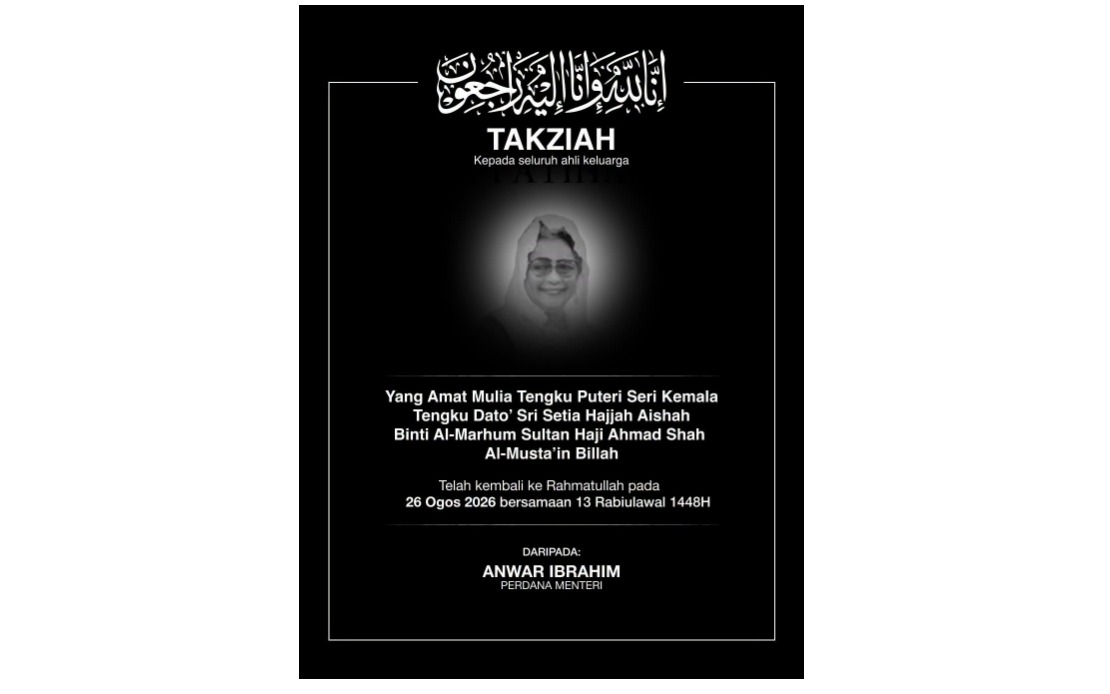
Prime Minister Datuk Seri Anwar Ibrahim has extended his sympathies to Pahang Sultan Al-Sultan Abdullah Ri'ayatuddin Al-Mustafa Billah Shah and members of the Pahang Royal Family following the passing of the Sultan's elder sister, Tengku Puteri Seri Kemala Tengku Datuk Seri Aishah Almarhum Sultan Ahmad Shah. The distinguished member of the royal household passed away on August 26 at a hospital in Kuala Lumpur, marking the end of a significant chapter in Pahang's royal lineage.
Through a message posted on his Facebook account, Anwar expressed his prayers for divine mercy upon Tengku Datuk Seri Aishah's soul, seeking forgiveness for her sins and requesting that Allah SWT place her among the righteous in the hereafter. The Prime Minister's public expression of condolences underscores the importance placed on acknowledging the loss of senior members of Malaysia's royal families, a gesture that reflects both respect for the institution and recognition of the personal grief experienced by the ruling household.
Anwar also offered prayers for strength and resilience for Al-Sultan Abdullah, Tengku Ampuan of Pahang Tunku Azizah Aminah Maimunah Iskandariah, and the broader Pahang Royal Family as they navigate this period of mourning. Such messages from the nation's leader serve an important symbolic function in Malaysian society, where the monarchy holds constitutional and cultural significance. The timing and nature of these condolences demonstrate the protocol observed between the executive branch and the institution of royalty, maintaining the formal dignity expected in such circumstances.
Tengku Datuk Seri Aishah breathed her last at 9:15 pm on August 26, concluding a lifetime connected to Pahang's royal affairs. Her death represents the loss of an elder member of a generation that witnessed significant periods of the state's modern history. As the sister of the current Sultan, she occupied a prominent position within the royal hierarchy and had maintained connections to palace affairs throughout her life.
Following customary practice for members of the Pahang royal household, the late Tengku Datuk Seri Aishah's remains were laid to rest at the Pahang Royal Mausoleum in Pekan, the historic seat of Pahang's royal authority. This final resting place is traditionally reserved for senior members of the ruling family and reflects the formal recognition of her status within the dynasty. The interment in Pekan, rather than Kuala Lumpur where she passed away, emphasises the spiritual and historical connection between senior royals and their ancestral home.
For Malaysians accustomed to following the affairs of the various state royal families, such occasions remind the public of the human dimensions of the monarchy and the personal losses experienced by those who hold ceremonial and constitutional positions. While the royal families maintain considerable privacy in their personal matters, official announcements regarding significant events provide rare glimpses into the family structures and succession dynamics that underpin Malaysia's constitutional framework.
The death also occurs within the context of ongoing duties performed by the Pahang royal household in representing state interests both domestically and internationally. Sultan Al-Sultan Abdullah has been actively engaged in various state functions and national commitments, and this period of personal loss coincides with the demands of maintaining such responsibilities. The support extended by the Prime Minister and other national figures acknowledges both the private grief and the public role that the Sultan must continue to fulfil.
Pahang, as one of Malaysia's larger peninsular states, has maintained a prominent position in the country's constitutional monarchy system. The state's royal family carries historical weight extending back centuries, and members such as Tengku Datuk Seri Aishah represent continuity with earlier generations of Pahang's rulers. Her passing marks another generational transition within the palace structure, a phenomenon that occurs across all Malaysian states as senior royals reach the end of their lives.
The formal expression of condolences from the Prime Minister's office, delivered through contemporary digital platforms, illustrates how traditional protocols of sympathy now incorporate modern communication methods. While the sentiment expressed remains rooted in Islamic tradition and Malaysian cultural values, the vehicle for conveying such messages has evolved to reflect current practices in public discourse and official communication between government and state institutions.

