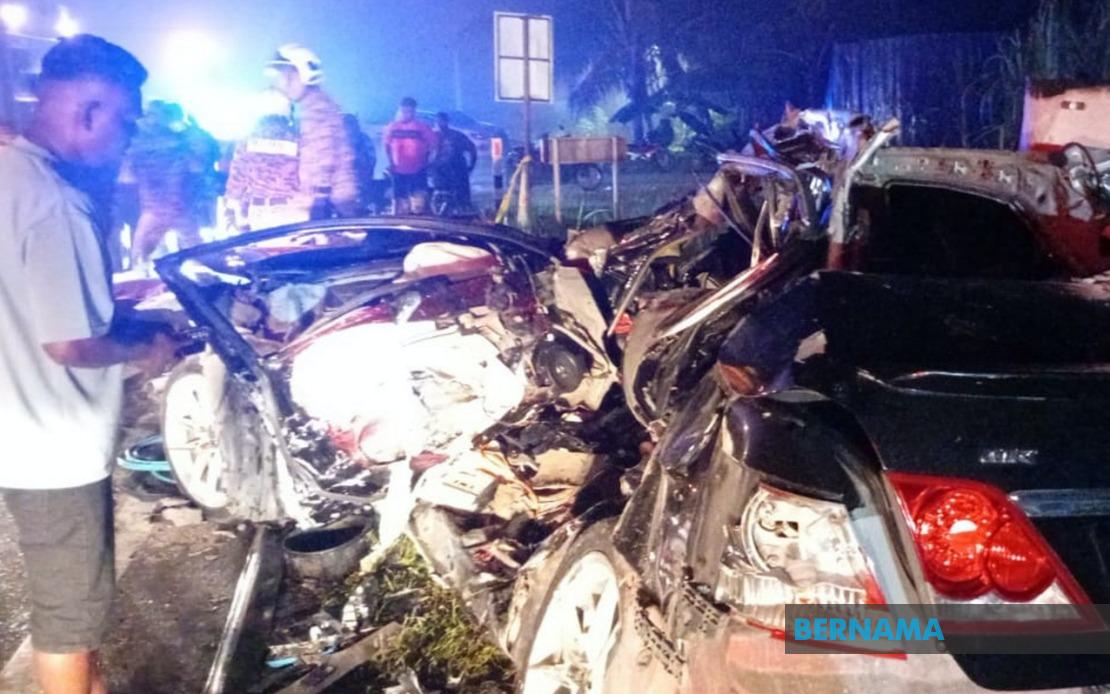
Prime Minister Datuk Seri Anwar Ibrahim has offered his condolences to the bereaved families of six individuals who lost their lives in a devastating road accident along Jalan Karak Lama in Bentong, Pahang. The tragedy occurred in the early hours of yesterday morning, prompting the country's top political leader to publicly acknowledge the grief of those affected. In a statement posted on social media platform X, Anwar emphasised that both he and his wife, Datuk Seri Dr Wan Azizah Wan Ismail, were deeply affected by the incident, underscoring the somber nature of the event.
The fatal collision unfolded at approximately 4 am on Jalan Karak Lama, a major highway corridor that connects Kuantan with Kuala Lumpur. A Toyota Vios sedan carrying six occupants collided with a one-tonne commercial lorry near Klink Desa Jambu Rias as traffic moved towards Temerloh. All six men inside the passenger vehicle perished at the crash scene, making this one of the more severe multi-fatality road accidents recorded in recent months. The victims ranged significantly in age, with the youngest being just 16 years old and the oldest 25, suggesting a vehicle primarily carrying young people, possibly friends or acquaintances travelling together.
Among those who died were the vehicle's driver, V. Mugilan, 25, and five passengers identified as K. Dineshvaran, 22, K. Alaganathan, 21, A. Kanabati Raja, 19, S. Kiisven, 17, and M. Paranthaman, 16. The lorry operator, a 31-year-old man, suffered serious injuries and was transported to medical facilities for treatment. The severity of the outcome on one side of the collision while the other driver survived has raised questions about the dynamics of the accident and the protective measures that might have made a difference in the outcome.
Initial police investigations suggest that the Vios, which had originated from Kuantan heading towards the capital, veered across the opposing lane while navigating a downhill section of the highway. This loss of lane control resulted in a direct collision with the incoming lorry. The circumstances point to factors commonly associated with such accidents on Malaysian highways, including possible fatigue, speed, or road conditions that compromised vehicle stability during the descent. The exact cause remains under investigation, but the initial findings highlight the critical importance of driver attentiveness during challenging road sections.
Jalan Karak Lama has been the site of numerous accidents over the years, a reality that places this incident within a troubling pattern affecting this particular corridor. The highway's characteristics—steep gradients, curves, and high traffic volume—create conditions that demand absolute driver focus and adherence to safety protocols. The collision has once again drawn attention to the need for enhanced safety measures, improved road infrastructure, and public education campaigns targeting the specific hazards present on this route.
In his public statement, Anwar conveyed sympathies not only to the immediate families of the deceased but also expressed wishes for the swift recovery of the injured lorry driver. He offered spiritual support through prayers for the departed and strength for those left behind to process their loss. Such expressions of sympathy from the nation's highest office serve to validate the gravity of road accidents as a matter of national concern rather than isolated incidents.
The Prime Minister utilised the tragic incident as a platform to reinforce a broader message about road safety consciousness. He stressed that the prevention of such tragedies demands collective responsibility and cannot be delegated to authorities alone. His statement reflected an understanding that road safety transcends individual compliance—it requires systemic improvements, better enforcement, adequate road design, and a cultural shift toward treating highway travel with the appropriate level of caution it demands.
The loss of six young lives in a single collision represents not merely statistics in accident reports but represents profound human tragedy affecting multiple families and communities. The youngest victim, at just 16 years old, suggests that some may have been students, potentially on a journey that could have involved social activities, family visits, or other civilian travel purposes. The concentration of fatalities among young people adds another dimension to concerns about youth road safety and possibly the need for targeted awareness campaigns aimed at younger drivers and passengers.
Road fatalities remain a persistent challenge across Malaysia, with similar incidents occurring with troubling regularity on major highways. The Bentong accident serves as a stark reminder that even short journeys on well-travelled routes carry inherent risks that cannot be entirely eliminated. However, many accidents of this nature are preventable through a combination of improved driver behaviour, better vehicle maintenance, appropriate speed regulation, and strategic road design modifications that acknowledge the specific challenges of particular highway sections.
The incident also raises questions about enforcement and compliance on Malaysian highways. Whether speed limits are adequately monitored, whether fatigue management is encouraged among drivers, and whether heavy vehicles maintain safe operating standards all contribute to the overall safety equation. Authorities will likely conduct a comprehensive review of this particular stretch of road to identify any infrastructure improvements that might reduce future collision risks.
Moving forward, the families of the six deceased will require both immediate support and long-term assistance as they navigate their grief. Community organisations, religious groups, and government welfare programmes typically coordinate to provide such support, though the emotional and financial impact on these families will be substantial. The incident underscores the need for robust victim support systems and compensation mechanisms that can partially address the devastating consequences of such tragedies.
The Prime Minister's public engagement with this tragedy reflects the evolving role of political leadership in responding to national crises and public losses. While expressions of condolence are customary, the emphasis placed on road safety as a collective responsibility indicates a recognition that such accidents are not merely individual misfortunes but societal failures that demand systemic responses. Whether these statements translate into concrete policy actions, enhanced enforcement, or infrastructure improvements will be closely watched by road safety advocates and the families of accident victims seeking to prevent future tragedies.

