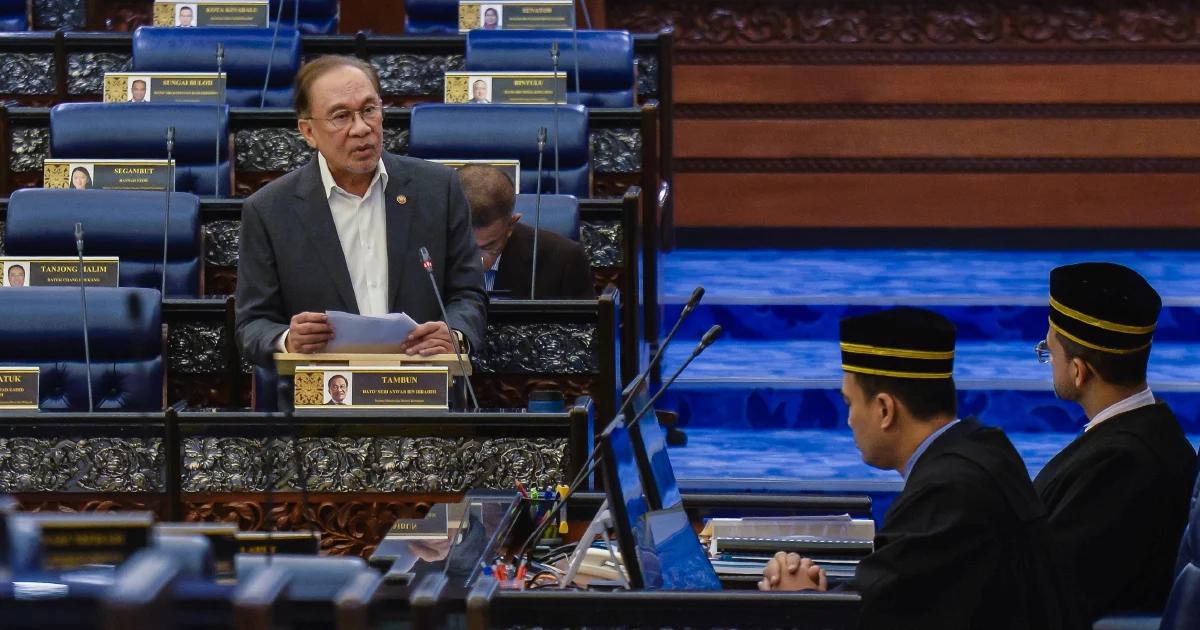
Prime Minister Datuk Seri Anwar Ibrahim has once again rejected allegations that he personally directed the cancellation of a Felda Settlers' Day commemoration scheduled for Kluang in Johor, addressing the matter directly in parliamentary proceedings. Speaking before the Dewan Rakyat, the Prime Minister clarified that no specific instruction from his office led to the event's cancellation, instead pointing to broader administrative guidelines that govern government conduct during electoral periods.
The incident has become a point of contention in Malaysian politics, with questions raised about decision-making authority and the scope of restrictions placed on state institutions during campaign seasons. Anwar's statement seeks to distinguish between his personal directives and the standard protocols that apply nationwide whenever the country enters an election cycle. This clarification is significant because it addresses concerns about executive overreach and the potential use of administrative machinery to influence outcomes in critical constituencies.
The Prime Minister emphasized that the singular constraint in operation was a blanket prohibition preventing government departments and agencies from deploying their resources, personnel, or infrastructure for any form of political campaigning. Such restrictions are standard practice in Malaysian electoral law, designed to ensure that state resources remain neutral and do not provide unfair advantage to any political party or candidate. These guidelines typically restrict official vehicles, premises, and personnel from being utilized for campaign-related activities that could be construed as promoting particular candidates or political parties.
The Kluang event in question carries particular significance in Johor's political landscape. Felda settlers represent a substantial constituency in the state, and Felda Settlers' Day celebrations traditionally serve as opportunities for the government to engage with this community and acknowledge their contributions to Malaysia's agricultural and economic development. The Kluang gathering would have been one such occasion to recognize the historical importance of the Federal Land Development Authority's beneficiaries and their role in nation-building since the programme's establishment decades ago.
Anwar's restatement in parliament underscores the government's position that any cancellation or postponement was a result of applying election-period protocols uniformly, rather than selective targeting. The distinction carries weight because it affects perceptions of governmental fairness and adherence to established institutional rules. If the cancellation had resulted from a direct prime ministerial order, it might have suggested political motivation or intervention in local event planning. By framing it as adherence to broader electoral regulations, the government attempts to present the decision as administratively neutral.
The controversy reflects broader tensions in Malaysian politics regarding the balance between executive authority and institutional independence, particularly during election periods when scrutiny of government actions intensifies. Opposition voices have questioned whether such restrictions are applied consistently across the country and whether they disproportionately affect certain communities or regions. These concerns touch on fundamental issues of democratic governance and the proper use of state power.
Johor remains a strategically important state in Malaysian politics, and any perception of unequal treatment toward its communities can have electoral consequences. The Felda settler community has historically been a significant voting bloc, making relations with this group a matter of political consequence for any governing administration. Events and recognition of Felda's contributions thus carry both symbolic and practical political weight that extends beyond simple ceremonial functions.
The Prime Minister's clarification also reflects the broader context of Malaysia's electoral framework, which imposes strict rules on government conduct once the election process commences. These provisions exist to prevent sitting governments from leveraging state apparatus for partisan advantage—a principle considered essential to democratic integrity. Whether such restrictions should apply to community commemoration events or only to activities with explicit campaign purposes remains a subject of legitimate debate among constitutional and electoral scholars.
Parliamentary exchanges on this matter highlight how electoral rules and their implementation can become matters of political contention, even when their intent is to maintain neutrality. The government's consistent messaging through Anwar's parliamentary statements suggests an effort to establish a clear record that distinguishes between administrative necessity and political choice. Going forward, clarity on how such restrictions apply to different categories of government-organized events may help prevent similar controversies during future election periods.

