Prime Minister Datuk Seri Anwar Ibrahim made another visit to Johor on June 24, this time heading to Segamat for two significant engagements that underscored the government's commitment to community-level initiatives during an election season. The trip marked his second appearance in the state within a 72-hour window, reflecting the strategic importance placed on voter outreach in a critical electoral battleground.
Segamat, situated approximately 200 kilometres from Johor Bahru, served as the venue for a pair of events designed to connect the national leadership directly with constituents at the grassroots level. The timing of these programmes came merely days after Anwar had unveiled the complete slate of Pakatan Harapan candidates contesting the 16th Johor state election, a moment that galvanised party machinery ahead of the formal nomination process.
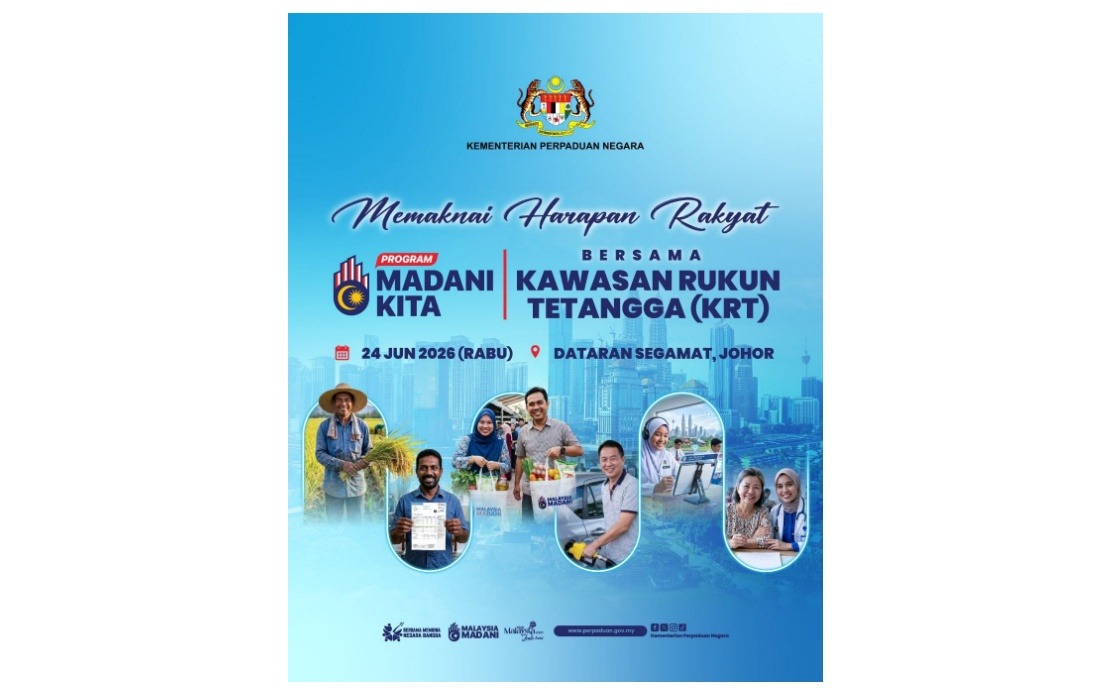
The centrepiece of the afternoon's agenda was the officiation of the MADANI KITA programme, held at Dataran Segamat at 5 pm in partnership with local Rukun Tetangga chapters. This initiative represents a deliberate pivot towards hyper-local governance structures, leveraging the neighbourhood-level associations as conduits for bridging governmental outreach and community consolidation. Such programmes serve multiple objectives simultaneously: they fortify bonds between residents of different ethnic backgrounds, translate high-level policy initiatives into tangible neighbourhood conversations, and create informal spaces where citizens can engage with implementation details of broader government agendas.
The MADANI KITA framework itself carries particular resonance within Malaysia's political landscape, as "MADANI" forms the cornerstone of the current administration's development narrative. By tethering this brand explicitly to localised Rukun Tetangga structures, the government signals recognition that neighbourhood associations remain vital intermediaries in the country's social fabric, particularly in rural and semi-urban constituencies like those throughout Segamat.
Following the more formal MADANI KITA ceremony, Anwar transitioned to a casual community gathering, the "Jom! Makan Durian" event scheduled for 6.30 pm at the Yayasan Bazaar site. This deliberately unstructured format offered stark contrast to the structured programme preceding it, creating an informal milieu where the Prime Minister could engage with residents over a shared Malaysian culinary tradition. The strategic deployment of durian consumption as a community bonding exercise reflects a shrewd understanding of cultural touchstones that resonate across demographic divides within Malaysian society.
These Segamat engagements arrived against the backdrop of intensifying electoral preparations. Anwar had formally announced the complete Pakatan Harapan roster on June 23 in Bukit Gambir, Tangkak, revealing a coalition composition of 20 PKR candidates, 19 from Amanah, and 17 from DAP contesting all 56 state assembly seats. This distribution strategy attempted to maintain coalition equilibrium while respecting historical voting patterns and demographic considerations across the state's diverse constituencies.
The Election Commission's codified timeline heightened the strategic significance of these pre-campaign engagements. With nomination day scheduled for June 27, the window for informal community building ahead of formal candidacy declarations remained compressed. Early voting commenced on July 7, with the principal polling day set for July 11, condensing the entire formal campaign period into mere weeks. This compressed electoral calendar meant that grassroots initiatives such as those undertaken in Segamat served as crucial relationship-building exercises before the intensity of official campaigning commenced.
Anwar's itinerary reflected broader patterns in contemporary Malaysian electoral politics, where senior leaders increasingly supplement traditional campaign appearances with community-centric, relatively apolitical events designed to humanise leadership and reinforce government messaging at neighbourhood scales. The dual-programme approach enabled the Prime Minister to simultaneously address different audience segments and communication objectives: the MADANI KITA platform functioned as a formal policy briefing channel, whilst the durian gathering emphasised accessibility and cultural commonality.
For Johor specifically, maintaining momentum proved critical. The state had traditionally represented complex electoral terrain, with its 56 seats distributed across urban, suburban, and rural constituencies characterised by distinct demographic compositions and political leanings. Segamat itself encompasses diverse communities, and the deliberate emphasis on inter-communal harmony and shared traditions within both programmes suggested an effort to consolidate support across demographic divides that might otherwise fragment voting behaviour.
The underlying message communicated through these Segamat visits extended beyond immediate electoral positioning. By grounding national initiatives like MADANI within localised community structures and emphasising government accessibility through informal social gatherings, Anwar sought to reinforce a narrative of people-centred governance that distinguished his administration's approach from predecessors. For Malaysian voters evaluating competing visions of leadership ahead of the July 11 polls, such direct engagement provided tangible evidence of leadership commitment to grassroots concerns and community-level development priorities.
Moving forward, the Segamat template may inform subsequent Pakatan Harapan campaign strategies across other states, particularly where coalition candidates seek to establish strong community foundations before formal campaigning intensifies. The compressed electoral timeline and formal programme architecture both underscore how contemporary Malaysian politics increasingly demands simultaneous engagement across formal governmental channels and informal social spaces, with senior leaders required to code-switch between policy exposition and cultural participation with practiced ease.

