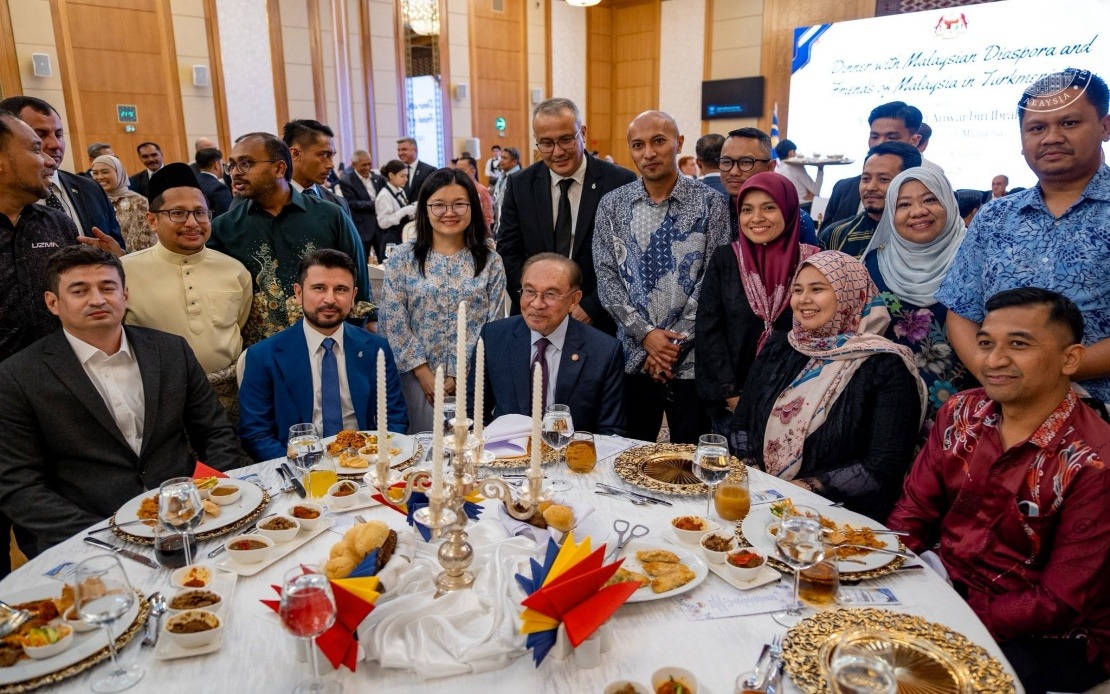
Prime Minister Datuk Seri Anwar Ibrahim has used his official visit to Turkmenistan to reconnect with Malaysian citizens residing in Ashgabat, reaffirming the government's commitment to maintaining strong bonds with communities scattered across the globe. The encounter underscores a broader diplomatic strategy that extends beyond traditional state-to-state relations, encompassing the cultivation of people-to-people networks that have become increasingly valuable in Malaysia's international engagement.
During the gathering, Anwar articulated the MADANI Government's vision for sustaining and deepening connections with Malaysians living abroad. He addressed the assembled diaspora with an appeal for continued engagement with developments back home, positioning their awareness of Malaysia's progress as integral to their sense of national belonging. His remarks reflected recognition that citizens abroad serve as important conduits for Malaysia's soft power and cultural representation on the international stage.
The Prime Minister characterised the Malaysian diaspora as unofficial ambassadors who actively contribute to enhancing the country's reputation and expanding its global networks. This framing moves beyond viewing overseas Malaysians as expatriates with temporary foreign postings; instead, it acknowledges them as stakeholders in Malaysia's international standing. By elevating their role and validating their contributions, Anwar sought to foster a sense of shared national purpose that transcends geographical boundaries.
Anwar's visit to Turkmenistan marks his first official engagement with the Central Asian nation, following a reciprocal state visit by Turkmenistan President Serdar Berdimuhamedov to Malaysia in December 2024. This diplomatic choreography reflects the pattern of high-level engagement that characterises modern bilateral relations, where state visits are often reciprocated within a relatively short timeframe to demonstrate mutual commitment. The Ashgabat leg of Anwar's journey demonstrates Malaysia's effort to strengthen presence and influence in regions historically less visited by Malaysian leadership.
Beyond the ceremonial aspects of diplomatic protocol, Anwar emphasised that Malaysia's outreach to Turkmenistan encompasses substantive areas of cooperation. Trade, investment, and economic partnerships form the foundation of the relationship, yet the Prime Minister was careful to situate these practical considerations within a broader framework of deepening friendship and mutual understanding. This holistic approach suggests that Malaysia views Turkmenistan not merely as a commercial opportunity but as a strategic partner with whom shared values and complementary interests can be developed.
The expansion of cooperation into new domains reflects both Malaysia's openness to exploring partnerships across different regions and Turkmenistan's receptiveness to deepening ties with Southeast Asia. Central Asia has long occupied a secondary position in Malaysia's foreign policy priorities, with more immediate regional concerns typically claiming policy attention. However, the cultivation of relationships with countries like Turkmenistan signals Malaysia's recognition that emerging opportunities in energy, connectivity, and cultural exchange warrant serious diplomatic investment.
Anwar's engagement with the diaspora community in Ashgabat also carries symbolic significance for how Malaysia positions itself as a homeland genuinely invested in the welfare and experiences of its citizens abroad. Rather than viewing diaspora engagement as a peripheral activity, the visit demonstrates that such encounters merit the personal attention of senior leadership. This approach may encourage greater participation and investment by overseas Malaysians in their home country's development, whether through financial contributions, knowledge transfer, or advocacy on Malaysia's behalf.
The timing of this outreach is particularly relevant given the global competition for diaspora engagement. Countries throughout Asia and beyond increasingly recognise that their diaspora communities represent both soft power resources and economic assets. Malaysia's deliberate efforts to maintain these connections position the country competitively within a landscape where diaspora networks increasingly contribute to national development objectives, from remittances and entrepreneurship to innovation and professional collaboration.
For Southeast Asian readers, Anwar's Turkmenistan engagement demonstrates how individual nations within the region are pursuing bilateral relationships that extend beyond traditional ASEAN-centric diplomacy. While ASEAN remains central to regional foreign policy, the visit suggests that Malaysian leadership sees value in cultivating direct partnerships with countries across different regions and geopolitical contexts. This diversification of diplomatic engagement reflects a pragmatic approach to securing Malaysia's interests in an increasingly multipolar international environment.
The two-day official visit provides an opportunity for substantive discussions on bilateral matters while the diaspora engagement adds a humanising dimension to what might otherwise remain distant governmental interactions. By combining these elements, Anwar demonstrates an understanding that successful international relations require attention to both state-level negotiations and the people-to-people connections that ultimately give those agreements lasting resonance and public support.

