%22%2F%3E%3C%2Fpattern%3E%3C%2Fdefs%3E%3Crect%20width%3D%22100%25%22%20height%3D%22100%25%22%20fill%3D%22url(%23ph1n1llg)%22%2F%3E%3Crect%20width%3D%22100%25%22%20height%3D%22100%25%22%20fill%3D%22url(%23ph1n1llp)%22%2F%3E%3Ctext%20x%3D%2250%25%22%20y%3D%2250%25%22%20text-anchor%3D%22middle%22%20dominant-baseline%3D%22central%22%20fill%3D%22rgba(255%2C255%2C255%2C0.95)%22%20font-family%3D%22Georgia%2C%20'Times%20New%20Roman'%2C%20serif%22%20font-weight%3D%22700%22%20font-size%3D%22320%22%20letter-spacing%3D%22-0.02em%22%3EPM%3C%2Ftext%3E%3C%2Fsvg%3E)
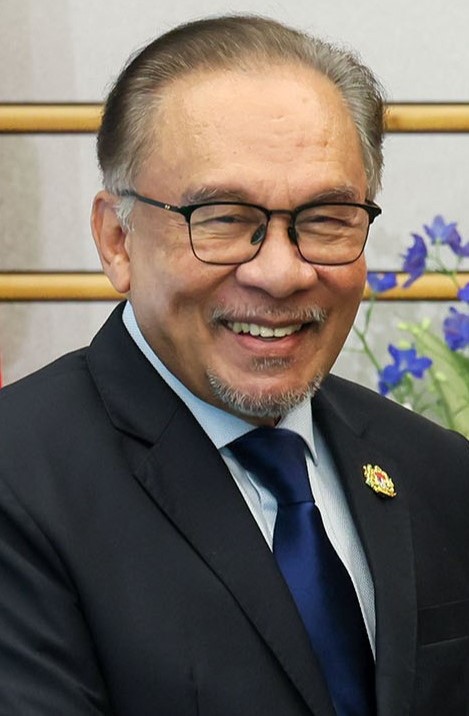
Prime Minister Datuk Seri Anwar Ibrahim is set to deliver a keynote address at the ASEAN-Russia Business Forum in Kazan, positioning Malaysia at the forefront of regional efforts to deepen ties with Russia. The engagement takes place during the ASEAN-Russia Commemorative Summit, a gathering that underscores the sustained commitment both sides have maintained across three decades of formal dialogue relations. Anwar, who holds the dual portfolio of Prime Minister and Finance Minister, will speak directly to business leaders and government representatives from across the ASEAN bloc and the Russian Federation at Kazan IT Park, where he will receive a formal welcome from Ilya Nachvin, the Tatarstan republic's Minister of Digitalisation of Public Administration, Information Technologies and Communications.
The forum represents a critical opportunity for Malaysia to champion its economic interests within the broader ASEAN framework while simultaneously positioning itself as a bridge between Southeast Asian markets and Russian business opportunities. Beyond the formal business discussions, Anwar's itinerary includes participation in an evening gala dinner at the Tatar State Academic Theater, where he will have the opportunity to hold a courtesy meeting with Russian President Vladimir Putin. This bilateral interaction carries particular significance given Malaysia's role in ASEAN affairs and the expanding importance of Southeast Asian engagement with Moscow amid shifting geopolitical dynamics in the Euro-Asian region.
The evolution of the ASEAN-Russia partnership reflects decades of gradual institutional deepening. When Moscow and ASEAN established formal dialogue relations in 1991, the framework was relatively nascent, but the bloc's decision to elevate Russia to full Dialogue Partner status in 1996 signalled growing mutual recognition of shared interests. The relationship achieved a watershed moment in 2018 when both parties formally established a Strategic Partnership, a designation that explicitly commits them to expanding cooperation across three critical pillars: political and security matters, economic collaboration, and socio-cultural exchange. This multi-dimensional framework provides the architecture within which national governments like Malaysia pursue their bilateral and regional objectives with Moscow.
Kazan itself carries symbolic weight as the venue for this commemorative gathering. The city, located approximately 800 kilometres east of Moscow at the intersection of the Volga and Kazanka rivers, represents a unique intersection of Russian and Islamic cultures. With a population approaching 1.3 million and a documented history spanning more than a millennium, Kazan holds the distinction of being regarded as Russia's 'third capital' after Moscow and St Petersburg. Its prominence as a globally recognised centre of Islamic heritage and culture makes it particularly fitting for a summit bringing together ASEAN—a region where Islam has deep civilisational roots—and Russia's multi-confessional state apparatus. The selection of this venue implicitly acknowledges the importance of bridging cultural and civilisational perspectives in the bilateral relationship.
The economic dimensions of ASEAN-Russia engagement have demonstrated resilience and modest growth despite geopolitical uncertainties. In 2024, bilateral trade between the two blocs reached USD18.1 billion, while Russian foreign direct investment in ASEAN economies amounted to USD92.97 million. These figures, while not enormous by global standards, represent meaningful economic interdependence. Malaysia occupies a particularly notable position within this framework, ranking as Russia's ninth-largest European trading partner in 2025 with total bilateral trade valued at RM8.72 billion or USD2.04 billion. This commercial relationship underscores why Malaysian participation in high-level forums such as the Kazan summit carries tangible relevance beyond diplomatic protocol.
The composition of Malaysia-Russia trade reflects complementary economic structures that have evolved organically over decades. Malaysian exporters have successfully carved out market share by supplying Russia with electrical and electronic products, sophisticated machinery, equipment and component parts, alongside processed food items. These shipments capitalise on Malaysia's manufacturing capabilities and food processing expertise. Conversely, Malaysian importers rely substantially on Russian supplies of petroleum products, mineral resources, and chemicals plus chemical-based materials. This bilateral trade pattern demonstrates that despite geographical distance and political differences, both economies have identified genuine areas of mutual supply and demand that justify sustained commercial engagement. The stability of these trading relationships suggests that economic ties can persist even amid broader geopolitical fluctuations.
The timing of the Kazan summit carries additional significance as the gathering explicitly commemorates thirty-five years of ASEAN-Russia dialogue relations. Anniversaries of this magnitude invite reflection on the trajectory of engagement and serve as inflection points for renewed commitment to deepened cooperation. For Malaysia, the forum provides a platform to advocate for priorities that align national interests with broader ASEAN positions, including potential expansion of trade relationships, investment facilitation, and practical cooperation on shared concerns ranging from maritime security to technological collaboration. The presence of Anwar in his capacity as both PM and Finance Minister signals the seriousness with which the Malaysian government views these discussions.
Beyond the economic agenda, the political and strategic dimensions of ASEAN-Russia engagement merit close attention. Russia's elevation to Strategic Partner status in 2018 reflected mutual interests in maintaining stability across the Asia-Pacific region and respecting principles of non-interference and sovereignty that resonate deeply within ASEAN's founding ethos. For Malaysia, participating in forums that maintain active channels of communication with Russia contributes to regional stability, ensuring that Southeast Asia retains agency in navigating great power competition rather than becoming a passive arena of external competition. The business forum setting provides cover for political discussions while maintaining focus on tangible economic outcomes that benefit participating nations.
The Kazan gathering also reflects broader patterns of Southeast Asian diversification in external engagement. Rather than limiting diplomatic and economic focus to traditional Western partners, ASEAN nations including Malaysia have consciously cultivated multifaceted relationships with countries across the Eurasian landmass. This approach acknowledges that Russia, despite Western sanctions and isolation, remains a consequential power with resources, markets, and strategic interests that intersect with Southeast Asian concerns. Malaysia's participation exemplifies the region's commitment to pragmatic engagement unconstrained by ideological blocs, a positioning that has historically served Malaysian interests well. The business forum format emphasises this pragmatism by prioritising commercial opportunities alongside political dialogue.
Looking forward, the commemorative summit in Kazan may serve as a springboard for intensified engagement across multiple domains. Malaysian business representatives attending the forum may identify new investment opportunities or supply chain partnerships, while government officials can discuss potential areas for enhanced cooperation in digitisation, renewable energy, and technological innovation. The courtesy meeting between Anwar and Putin provides a venue for candid discussion of bilateral priorities outside formal multilateral settings. Whether the relationship deepens substantially may depend on broader geopolitical trajectories, but the commitment to maintaining active engagement channels through forums such as the Kazan summit signals that both ASEAN and Russia view their partnership as enduring despite external pressures.
Ultimately, Anwar's address to the business forum represents Malaysia's continued investment in robust ASEAN-Russia relations during a period of significant global transition. The three-decade trajectory from initial dialogue to Strategic Partnership demonstrates that sustained institutional commitment can produce meaningful cooperation even between distant regions with divergent political systems. For Malaysian stakeholders—exporters, importers, investors, and policymakers—the forum offers concrete opportunities to strengthen economic ties while contributing to broader regional stability objectives. The selection of Kazan as venue, with its rich Islamic heritage and position as a cultural bridge, reinforces the symbolic importance of deepened ASEAN-Russia engagement.