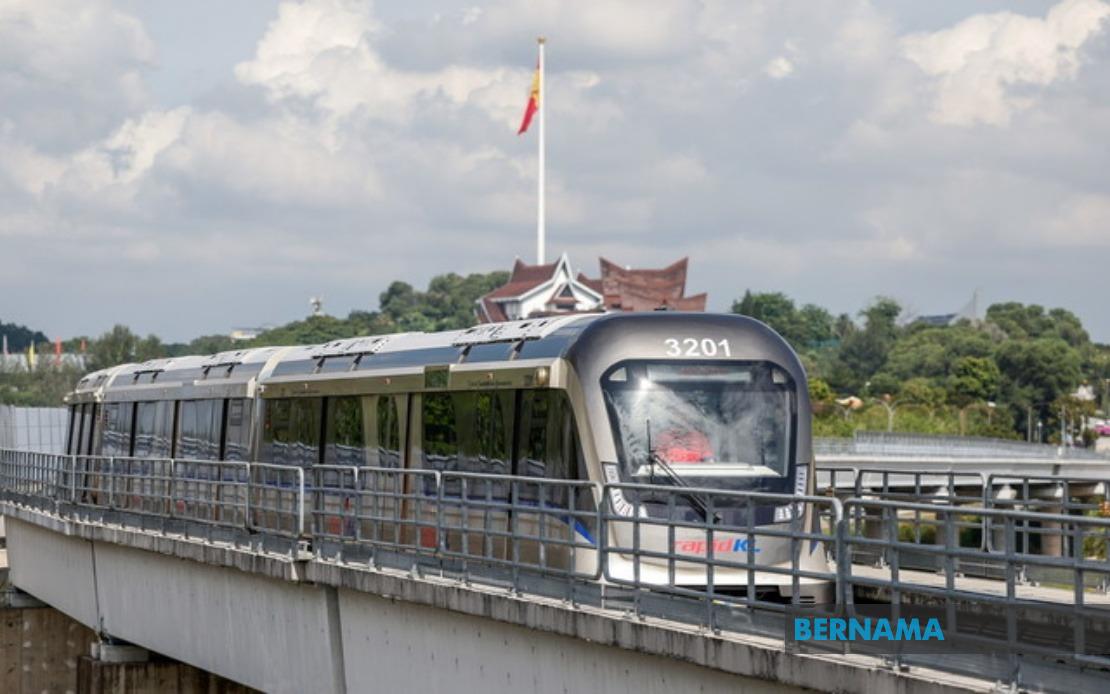
The Light Rail Transit 3 (LRT3) Shah Alam Line is set to welcome its first passengers following an official inauguration ceremony on Sunday, June 28, when Prime Minister Datuk Seri Anwar Ibrahim presides over the launch at a dedicated event. The completed transit line, stretching 37.8 kilometres from Bandar Utama to Johan Setia, represents a significant infrastructure milestone for the Klang Valley region and will substantially expand public transport connectivity across the district. During the official ceremony, the Prime Minister is expected to announce both the commercial opening date and time for service commencement, providing clarity for the anticipated two million residents whose daily commutes stand to be transformed by the new corridor.
The LRT3 Shah Alam Line encompasses 20 stations distributed strategically across its length, each designed with specific connectivity and accessibility considerations. The first ten stations—Bandar Utama, Kayu Ara, BU 11, Damansara Idaman, Subang, Glenmarie 2, Kerjaya, Stadium Shah Alam, Dato' Menteri, and UiTM Shah Alam—form the initial cluster serving the northern corridor. The remaining stations—Seksyen 7 Shah Alam, Bandar Baru Klang, Pasar Klang, Jalan Meru, Jambatan Kota, Taman Selatan, Seri Andalas, Klang Jaya, Bandar Bukit Tinggi, and Johan Setia—extend the network through the central and southern sections, creating comprehensive coverage across Shah Alam and surrounding municipalities. According to Mohd Ariffin Idris, the line's chief, this distribution ensures that major employment centres, residential hubs, and commercial districts all benefit from direct rail connectivity.
Intermodal integration emerges as a cornerstone feature of the Shah Alam Line's operational design, facilitating seamless transitions between the new corridor and existing transit networks. Passengers boarding at Bandar Utama gain direct access to the Kajang Line, enabling travel across the wider Klang Valley network without requiring surface-level transfers. Similarly, the Glenmarie 2 station provides a connection point to the Kelana Jaya Line, further enhancing the system's utility for commuters whose journeys span multiple districts. This level of integration reduces friction in journey planning and encourages greater adoption of public transport by eliminating the need for lengthy walks or vehicle changes between rail lines.
Complementing the rail infrastructure is an extensive feeder network designed to extend the reach of the LRT3 Shah Alam Line into residential and commercial areas beyond immediate station proximity. Prasarana operates 40 dedicated feeder buses deployed across 13 distinct routes, collectively serving 323 stops throughout the corridor. The pricing structure—fixed at RM1 per journey—represents a competitive cost for first and last-mile connectivity, effectively broadening the catchment area from which potential passengers can reasonably access the rail network. Operating hours span from 6 am to 11.30 pm, aligning with typical commuting patterns across the region while accommodating evening leisure travel and service-sector workers.
Beyond conventional bus services, Prasarana has introduced Rapid On-Demand van solutions to serve lower-density areas where fixed-route feeder buses may prove inefficient. The 44-van fleet operates across 20 designated zones, with passengers charged RM2 per trip for point-to-point connectivity during the same extended hours as the feeder bus network. This hybrid approach reflects growing recognition within Malaysia's transport planning community that mixed-mode feeder systems better serve sprawling suburban landscapes than traditional fixed-route buses alone. The operator explicitly intends to refine both bus routes and van zone boundaries as actual commuter demand patterns emerge during the line's operational phase, allowing the feeder network to evolve responsively rather than remain static according to pre-opening projections.
Parking infrastructure across the Shah Alam Line addresses the persistent challenge of integrating rail transit with private vehicle usage in a car-dependent region. Six stations—Kayu Ara, Damansara Idaman, Pasar Besar Klang, Sri Andalas, Bandar Bukit Tinggi, and Johan Setia—feature dedicated parking facilities totalling 2,300 bays. This provision reflects Malaysian commuting realities, where many residents maintain vehicle ownership for activities beyond commuting and prefer park-and-ride arrangements to full transit conversion. The strategic placement of parking across geographically distributed stations allows residents from multiple zones to access the network without lengthy surface-level travel.
Projected ridership figures suggest considerable confidence in the line's appeal to the target population. Prasarana anticipates 67,000 daily passengers during the first operational year, a baseline informed by comparable transit corridors and population density within the catchment area. Within five years, this figure is projected to expand to 117,708 daily passengers, reflecting both population growth within the corridor and the expected gradual shifting of commuter preferences toward public transport as the network becomes established and service reliability is proven. These projections carry implications for future capacity planning and potential expansion scenarios, should demand exceed current forecasts.
Environmental considerations have shaped both the technical specifications and architectural design of the Shah Alam Line, reflecting broader sustainability commitments within Malaysia's transport sector. The light rail vehicles themselves incorporate inverter-based air-conditioning systems that reduce energy consumption compared to conventional cooling mechanisms, a particularly significant design choice given tropical climates where thermal comfort directly affects ridership willingness. Station architecture has been deliberately conceived to maximise natural ventilation and daylight penetration, substantially reducing dependency on artificial lighting and mechanical cooling during daylight operating hours. These measures, collectively, constitute a meaningful reduction in the operational carbon footprint compared to equivalent transit systems employing conventional energy management approaches.
Accessibility provisions across all 20 stations demonstrate explicit commitment to inclusive transport design. Every station incorporates wheelchair-accessible ramps, eliminating barriers that historically excluded persons with mobility challenges from rail transit systems. Disability-compliant toilet facilities at all stations provide essential amenities for passengers with continence-related conditions or disabilities requiring accessible facilities. Within each train carriage, reserved seating designated for persons with disabilities ensures that accessibility extends beyond station access into the journey itself. These provisions represent minimum compliance with international accessibility standards, yet their presence across all stations indicates systematic commitment rather than ad-hoc accommodation.
The Shah Alam Line expansion itself forms part of a larger infrastructure evolution affecting the broader region. Five additional stations—Tropicana, Raja Muda, Temasya, Bukit Raja, and Bandar Botanik—currently designated for reconstruction rather than immediate opening require subsequent development works anticipated to commence by year-end. This phased approach allows the core corridor to establish stable operations and develop ridership patterns before extending the network further, a pragmatic strategy that avoids overwhelming operational teams during critical establishment phases. Once these stations enter service, the effective catchment area will expand considerably, potentially elevating long-term ridership projections beyond current forecasts.
For Malaysian commuters and policymakers, the Shah Alam Line's launch represents validation of long-planned public transport expansion across the Klang Valley. The corridor directly addresses historical transport gaps that have contributed to traffic congestion and air quality degradation across the region. By providing competitive alternatives to private vehicle use for hundreds of thousands of daily trips, the infrastructure intervention carries implications extending well beyond conventional transport metrics into urban air quality, congestion costs, and quality-of-life outcomes across the greater Kuala Lumpur metropolitan area. The integration model—combining rail transit, feeder buses, demand-responsive transport, and parking facilities—offers a replicable framework for other Malaysian urban centres contemplating their own transit expansion strategies.

