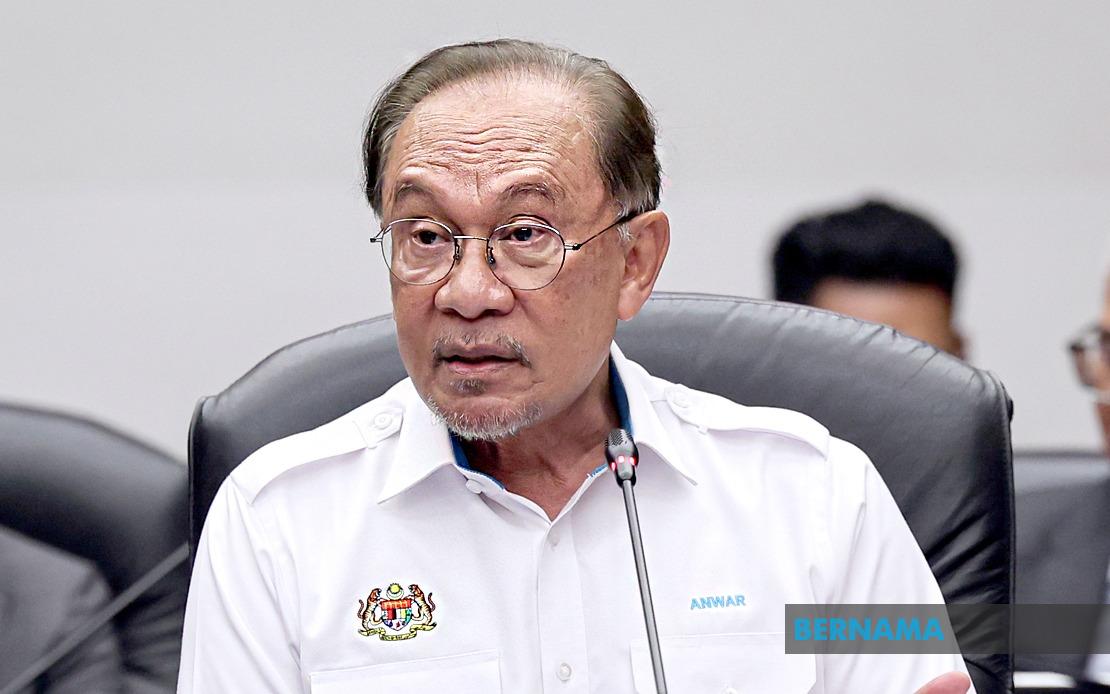
Prime Minister Datuk Seri Anwar Ibrahim begins a two-day visit to Penang this evening, during which he will oversee the rollout of several significant national and state-level initiatives spanning education reform, workforce development and cultural preservation. The itinerary demonstrates the federal government's continued focus on three interconnected policy pillars—strengthening Islamic scholarship alongside pluralistic values, equipping citizens with contemporary skills, and preserving Malaysia's architectural and cultural heritage.
This evening, Anwar will inaugurate the Indian Muslim Transformation Framework (IMTF) 2030 Programme at PICCA@Arena Butterworth Convention Centre at 8.30 pm. The IMTF represents a targeted effort to enhance social cohesion and economic participation among Malaysia's Indian Muslim communities through structured pathways in education and entrepreneurship. The framework's 2030 horizon suggests alignment with broader federal development targets and reflects the administration's emphasis on inclusive growth benefiting minority communities across the peninsula.
The second day's agenda opens with Anwar's attendance at the National Training Week (NTW) 2026 Summit at Universiti Teknologi MARA (UiTM) Permatang Pauh at 9.30 am, underscoring the government's prioritization of workforce readiness in an increasingly competitive regional economy. As Finance Minister, Anwar's presence at a skills-focused convening signals budgetary commitment to vocational and technical pathways—a persistent gap in Malaysia's education pipeline despite decades of discussion.
Shortly thereafter at 10.45 am, Anwar will cut the ribbon on Sekolah Menengah Kebangsaan Agama (SMKA) Sheikh Tahir Jalaluddin in Bukit Mertajam, honouring the 19th-century Penang scholar and Islamic reformer whose contributions to da'wah scholarship remain foundational in Malay-Muslim intellectual circles. The school's formal establishment during a time of heightened scrutiny over Islamic education in Malaysia carries symbolic weight—the institution explicitly positions Islamic learning within a framework of pluralism and social harmony, responding to recurring tensions between religious education and multicultural citizenship. The concurrent launch of the Nuqaba Programme at the same venue suggests complementary initiatives aimed at nurturing leadership capacity among young Muslim scholars.
The afternoon schedule intensifies Anwar's economic messaging. At 2 pm, he will officiate both the Himpunan Usahawan Bumiputera Pulau Pinang (HUBPP) and the 14th Penang International Halal Trade Exhibition (PIHEX) at Seberang Perai Polytechnic, Permatang Pauh. This dual platform allows the Prime Minister to address both domestic bumiputera entrepreneurship—a perennial political constituency—and Penang's expanding role in the global halal economy. The halal sector has emerged as a genuine comparative advantage for Malaysia within Southeast Asia, with Penang positioning itself as a regional hub through infrastructure investment and industry clustering.
Penang's significance as Malaysia's second-largest halal trading centre reflects deeper structural shifts in the state's economy. Once primarily dependent on electronics manufacturing, Penang has successfully diversified into high-value sectors including halal commerce, tourism, and advanced services. The PIHEX exhibition provides a platform for local exporters to showcase compliance certifications and build international networks, particularly with buyers from the Organisation of Islamic Cooperation member states where Malaysian halal credentials command premium recognition.
Anwar will conclude his Penang sojourn at 3.30 pm with the opening ceremony of Fort Cornwallis in George Town. This heritage conservation initiative carries historical resonance—the 18th-century fortification represents Georgetown's colonial foundations and its evolution into a cosmopolitan trading entrepôt. UNESCO World Heritage designation of Georgetown's core zone in 2008 placed heritage preservation atop the state government's development agenda. Federal backing for such restoration projects signals alignment between Kuala Lumpur and Penang authorities on cultural tourism as an economic diversification tool.
Communications Minister Datuk Seri Fahmi Fadzil's parallel itinerary, including attendance at the HUBPP and PIHEX events followed by a visit to the Nordin Ahmad Employee Gallery at Sekolah Kebangsaan Permatang Pasir, suggests coordinated messaging around civil service excellence and community service narratives. The Nordin Ahmad Gallery likely memorializes a respected educator or public servant, reinforcing the government's positioning of dedicated service as a civic virtue.
For Malaysian observers, this visit exemplifies the administration's pragmatic approach to balancing competing demands. The sequencing—from evening-launched minority community frameworks through skills summits and heritage projects—demonstrates awareness that economic resilience, social inclusion, and cultural preservation must advance in tandem. Penang's particular relevance lies in its track record successfully navigating these tensions; the state has maintained relative interethnic harmony while building a reputation for clean governance and business-friendly administration.
The visit also underscores persistent centripetal tensions within Malaysia's federal structure. Penang, governed by the DAP-led Pakatan Harapan coalition, maintains a notably independent policy trajectory, particularly regarding secular governance and heritage protection. Anwar's high-profile presence for major launches—rather than ceremonial delegation to state counterparts—reflects federal interest in maintaining political visibility and ensuring Kuala Lumpur's role in defining developmental narratives remains prominent. For opposition-held states, federal working visits offer opportunities for demonstrating national economic integration even amid political differences.
These initiatives also position Malaysia strategically within Southeast Asian development hierarchies. The halal economy focus reflects competitive dynamics with Indonesia and Thailand in capturing Islamic finance and trade flows. Skills training emphasis responds to demographic anxieties about youth employment and regional brain drain. Heritage conservation signals cultural confidence and soft power ambitions. Anwar's packed itinerary, across these multiple domains, projects an image of administrative dynamism—calculated to reassure investors, mobilize party supporters, and demonstrate governing competence ahead of electoral cycles.

