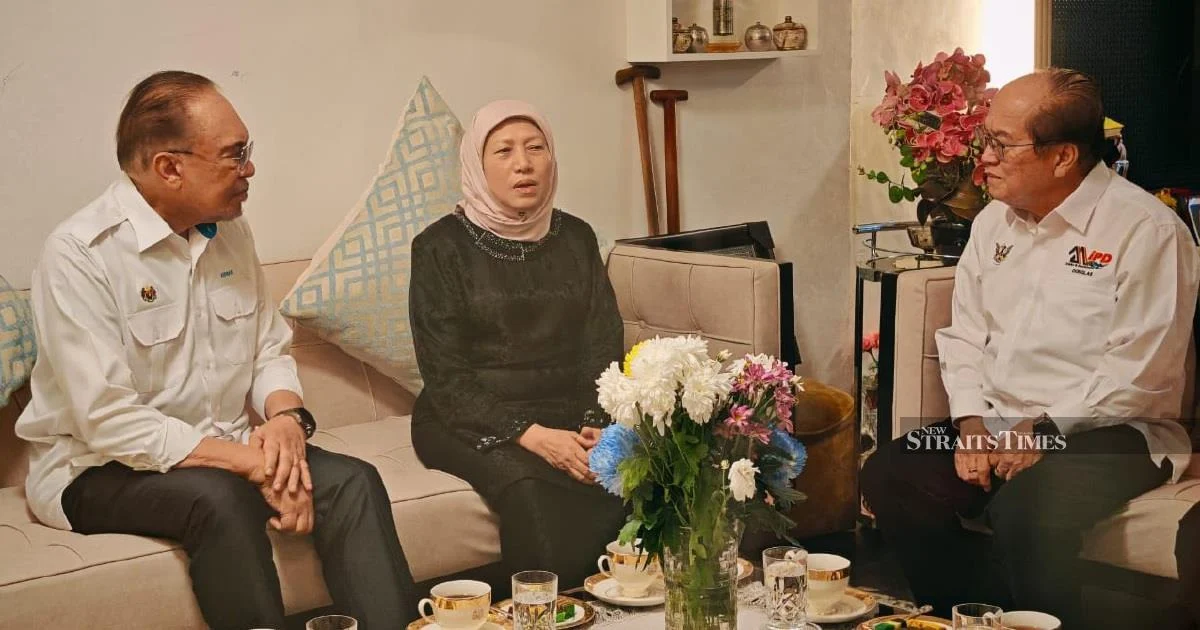
Prime Minister Datuk Seri Anwar Ibrahim travelled to Kuching to extend personal condolences to Women, Family and Community Development Minister Datuk Seri Nancy Shukri following the death of her husband, Datuk Kamil Misuari. The visit underscores the government's commitment to acknowledging the personal hardships facing its senior leadership at a time when multiple ministerial portfolios carry substantial public responsibility.
Nancy Shukri, a prominent political figure in Sarawak, has held her current cabinet position overseeing matters relating to women's welfare, family support systems, and community development initiatives. Her ministerial remit encompasses wide-ranging policy areas that directly impact Malaysian households and social cohesion. The loss of a spouse represents a significant personal challenge that can affect the discharge of such demanding duties, making the Prime Minister's gesture a recognition of both the minister's contribution to the administration and the emotional toll of bereavement.
Anwar's willingness to undertake travel to Kuching for this purpose demonstrates the importance placed by his administration on maintaining solidarity among cabinet members during times of personal crisis. Such visits, traditionally a cornerstone of Malaysian political courtesy and Islamic practice, reflect broader cultural values of mutual support and shared responsibility within government circles. The symbolic weight of a prime ministerial condolence call extends beyond mere formality, serving to affirm the human dimensions of political life and the bonds that unite the executive council.
The passing of Datuk Kamil Misuari marks a loss within a family that has been intertwined with Sarawak's political landscape. Sarawak, as Malaysia's largest state by landmass and a crucial component of the federation's federal structure, holds particular significance within national governance. Political figures and their families in this context often carry extended public profiles, and matters affecting their wellbeing resonate across state and national constituencies.
Nancy Shukri's tenure as minister has positioned her at the forefront of implementing policies related to gender equality, family institution strengthening, and community engagement programmes. Her portfolio directly influences how the government addresses contemporary challenges including domestic support services, care systems for vulnerable populations, and social safety nets. The stability of ministerial leadership in such sensitive areas carries implications for continuity in policy implementation and the maintenance of institutional momentum within her ministry.
The timing and nature of condolence visits by senior government figures often carry procedural and political significance. By personally attending to express sympathy, the Prime Minister signals that ministerial colleagues remain valued members of the administration regardless of personal circumstances, while also demonstrating the interconnected nature of Malaysia's political establishment. Such gestures, when executed with genuine intent, contribute to institutional morale and reinforce the notion that government functions as a collective enterprise rather than a collection of isolated positions.
Sarawak's political culture, shaped by its history as a distinct state within the Malaysian federation, maintains particular emphasis on personal relationships and community bonds. Anwar's presence in Kuching for this occasion aligns with these broader cultural expectations while reinforcing the federal government's engagement with state-level leadership. The visit facilitates direct personal connection between the national executive and Sarawak's political establishment, potentially strengthening working relationships that underpin federal-state cooperation on development and governance matters.
The Women, Family and Community Development Ministry has undergone various administrative reorganizations in recent years, reflecting shifting government priorities regarding social policy and family welfare. Nancy Shukri's leadership within this evolving institutional framework demonstrates the ministry's continued importance in the cabinet's policy architecture. Her ability to maintain focus on ministerial responsibilities while navigating personal loss will likely influence public perception of the government's commitment to gender-focused initiatives and family support infrastructure.
Beyond the immediate circumstances of this condolence visit, the incident highlights the intersection of personal tragedy and public duty that characterises high-level political positions. Ministers must simultaneously manage significant portfolio responsibilities and navigate personal challenges, a reality that rarely receives adequate public acknowledgement. The Prime Minister's action implicitly validates the legitimacy of such personal struggles within the political sphere, potentially normalising a more humane understanding of political leadership.
The broader implications of this visit extend to how Malaysia's political establishment manages succession planning, institutional continuity, and personnel stability within cabinet structures. When senior figures experience personal difficulties, whether temporary or lasting in their impact, questions inevitably arise regarding portfolio management and administrative resilience. The government's visible response through such condolence protocols signals confidence in existing institutional arrangements and in the capacity of ministerial colleagues to maintain operational effectiveness during personal trials.
Looking forward, Nancy Shukri's continued tenure within the cabinet will likely be subject to both public expectation and personal reassessment. The condolence visit from the Prime Minister effectively opens a narrative chapter in which the minister's response to personal loss becomes intertwined with her professional trajectory. How both the minister and her ministry navigate the coming period will carry significance for public understanding of government resilience and the personal dimensions of political service.

