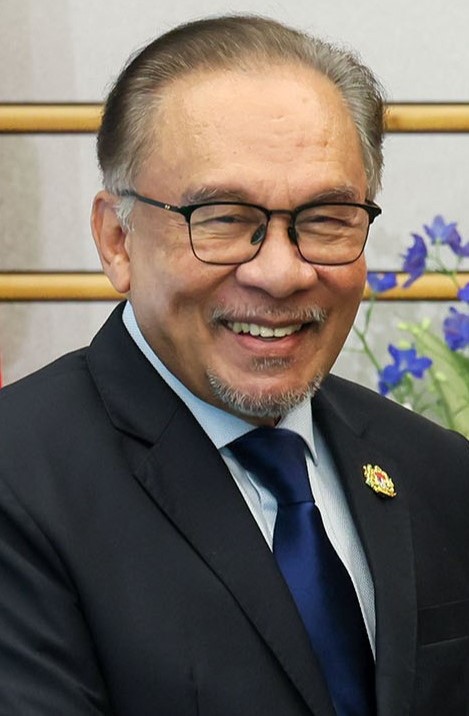
Prime Minister Datuk Seri Anwar Ibrahim has issued a strong warning against what he characterises as deliberate attempts by political actors to fracture Malaysian communities through appeals to racial sentiment and divisive rhetoric, cautioning that the burden of such polarisation ultimately falls on ordinary citizens rather than those who orchestrate these campaigns.
The Prime Minister's message arrives at a moment when Malaysia's multicultural fabric faces periodic strain from inflammatory language and identity-based politics. Anwar's intervention underscores the government's commitment to steering the nation away from zero-sum communal narratives that have historically threatened social cohesion. His remarks reflect growing concern among policymakers that routine invocation of racial grievances serves narrow political interests rather than the broader national good.
Anwar's position aligns with his administration's broader push toward inclusive governance and merit-based policy frameworks. Since assuming office, his government has attempted to distance itself from communal politics, instead emphasising economic performance, institutional reform, and cross-cutting policy objectives that benefit all Malaysians regardless of ethnicity or religion. This stance contrasts with periods of Malaysian politics when racial messaging dominated electoral campaigns and policy debates.
The Prime Minister's warning carries particular weight given Malaysia's history of communal tension. The country's 1969 racial riots serve as a historical backdrop for contemporary discussions about the dangers of unchecked polarisation. Malaysian policymakers and opinion leaders have long recognised that societies fractured along ethnic lines struggle to achieve economic productivity, institutional coherence, and social progress. Anwar's remarks effectively invoke this historical memory while framing racial division as antithetical to national development.
Political analysts suggest that campaigns weaponising racial identity often benefit politicians facing difficulties on substantive policy grounds. By redirecting public attention toward cultural grievances and historical disputes, such campaigns deflect scrutiny from economic management, administrative competence, or governance failures. Anwar's messaging implicitly acknowledges this dynamic, suggesting that citizens should recognise the manipulative intent behind racially charged rhetoric and evaluate politicians instead on their capacity to deliver tangible improvements in living standards and institutional performance.
The Prime Minister's intervention also reflects evolving demographics and values among Malaysia's electorate, particularly younger voters increasingly skeptical of identity-based politics. Generation Z and younger millennial voters in Malaysia have demonstrated openness to multiethnic coalitions and cross-communal political movements that prioritise bread-and-butter issues. Anwar's appeal directly targets this constituency, framing resistance to racial division as the modern, forward-thinking approach to politics.
Within the broader Southeast Asian context, Malaysia's approach to managing communal tensions holds significance. Regional neighbours including Singapore and Indonesia have grappled with similar challenges around ethnic and religious politics. Malaysia's attempt to construct political narratives that transcend communal divisions offers a potential model for regional democratic stability, though success remains contingent on consistent political leadership and sustained institutional commitment.
However, translating such rhetorical commitments into sustained political practice presents ongoing challenges. Opposition parties and fringe political movements may continue deploying divisive messaging, particularly during electoral contests when incentives to mobilise narrow constituencies intensify. Anwar's warning therefore represents not a solution but rather a baseline assertion of principles that must be repeatedly reinforced through political action and institutional design.
The economic dimensions of communal polarisation deserve emphasis in understanding Anwar's intervention. High-tension, racially-charged political environments increase business uncertainty, discourage foreign investment, and divert governmental resources toward managing social friction rather than productive infrastructure and human capital development. Anwar's background as an economist and former finance minister likely informs his understanding that social cohesion constitutes essential infrastructure for economic competitiveness.
Myth-making around race-based politics often obscures material interests that drive divisive campaigns. Anwar's framing implicitly suggests that Malaysian voters should look beyond emotional appeals toward identifying which political actors genuinely pursue policies benefiting their constituencies. This analytical approach requires civic sophistication and resistance to messaging that reduces complex policy questions to simplified communal narratives.
The Prime Minister's comments also signal to international observers Malaysia's commitment to democratic stability and multiethnic pluralism. At a moment when democratic backsliding and majoritarian capture concern global governance analysts, Malaysia's leadership explicitly rejecting racial polarisation strategies reinforces the nation's democratic credentials and institutional resilience.
Moving forward, Anwar's challenge involves demonstrating through concrete policy outcomes that rejecting divisive racial politics yields tangible benefits for Malaysian communities. Economic growth, improved public services, and visible progress on corruption and institutional accountability would substantiate his arguments more persuasively than rhetoric alone. Conversely, should economic stagnation or governance failures accumulate, political opponents will have greater opportunity to revive identity-based messaging as an alternative mobilisation strategy.