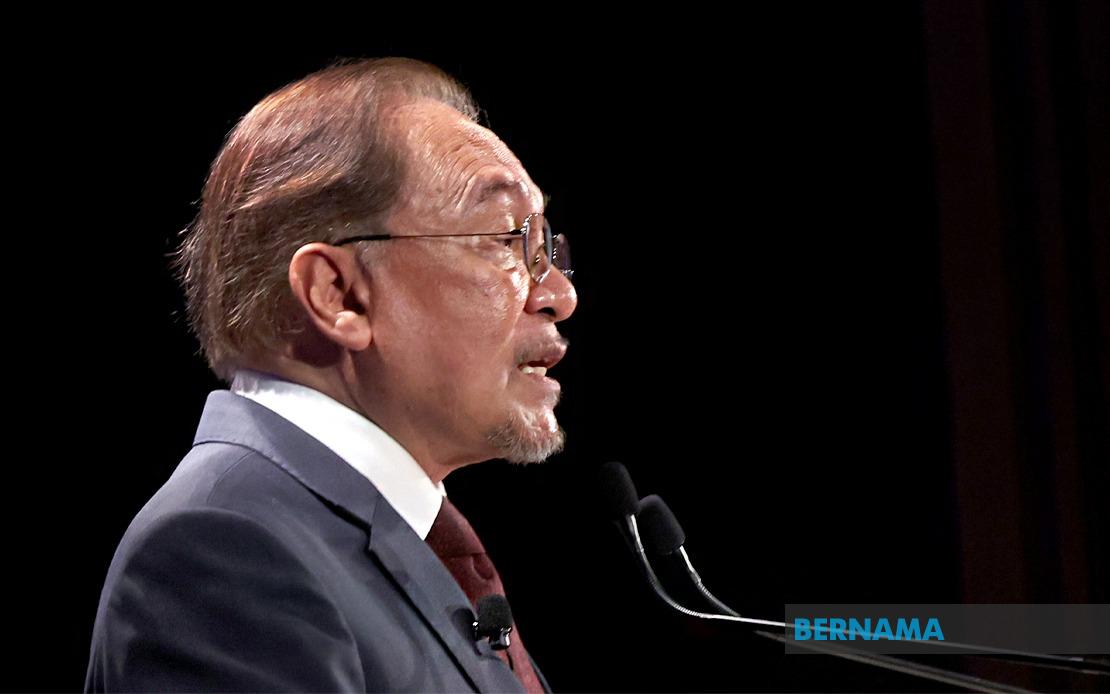
Prime Minister Datuk Seri Anwar Ibrahim's second and concluding day in Turkmenistan unfolded as a carefully choreographed sequence of high-level engagements designed to cement Malaysia's growing strategic presence in Central Asia. The itinerary demonstrated the significance Kuala Lumpur places on strengthening relationships beyond its traditional Southeast Asian sphere, particularly with energy-rich nations positioned at the intersection of Asia, Europe, and the Middle East.
The day commenced at Ashgabat's Presidential Palace, where President Serdar Berdimuhamedov extended an official welcome to the Malaysian leader. Following the ceremonial reception, Anwar and Berdimuhamedov proceeded to closed-door discussions that laid the foundation for subsequent bilateral negotiations. These initial conversations provided both leaders with an opportunity to establish personal rapport and identify priority areas for enhanced cooperation before the formal bilateral meeting commenced.
The bilateral session itself proved substantive, with both delegations focusing on broadening Malaysia's engagement across multiple economic sectors. Beyond traditional areas of cooperation, discussions encompassed digital innovation and scientific collaboration, reflecting recognition that modern partnerships require technological dimension. The signing of a joint statement formalized the outcomes of these discussions, while the exchange of multiple agreements and memoranda of understanding provided concrete mechanisms for implementation. The Air Services Agreement carries particular importance for Malaysian investors and business travellers seeking expanded connectivity to Central Asia's emerging markets.
Cooperation in energy sectors dominated much of the agenda, unsurprising given Petronas's substantial long-term investment footprint in Turkmenistan. Since 1996, Malaysia's national oil company has committed RM52.73 billion to operations in the country, making it a cornerstone of bilateral economic relations. Trade statistics underscore this expanding relationship: in 2025, Turkmenistan ranked as Malaysia's fourth largest trading partner among Central Asian nations, with bilateral commerce reaching RM75.80 million and Malaysian exports rising nine percent year-on-year to RM75.50 million. These figures, while modest compared to Southeast Asian trading partners, represent steady momentum in relationship-building with a strategically important energy exporter.
The exchange of agreements between Malaysia's Academy of Sciences and Turkmenistan's equivalent institution signalled commitment to knowledge transfer and research collaboration. Similarly, the memorandum of understanding involving the Ministry of Transport and Turkmenistan's State Service suggested expanding logistics and infrastructure cooperation. Such institutional links create sustained channels for engagement beyond individual diplomatic visits, embedding bilateral relations within broader scientific and technical communities.
Following the formal proceedings, Prime Minister Anwar attended a luncheon hosted by President Berdimuhamedov before fulfilling religious observance at the Turkmenbashi Ruhy Mosque. This combination of diplomatic engagement and personal spiritual practice reflects Malaysia's positioning as a Muslim-majority nation engaging with fellow Islamic societies within the Central Asian region. Turkmenistan's significant Muslim population and historical Islamic heritage create natural cultural touchpoints that complement commercial interests.
The Malaysia-Turkmenistan Forum, jointly inaugurated by both leaders at the Chamber of Commerce and Industry of Turkmenistan, provided a platform for business-to-business dialogue extending beyond governmental channels. Such forums facilitate direct engagement between Malaysian and Turkmenistan enterprises, potentially unlocking commercial opportunities in sectors ranging from agriculture and commodities to tourism and consumer goods. For Malaysian companies seeking to expand into Central Asia, Turkmenistan offers a gateway positioned at the crossroads of major Asian and regional trade routes.
Anwar's delegation composition underscored the visit's economic emphasis. The inclusion of Minister of Investment, Trade and Industry Datuk Seri Johari Abdul Ghani and Minister of Economy Akmal Nasrullah Mohd Nasir signalled that commercial expansion ranked alongside diplomatic niceties. Their presence facilitated substantive discussions with Turkmenistan counterparts regarding investment incentives, regulatory frameworks, and sector-specific opportunities.
Ashgabat itself, recognized globally as the 'White Marble City' and holder of the Guinness World Record for highest concentration of white marble-clad buildings, projects an image of modernization and ambitious development. The capital's monumental architecture, extensive gold-leaf detailing, and broad avenues reflect Turkmenistan's petroleum wealth and aspirations as a developing nation. For Malaysian observers, the city's transformation offers insights into how Central Asian nations leverage natural resource revenues for infrastructure development and urban modernization.
Turkmenistan's geographic position along the Caspian Sea's eastern coast positions it as a crucial node in regional energy markets and transportation corridors. Bordered by Kazakhstan, Uzbekistan, Afghanistan, and Iran, the country straddles competing regional influences while maintaining strategic autonomy. For Malaysia, engagement with Turkmenistan represents broader hedging strategy within Central Asia, diversifying partnerships across multiple energy suppliers and investment destinations as Southeast Asian economies seek alternative sources beyond traditional suppliers.
The timing of this visit reflects Malaysia's maturing approach to international engagement, moving beyond exclusive focus on ASEAN and regional affairs toward systematic cultivation of relationships with strategically important nations across Eurasia. Turkmenistan's status as Malaysia's fourth largest Central Asian trading partner, combined with Petronas's massive investment commitment, justifies senior-level diplomatic attention. However, the relationship remains nascent compared to Malaysia's engagements with traditional partners, suggesting considerable untapped potential for expansion.
For Malaysian businesses, Turkmenistan offers untapped markets in agriculture, financial services, technology, and tourism. The country's development trajectory mirrors patterns observed in other emerging Central Asian economies, where Malaysian expertise in Islamic finance, palm oil commerce, and halal certification could yield commercial advantages. Conversely, Turkmenistan's energy resources present investment opportunities for Malaysian firms seeking diversified portfolio exposure and long-term stable returns from hydrocarbon assets.
The bilateral engagement signals both nations' commitment to transcending historical distance and establishing meaningful substantive relationships. While trade volumes currently appear modest, the institutional frameworks established through this visit—reflected in multiple memoranda and agreements—create foundation for accelerated growth. As Malaysia navigates complex regional dynamics and seeks expanded great power partnerships, systematic cultivation of relationships with Central Asian nations like Turkmenistan reflects strategic maturation and recognition that contemporary international relations demand global rather than regional vision.

