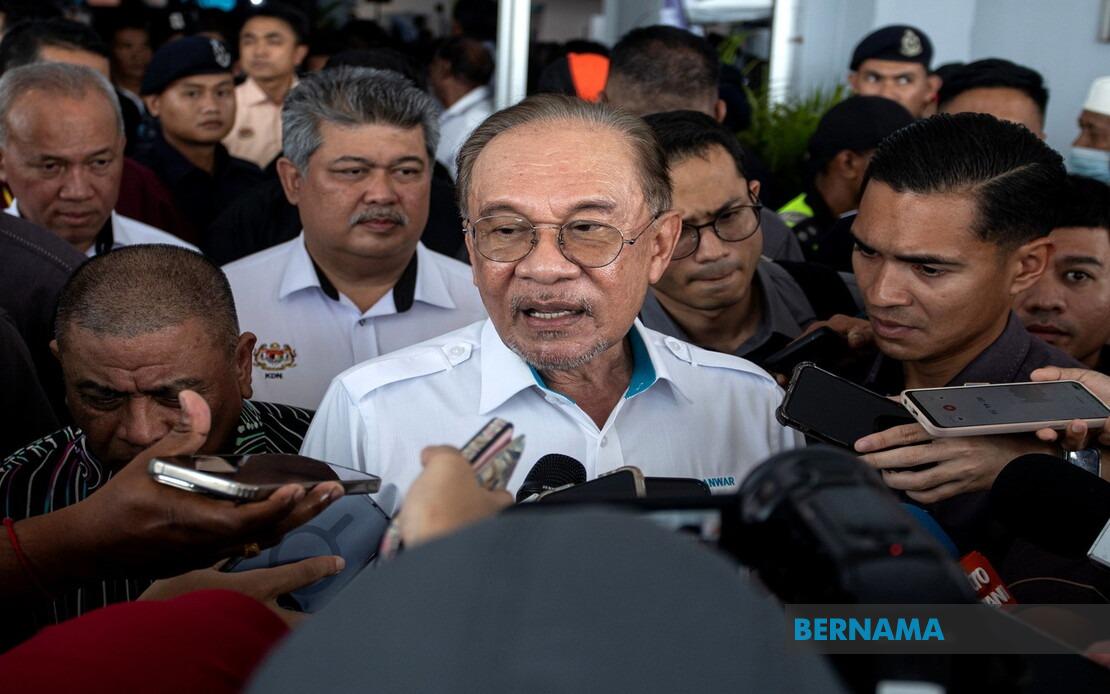
Prime Minister Datuk Seri Anwar Ibrahim has issued a stern reminder to all individuals serving in government positions to observe strict discipline and avoid directing criticism at the Federal Government during their participation in ongoing state election campaigns. Speaking in Ipoh following a community engagement programme, Anwar emphasised that such attacks risk creating a damaging political environment that undermines the stability of Malaysia's governing coalition.
The timing of this statement reflects growing tensions within the Unity Government as coalition partners prepare to contest against one another in state-level elections. While Anwar acknowledged that such internal competition is an accepted feature of democratic systems—where the same parties cooperate at federal level yet compete locally—he drew a firm distinction between acceptable state-based campaigning and behaviour that compromises the federal administration's credibility.
In drawing this line, Anwar made explicit that government officials who choose to breach these disciplinary expectations should voluntarily relinquish their posts. This condition represents a consequential shift in how the administration plans to enforce cohesion within its ranks, moving beyond mere reminders to establishing a clear cost for non-compliance. The ultimatum effectively signals that participation in government comes with constraints on political speech that extend beyond normal conduct.
The Prime Minister outlined the permitted scope of campaign activity, clarifying that ministers, deputy ministers, and agency heads retain the freedom to advocate on state-specific issues and policy matters directly affecting their constituencies. This flexibility recognises the practical reality that elected officials must engage with local concerns during campaign periods. However, Anwar stressed that this allowance does not extend to frontal assaults on the integrity or direction of the federal government itself.
Anwar indicated that he has already discussed these expectations directly with his two deputy prime ministers, Datuk Seri Dr Ahmad Zahid Hamidi and Datuk Seri Fadillah Yusof, suggesting that the issue has reached a level of seriousness warranting high-level coordination. This engagement with his immediate subordinates underscores that enforcement will operate through the leadership structure, with senior figures tasked with reinforcing messaging among their respective party members and government appointees.
Beyond individual discipline, Anwar—speaking in his capacity as Pakatan Harapan chairman—emphasised that all constituent parties within the Unity Government have been formally encouraged to maintain harmonious relationships across both federal and state governance levels. This broader call for cordiality reflects recognition that the coalition's continued effectiveness depends on preserving operational trust and mutual respect despite electoral competition.
The strategic calculation underlying these statements becomes clearer when examining Malaysia's political context. The Unity Government, formed following the 2022 general election, brought together ideologically diverse parties whose cooperation at the centre masks deeper rivalries at state level. When such partners campaign against each other, messaging discipline becomes crucial to preventing the state-level contest from destabilising federal partnerships. A minister or deputy minister who attacks the federal government's policies while campaigning against coalition partners creates narratives that opposition parties can weaponise against the entire administration.
For Malaysian political observers, Anwar's intervention signals that the government intends to manage internal competition through hierarchical discipline rather than structural separation. This approach differs markedly from some democracies where coalition partners maintain stricter compartmentalisation between federal and state operations. The Malaysian approach acknowledges that many officials necessarily operate across both levels simultaneously, making complete separation impractical.
The statement also carries implications for how Southeast Asian governments balance internal party competition with coalition stability. As other regional democracies navigate similar tensions—where coalition partners compete electorally while cooperating governmentally—Malaysia's approach offers a case study in using leadership authority and conditional office-holding to maintain alignment. Whether this strategy proves effective will depend substantially on whether coalition members interpret the warnings as credible commitments or rhetorical positioning.
Anwar's emphasis on continued service delivery adds another dimension to the messaging. By framing discipline requirements as essential to maintaining public services, the Prime Minister reframes internal compliance not merely as hierarchical obedience but as necessary to the government's fundamental obligation to citizens. This framing attempts to elevate the discipline requirement above partisan interest, appealing to shared commitment to governance effectiveness.
Looking forward, the enforcement mechanisms and any eventual test cases will determine whether this advisory crystallises into binding practice. Should prominent officials breach these parameters without consequences, the disciplinary framework loses credibility. Conversely, if the government strictly enforces the warnings, state campaign dynamics could shift significantly, with officials censoring themselves more rigorously to preserve their positions. The actual implementation will reveal whether Anwar's statement represents a genuine turning point in managing Unity Government tensions or a temporary circuit-breaker for a specific campaign period.

