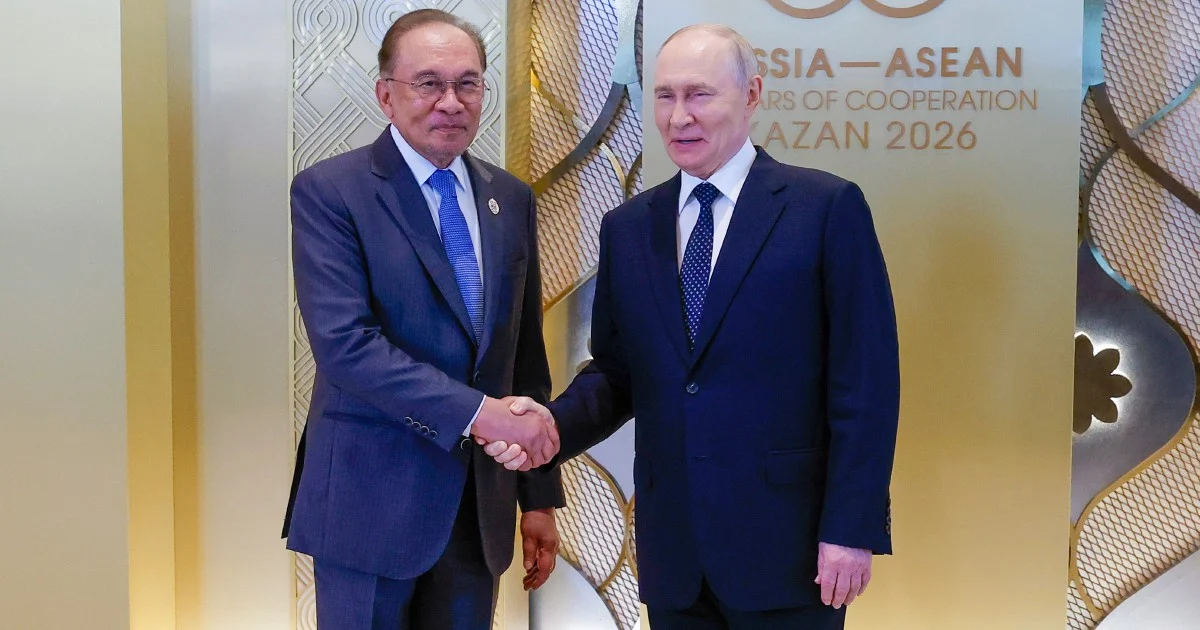
Prime Minister Datuk Seri Anwar Ibrahim's recent official visits to Russia and Turkmenistan have been characterised as strategically significant moves to fortify Malaysia's energy security and expand hydrocarbon partnerships in Central Asia and Eastern Europe. BRICS International Malaysia, a coalition focused on promoting relations among BRICS member states and their partners, has welcomed the diplomatic mission as a constructive advancement of the nation's long-term resource security objectives.
The timing of these engagements reflects Malaysia's deliberate efforts to diversify its energy supply chains amid global market volatility and geopolitical shifts. Rather than relying exclusively on established suppliers within the Asia-Pacific region, the Prime Minister's itinerary demonstrates Kuala Lumpur's willingness to cultivate relationships with major energy producers across different geopolitical spheres. This approach aligns with Malaysia's broader strategic framework of maintaining balanced international relations whilst securing reliable access to critical energy resources.
Turkmenistan, situated in Central Asia along the Caspian Sea, possesses substantial proven natural gas reserves and represents an underutilised avenue for Malaysian energy diversification. The country's existing pipeline infrastructure and export capabilities make it a potentially valuable partner for future liquefied natural gas agreements or direct gas procurement arrangements. Malaysia's energy-intensive petrochemical and manufacturing sectors require consistent fuel supply guarantees, making such partnerships essential for economic stability and industrial competitiveness.
Russia's position as a global energy superpower and major crude oil exporter adds another dimension to these discussions. Despite international sanctions and geopolitical tensions affecting Russia's relationships with Western nations, Asian economies including Malaysia have maintained pragmatic commercial engagement. The energy cooperation framework between Malaysia and Russia could encompass crude oil supply contracts, joint exploration ventures, or downstream petroleum processing collaborations that strengthen both nations' economic interests.
The diplomatic visits also serve to enhance Malaysia's standing within broader international economic frameworks. BRICS International Malaysia's endorsement underscores how these energy initiatives fit within Malaysia's positioning as a bridge between different global power centres. By strengthening ties with Russia and Central Asian states, Malaysia reinforces its non-aligned approach to international relations, avoiding overdependence on any single regional bloc whilst maximising commercial opportunities.
Energy security carries profound implications for Southeast Asia's economic trajectory. Malaysia, as a developed industrial economy with significant manufacturing and export sectors, faces rising electricity demand and feedstock requirements for its petrochemical industry. Securing diverse, reliable energy sources insulates the nation from supply shocks that could disrupt manufacturing output, employment, and export revenues. The visits to Russia and Turkmenistan represent proactive steps to build redundancy into Malaysia's energy infrastructure.
The strategic economic partnerships referenced extend beyond energy transactions alone. Russia and Turkmenistan maintain interests across multiple sectors including technology transfer, infrastructure development, and investment flows. Malaysia's approach to these relationships demonstrates sophisticated economic statecraft, recognising that energy cooperation can anchor broader trade and investment relationships that benefit multiple economic sectors and create employment opportunities.
For BRICS International Malaysia, these diplomatic outcomes validate the importance of developing South-South cooperation mechanisms and South-East-North partnerships that exist outside traditional Western-dominated economic structures. The endorsement reflects how energy security fits within a larger narrative of Malaysian economic resilience and strategic autonomy in a multipolar world.
The visits also carry implications for Malaysia's position within ASEAN and the broader Indo-Pacific region. By cultivating energy partnerships across diverse geopolitical zones, Malaysia strengthens its capacity to support regional stability and prosperity. A Malaysia with secure energy supplies and stable petrochemical production supports broader Southeast Asian economic integration and reduces pressures for destabilising economic policies driven by resource scarcity.
Moving forward, the outcomes of these visits will likely translate into concrete agreements, technical teams, and phased implementation schedules for energy cooperation frameworks. Malaysia's Ministry of International Trade and Industry, along with national energy agencies, will presumably undertake detailed negotiations addressing contract terms, pricing mechanisms, transportation logistics, and regulatory compliance. These technical discussions will determine whether diplomatic goodwill translates into sustained, mutually beneficial commercial relationships.
The broader significance of Prime Minister Anwar Ibrahim's diplomatic mission lies in demonstrating Malaysia's capacity to pursue independent foreign policy objectives aligned with national economic interests. By engaging major energy producers across Europe and Central Asia, Malaysia signals its determination to shape its energy future through diversified partnerships rather than accepting predetermined supply arrangements dictated by established regional powers.

